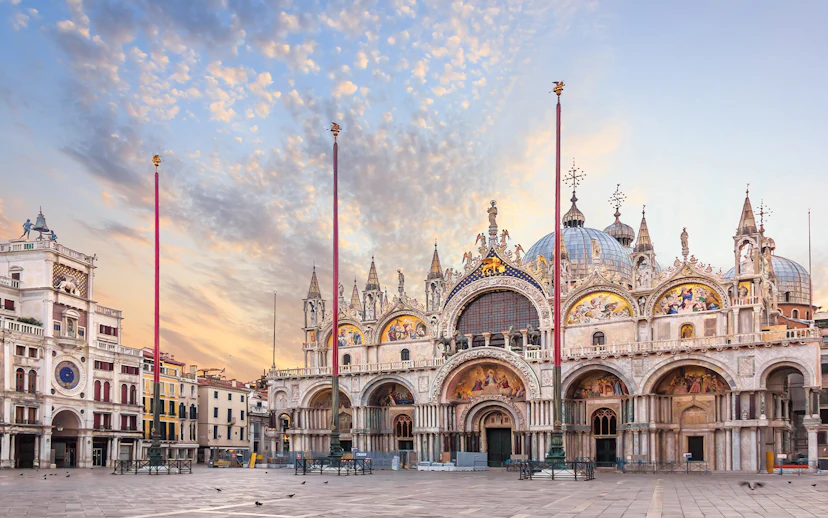
Correr Museum visitor guide
Correr Museum, or Museo Correr, is the museum in St. Mark’s Square best known for its Napoleonic royal rooms, Venetian civic-history collections, and early Venetian paintings. The visit feels more layered than large: you move from ornate palace interiors into denser history galleries, then into quieter art rooms. Most people don’t need a half-day here, but they do need a route — the difference between a rushed stop and a rewarding visit is knowing what to slow down for. This guide covers timings, tickets, entrances, and the highlights worth prioritizing.
Quick overview: Correr Museum at a glance
If you’re fitting Correr Museum into a St. Mark’s Square day, a few planning choices matter more than people expect.
- When to visit: Daily, typically from 10am–6pm, with some summer evening extensions; the first hour after opening is noticeably calmer than 11am–2pm, because most St. Mark’s Square visitors reach the museums only after the Basilica and Doge’s Palace queues build.
- Getting in: Online access is usually available either through the St. Mark’s Square Museums ticket, which includes the Museo Correr, the Archaeological Museum, and the Marciana Library with discounted entry to Doge's Palace, or as part of a 7-day Turbopass city card covering 30+ Venice attractions. Advance booking matters most from April through October when St. Mark’s Square gets especially crowded.
- How long to allow: 1.5–2 hours for most visitors. It stretches closer to 3 hours if you linger in the civic-history galleries or add the Royal Apartments itinerary.
- What most people miss: The civic-life galleries between the royal rooms and paintings, plus the views back over Piazza San Marco from the palace side of the building.
- Is a guide worth it? Yes, if you’re combining it with Doge’s Palace and want the politics of Venice explained clearly; for Correr alone, the MUVE audioguide app is usually enough.
🎟️ Tickets for Correr Museum sell out several days in advance during spring, summer, and holiday weekends. Lock in your visit before the time you want is gone.
Jump to what you need
🕒 Where and when to go
🎟️ Which ticket is right for you?
🗺️ Getting around
🖼️ What to see
♿ Facilities and accessibility
Where and when to go
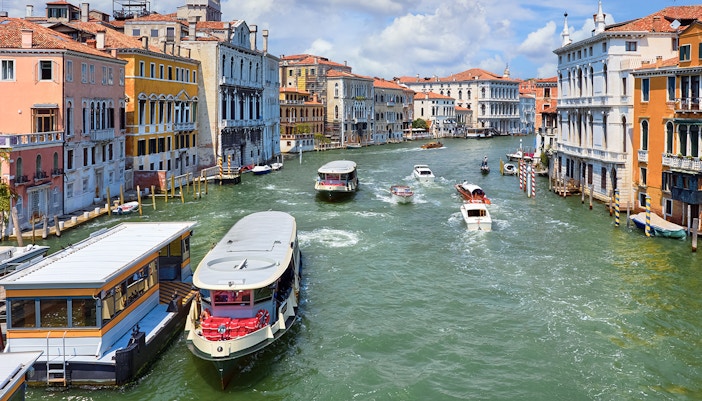
How do you get to Correr Museum?
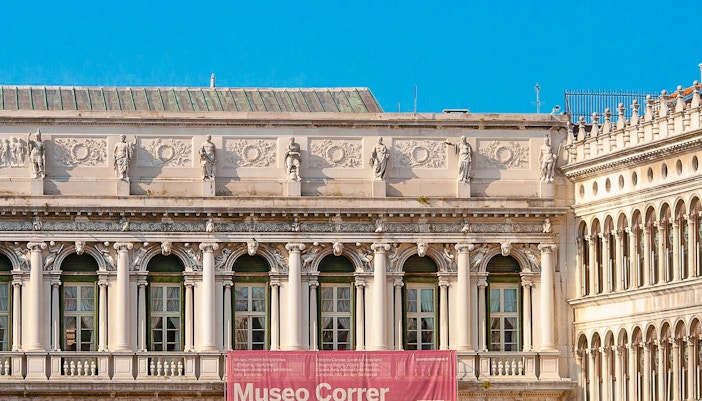
Correr Museum sits in the Napoleonic Wing at the west end of Piazza San Marco, a short walk from San Zaccaria and roughly 10 minutes from Rialto.
Piazza San Marco, 52, 30124 Venice VE, Italy
- Vaporetto: San Zaccaria stop → 5-min walk → Best if you’re arriving from Venezia Santa Lucia or Piazzale Roma.
- Vaporetto: Vallaresso stop → 6-min walk → A good option if you’re already moving along the Grand Canal.
- Walking: Rialto Bridge → 10-min walk → Take the Mercerie route for the most direct pedestrian approach.
- Water taxi: San Zaccaria drop-off → 5-min walk → The simplest paid option if you want the shortest transfer.
- Bus + walk: Piazzale Roma → vaporetto or 20–25 min on foot → Useful if you’re arriving by car or airport coach.
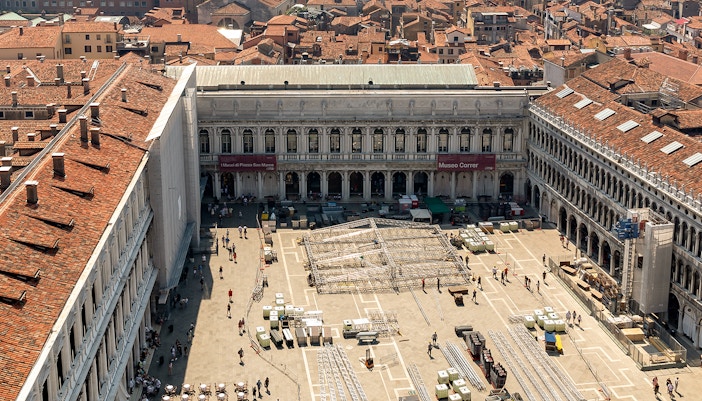
Which entrance should you use?
Correr Museum is entered through the St. Mark’s Square museums circuit, and the mistake most visitors make is joining the on-the-day ticket line when they already have a valid museum pass or timed booking.
- Pre-booked tickets: For visitors with an online museums ticket or pre-reserved access. Expect 5–15 min waits except around late morning in peak season.
- On-the-day tickets: For visitors buying at the square. Expect 20–45 min waits on spring weekends, summer afternoons, and holiday dates.

When is Correr Museum open?
- Monday–Sunday: 10am–6pm
- Selected summer evenings / events: Extended hours may run later, including some weekend openings to 10pm
- Last entry: Usually 1 hour before closing
When is it busiest? Late morning to mid-afternoon, especially from April to October, when St. Mark’s Square queues spill across multiple attractions and the first palace rooms feel the most compressed.
When should you actually go? Aim for opening time or the last 90 minutes of the day, when tour groups thin out and the royal rooms and picture gallery feel far less crowded.
Which Correr Museum ticket is best for you
| Ticket type | What's included | Best for | Price range |
|---|---|---|---|
St. Mark’s Square Museums ticket | Entry to Correr Museum + Doge’s Palace + National Archaeological Museum + Monumental Rooms of the Marciana Library + MUVE audioguide app | A same-day St. Mark’s Square plan where you want the best value and don’t want to buy separate entries | From €35 |
Turbopass Venice City Card | Access to over 30 attractions including Correr Museum with 7 day validity | Hassle free access to top Venice highlights at a cost effective price and public unlimited transport | From €84 |
How do you get around Correr Museum?

Layout and suggested route
Correr Museum is best understood as a linear palace-to-museum route rather than a maze, and that makes it easy to self-navigate if you know not to spend all your energy in the first decorated rooms.
- Napoleonic Wing / Royal rooms: Grand ceremonial rooms, Canova sculptures, and the Ballroom → budget 30–40 min.
- Venetian civic-life galleries: Artifacts, uniforms, naval models, costumes, and daily-life displays → budget 35–45 min.
- Picture Gallery: Bellini, Carpaccio, Antonello, Lotto, and other early Venetian works → budget 25–35 min.
- Royal Apartments special itinerary: Reserved-access rooms linked to Napoleon, the Habsburgs, and Empress Elisabeth → add 30–45 min if booked.
Suggested route: Start with the royal rooms while your attention is fresh, move steadily through the civic-history section without skipping the Arsenal and government displays, and save a calm final block for the paintings — most visitors rush here and miss how much the history galleries explain the art.

Maps and navigation tools
- Map: On-site museum map and the MUVE app cover the main route; download the app before you enter so you’re not relying on patchy square-side signal.
- Signage: Wayfinding is good enough for the main route, but it’s still easy to hurry past the civic galleries if you’re focused only on the paintings.
- Audio guide / app: The MUVE audioguide app is the most useful self-guided tool here, especially if you want context in the royal rooms and civic-history collections without joining a tour.
💡 Pro tip: Don’t treat the first grand salons as the whole visit — the museum gets more intellectually rewarding after the palace rooms, and that’s exactly where rushed visitors lose momentum.
Get the Correr Museum map / audio guide
Where are the masterpieces inside Correr Museum?

Grand Ballroom
Era: Napoleonic and Habsburg court interiors
This is the room that gives the museum its sense of scale. The marble columns, ceremonial proportions, and decorative program make it clear that you’re not just in a gallery — you’re inside a former royal residence staged for power. Most visitors photograph the ceiling and move on too quickly; slow down for the way the room frames the whole Napoleonic Wing experience.
Where to find it: Early in the route through the first-floor royal rooms in the Napoleonic Wing.
Canova collection
Artist: Antonio Canova
The Canova works are one of the strongest reasons to give this museum more than a quick pass. In these decorated palace rooms, the sculptures feel less like isolated artworks and more like part of a courtly setting, which changes how you read them. What people often miss is the contrast between the cool Neoclassical sculpture and the warm mirrors, stucco, and chandeliers around it.
Where to find it: In the restored Neoclassical rooms at the start of the Napoleonic Wing sequence.
Venetian civic-life galleries
Era: Venetian Republic and civic history
These galleries explain how Venice actually functioned — politically, socially, and maritime-wise — and they make the rest of your St. Mark’s Square day easier to understand. The model ships, uniforms, instruments, and market-life material give the museum its real depth. Most people treat this as a corridor to the paintings, but the Arsenal and government displays are where the city’s story starts to click.
Where to find it: In the Procuratie Nuove section after the royal rooms and before the picture gallery.
Picture Gallery
Artist: Bellini, Carpaccio, Antonello da Messina, Lorenzo Lotto, and others
This is the most concentrated art section of the museum and the quietest one if you time your visit well. The lighting and layout are more intimate than spectacular, which is exactly why these rooms reward patience. Visitors often spot the big names and keep moving, but the smaller devotional works and decorative objects in nearby vitrines add a lot to the story of early Venetian taste.
Where to find it: Midway through the museum route on the second-floor gallery sequence.
Sissi’s Suite
Era: 19th-century royal apartments
If you book the special itinerary, this is the section that feels most exclusive. The rooms linked to Empress Elisabeth of Austria and the later royal occupants are smaller, more personal, and more atmospheric than the ceremonial halls, which is why history-focused visitors tend to remember them so vividly. Most standard-ticket holders never see them, so they’re easy to overlook when planning.
Where to find it: In the Sale Reali special itinerary, accessed only with a separate reservation.
Facilities and accessibility
- 🎒 Lockers: Lockers are available on-site, and they’re the better option if you’re carrying more than a light day bag through the palace rooms.
- 🚻 Restrooms: Restrooms are available inside the museum complex, which matters because you don’t want to leave the circuit once you’ve started your visit.
- 🍽️ Café: The ground-floor café is the most convenient break point, with coffee, drinks, and light snacks at moderate Piazza San Marco standards.
- 🛍️ Gift shop / merchandise: The museum shop is the easiest place to pick up exhibition books, Venice-themed gifts, and a more thoughtful souvenir than the square’s generic stalls.
- 🪑 Seating / rest areas: Benches and pause points inside the galleries make the route manageable if you prefer a slower pace.
- 📶 Wi-Fi: Plan around mobile data rather than building-wide Wi-Fi, and download the MUVE app before you arrive.
- 🩺 First aid / medical station: Staff assistance is available on-site if you need help during the visit.
- 🐶 Dog-sitting service: The museum offers a dog-sitting service, which is unusually useful in a city where you’re often sightseeing on foot for most of the day.
- ♿ Mobility: Correr Museum is set up for accessible visits, but because it occupies a historic palace route, it’s smart to ask staff at entry about the easiest elevator-assisted path through the building.
- 👁️ Visual impairments: The MUVE mobile audioguide is the most helpful support here, especially in the dimmer art rooms where labels are brief and the atmosphere is intentionally subdued.
- 🧠 Cognitive and sensory needs: The quietest window is usually right after opening or later in the day, while the busiest and noisiest stretch is the entrance sequence and first royal rooms around late morning.
- 👨👩👧 Families and strollers: Strollers are practical on the main route, and the baby-changing station makes a shorter family visit far easier to manage.
- 🪑 Pacing support: The museum suits slower visits well because the route is indoors, linear, and broken into distinct sections rather than one long open hall.
Correr Museum works best for school-age children and curious younger visitors who like costumes, ships, and palace rooms more than wall-to-wall paintings.
- 🕐 Time: 60–90 minutes is realistic with young children, and the royal rooms plus civic-history displays are the parts most likely to hold their attention.
- 🏠 Facilities: The baby-changing station, café, seating, and restrooms make this a much easier family stop than many older museums in Venice.
- 💡 Engagement: Turn the visit into a spot-the-detail game — chandeliers, ceremonial objects, ship models, and royal symbols work better than trying to read every panel.
- 🎒 Logistics: Bring a light stroller or compact bag, skip bulky gear, and aim for opening time before the square and entrance areas get crowded.
- 📍 After your visit: St. Mark’s Square itself is the easiest family follow-up, because children can reset outdoors before you decide whether to continue to Doge’s Palace or the Campanile.
Rules and restrictions

What you need to know before you go
- Entry requirement: You’ll need a valid St. Mark’s Square Museums ticket or a pre-booked guided or special-itinerary reservation to enter.
- Bag policy: Small bags are easiest here, and larger items are better left in lockers so you’re not managing them through palace rooms and gallery spaces.
- Re-entry policy: Treat the visit as one continuous stop, because leaving the museum circuit mid-visit can cost you time in repeat checks and reorientation around a busy square.

Not allowed
- 🚫 Food and drink: Food and open drinks are best kept for the café rather than the galleries and decorated historic rooms.
- 🚬 Smoking / vaping: Smoking and vaping are not allowed inside the museum buildings.
- 🐾 Pets: Pets are not part of the standard museum route, which is why the dog-sitting service is useful if you’re sightseeing with one.
- 🖐️ Touching exhibits: Don’t touch sculptures, furniture, cases, or decorative surfaces, especially in the royal rooms where the interiors are part of the collection.

Photography
Personal photography is usually fine in the permanent museum spaces, but you should keep it low-impact. Flash, tripods, and selfie sticks are the pieces most likely to create issues in the galleries, and temporary exhibitions may apply stricter rules than the permanent route. If a room or object is marked differently, follow the room-level signage rather than assuming one blanket policy covers the whole museum.
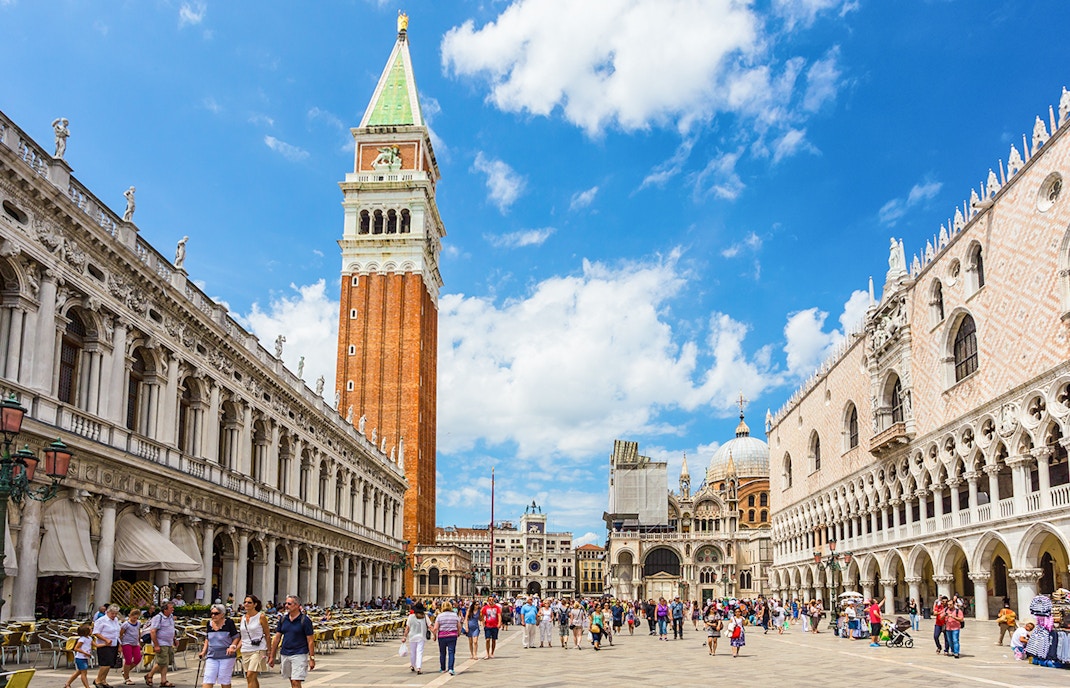
Good to know
- Included sites: Your main museums ticket covers more than Correr, so don’t leave St. Mark’s Square before deciding whether to continue to the Archaeological Museum or Marciana Library rooms.
- Special itinerary: The Royal Apartments and Sissi rooms are not part of the standard self-guided route, so book them separately if that’s one of your main reasons for visiting.
Practical tips
- Booking and arrival: Book at least 3–7 days ahead from April to October if you want a specific time slot around St. Mark’s Square, and give yourself 15–20 minutes before entry so a slow vaporetto connection doesn’t derail the start of your visit.
- Pacing: Don’t use all your time in the first royal rooms — save at least 40 minutes for the civic-history galleries, because that’s the section most visitors underestimate and then rush.
- Crowd management: The best working slot here is opening time, not because ‘early is always better,’ but because Correr gets its calmest rooms before the Basilica and Doge’s Palace spillover reaches the shared museum entry.
- What to bring or leave behind: Bring headphones and a charged phone for the MUVE app, and leave bulky bags behind if you can — the route is easier when you’re not weaving through decorated interiors with extra gear.
- Food and drink: Have coffee or a light breakfast before you enter, then use the museum café after the main route if you need a reset; breaking in the middle costs more time than most people expect in Piazza San Marco.
- Heat and comfort: In summer, the museum can feel warmer than visitors expect, so a later-afternoon slot is often more comfortable than noon even if the square looks equally busy outside.
- Combo planning: If you’re pairing Correr with Doge’s Palace, do Doge’s first for the heavier crowd pressure and use Correr as the calmer second half of your St. Mark’s Square visit.
What else is worth visiting nearby?
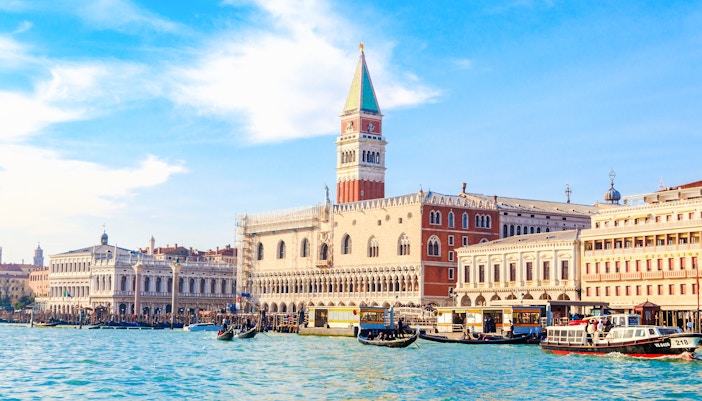
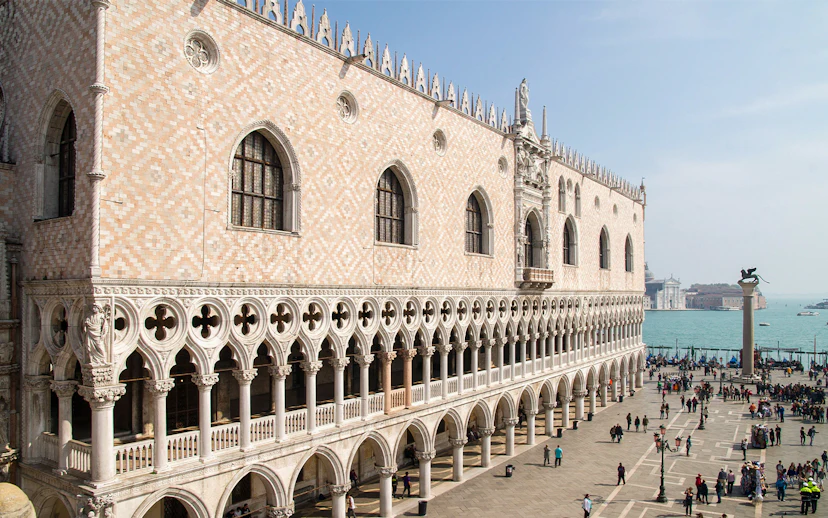
Commonly paired: Doge’s Palace
Distance: 100 m — 2 min walk
Why people combine them: They sit on the same square and tell the political story of Venice from two complementary angles — Doge’s Palace shows power in action, while Correr explains the civic culture behind it.
✨ Correr Museum and Doge’s Palace are most commonly visited together — and simplest to do on one museums ticket. The pass avoids buying separate entries and keeps your St. Mark’s Square day moving in one direction. → See combo options

Commonly paired: National Archaeological Museum and Marciana Library rooms
Distance: 1–2 min walk within the St. Mark’s Square museums circuit
Why people combine them: They’re already included on the same ticket, so this is the easiest way to get more value from your admission without adding a second booking.
Also nearby
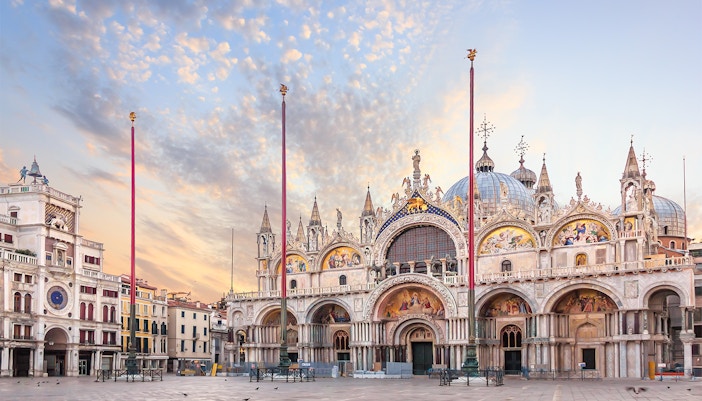
St. Mark’s Basilica
Distance: 150 m — 2 min walk
Worth knowing: It’s the obvious pre- or post-museum stop, but the crowd curve is much steeper than at Correr, so don’t assume you can fit it in casually at midday.
St. Mark’s Campanile
Distance: 200 m — 3 min walk
Worth knowing: It’s the fastest big-view payoff in the square, which makes it a good contrast after an indoor museum visit.
Eat, shop and stay near Correr Museum
- On-site: The museum café is the easiest option for coffee, soft drinks, and light snacks, and it’s worth using for convenience rather than as a destination meal.
- Caffè Lavena (2-min walk, Piazza San Marco): Classic Venetian café stop if you want a square-side coffee break immediately before or after your visit.
- Ristorante La Caravella (8-min walk, Calle Larga XXII Marzo): Better for a proper sit-down lunch or dinner once you’re done with museum crowds and want something more substantial.
- Bar at San Zaccaria waterfront (6–8 min walk, Riva degli Schiavoni area): A practical fallback if you’re heading straight to the vaporetto and want something quicker and less square-focused.
- 💡 Pro tip: Eat before 12 noon or after 2:30pm if you’re staying around San Marco — the area’s lunch crush is real, and the museum café works best as a short reset, not your main meal.
- Museo Correr shop: Best for exhibition books, art-led souvenirs, and Venice-themed gifts that feel more tied to the museum than the square’s generic stalls.
- Procuratie arcades boutiques: Best if you want polished Piazza San Marco shopping immediately outside the museum without adding another neighborhood detour.
Staying near Correr Museum is convenient, but it’s not the smartest Venice base for everyone. You’ll be able to walk to the museum in minutes and reach the square before day-trippers peak, but the trade-off is higher room prices, heavier foot traffic, and a less local feel after dark. It makes the most sense for a short first trip where being in the middle of Venice matters more than neighborhood character.
- Price point: This area skews expensive, especially for hotels with direct San Marco access, though you’ll occasionally find better value a short walk away toward Castello.
- Best for: Short stays, first-time visitors, and travelers who want the easiest possible walk to the city’s headline sights.
- Consider instead: San Polo or Dorsoduro if you want a better balance of restaurants, atmosphere, and price, or Castello if you want to stay within walking distance without sleeping in Venice’s busiest square.
Frequently asked questions about visiting Correr Museum
Most visits take 1.5–2 hours. If you move quickly through the royal rooms and focus on the main highlights, you can do it in about 60 minutes, but the full route with the civic-history galleries and picture gallery is more rewarding at a slower pace. Add another 30–45 minutes if you book the Royal Apartments itinerary.
Yes, it’s worth booking ahead if you’re visiting between April and October or on a holiday weekend. Correr Museum is part of the wider St. Mark’s Square museum flow, so the queue pressure comes as much from the square as from the museum itself. Booking ahead helps you avoid wasting time at the ticket office.
Yes, but mostly because of St. Mark’s Square, not because Correr alone always has extreme waits. On busy spring and summer days, priority entry saves time at the shared museum access point and helps you start before the late-morning congestion builds. In winter, the value is lower unless you’re on a tight schedule.
Arrive 15–20 minutes early. That gives you enough buffer for vaporetto delays, slow movement through the square, and entry checks without turning up so early that you just stand outside. If you’re visiting in summer, that extra margin matters more than people expect.
Yes, you can bring a small day bag, but lighter is better. Larger or awkward bags are worth storing so you’re not carrying them through decorated rooms, tighter gallery passages, and the picture gallery. If you’re planning a full St. Mark’s Square day, pack for a museum stop rather than a whole-day haul.
Usually, yes, for personal use in the permanent museum spaces. Keep it discreet, don’t use flash, and assume temporary exhibitions can set stricter rules than the permanent route. Tripods and selfie sticks are the items most likely to cause issues in the galleries.
Yes, and it works especially well when paired with Doge’s Palace. Group visits make sense here because the historical context is stronger when someone explains how the palace rooms, civic artifacts, and paintings connect. If you’re arranging a larger group, reserve in advance rather than relying on same-day entry.
Yes, especially for children who respond well to palace rooms, costumes, ships, and ceremonial objects. It’s less hands-on than an interactive museum, so most families do best with a 60–90 minute visit focused on the royal rooms and civic-history galleries rather than every painting room.
Yes, the museum can be visited accessibly, but it’s smart to ask staff for the easiest route as soon as you arrive. Because the building is historic, the accessible path matters more than at a modern museum. A slower-paced visit is easier here, and the route has natural pause points.
Yes, there’s an on-site café for a quick break, and you’ll have plenty of options around St. Mark’s Square and San Zaccaria. The practical choice is to eat either before you enter or after you finish the main route, because leaving mid-visit is more disruptive than it sounds in a crowded square.
No, the Royal Apartments special itinerary usually needs a separate reservation and extra fee. If seeing Empress Elisabeth’s rooms is one of your priorities, don’t assume it’s part of the standard self-guided circuit. Book it in advance so you don’t miss the one section you came for.
Buy the St. Mark’s Square Museums ticket or a guided combination tour. That’s the simplest way to cover both sites without juggling separate admissions, and it’s usually the best value if you also want the Archaeological Museum and Marciana Library rooms on the same day.