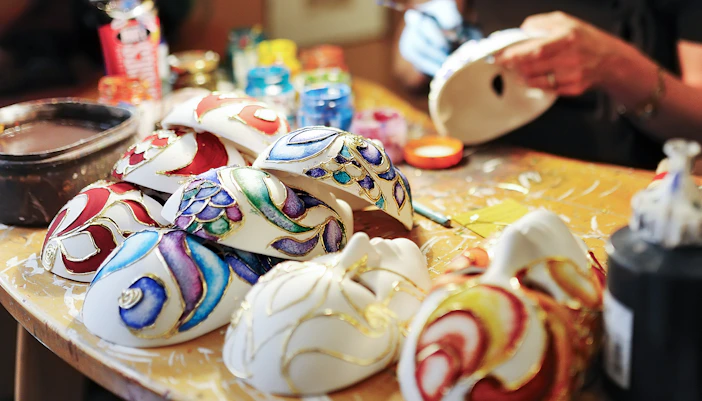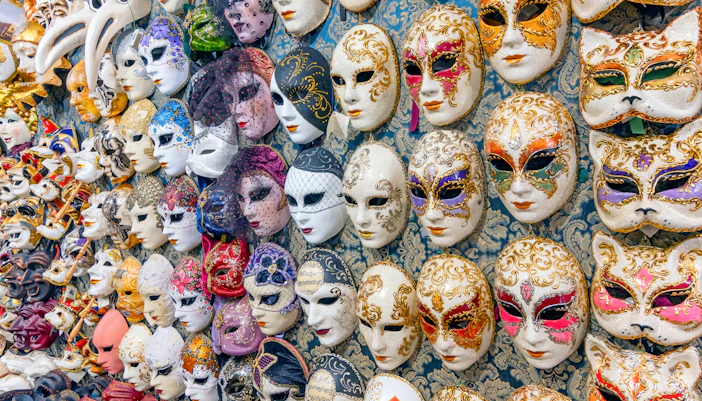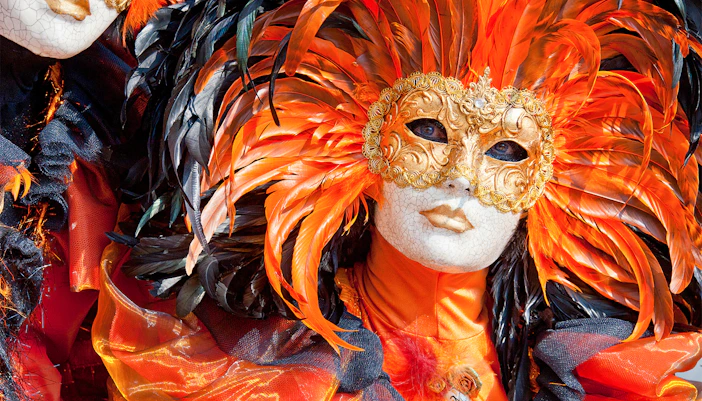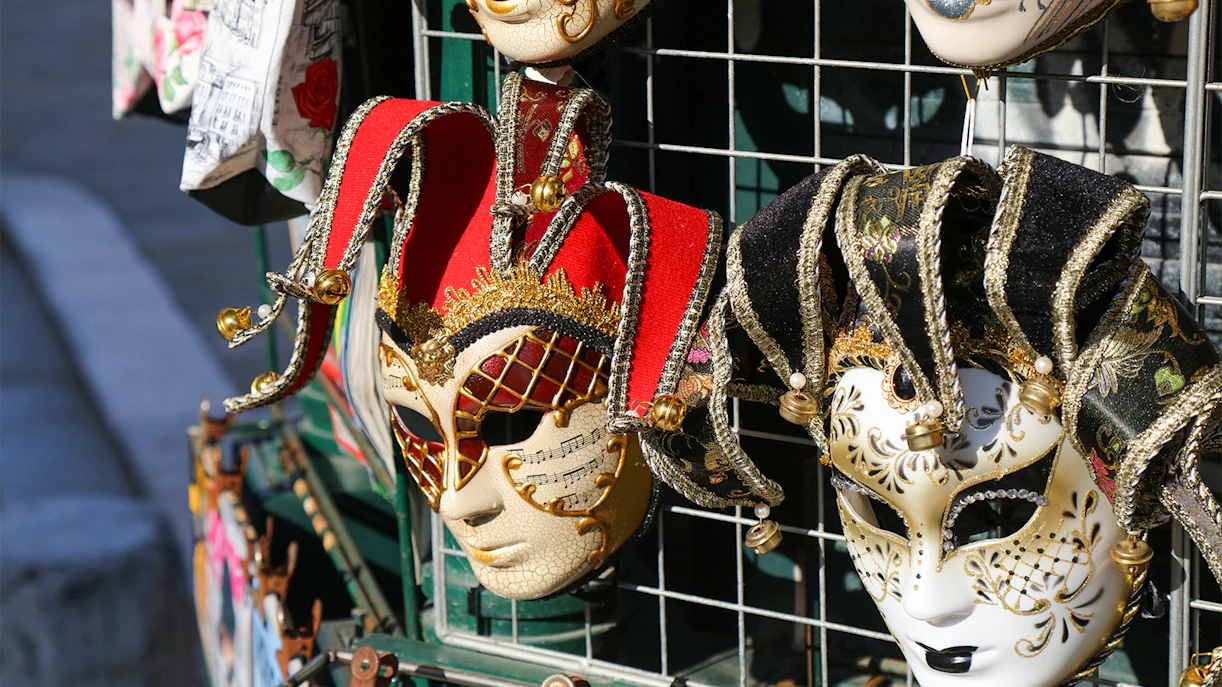
Believe it or not, masks were so popular (and misused) that authorities had to crack down on them in the 13th century! People took full advantage of their anonymity—think theft, secret affairs, and high-stakes gambling. While bans were put in place, they never fully stopped Venetians from indulging in masked revelry.
What’s a carnival without a little mystery?**
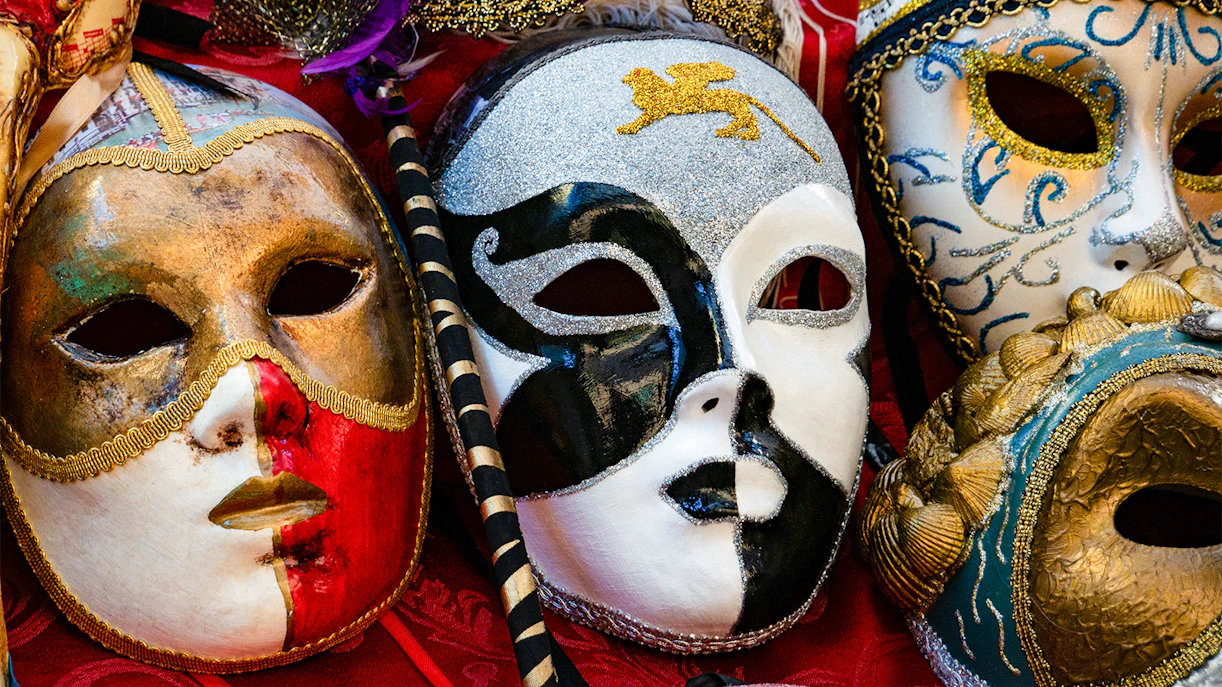
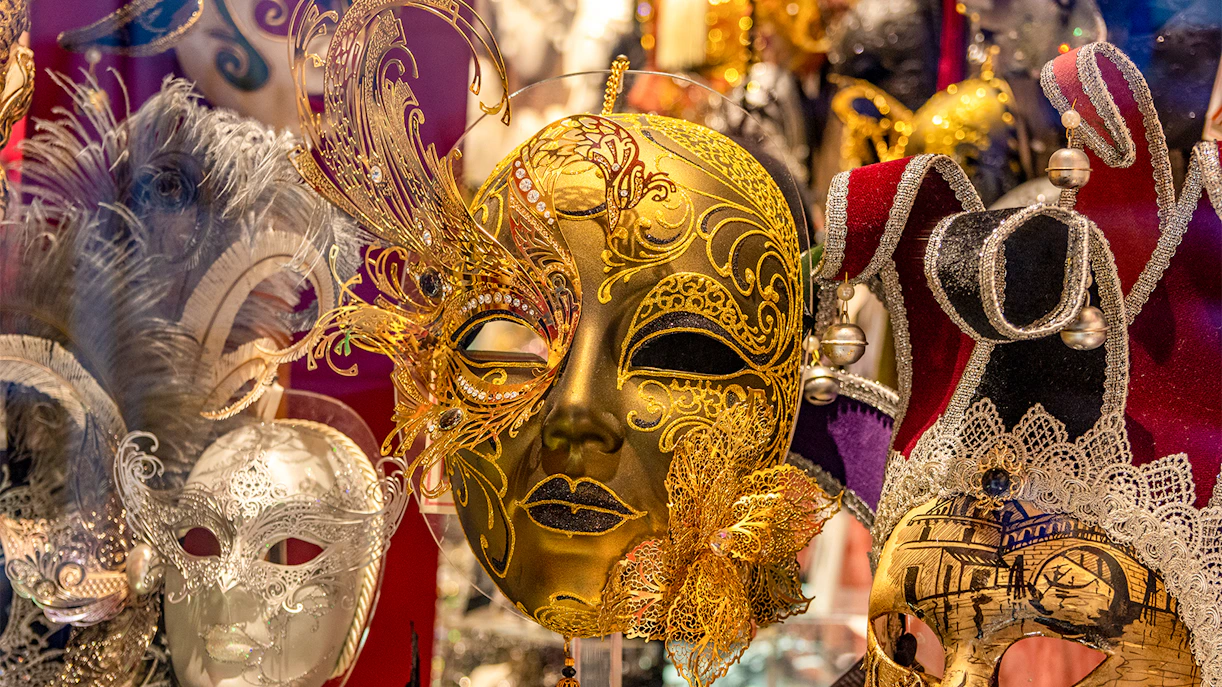
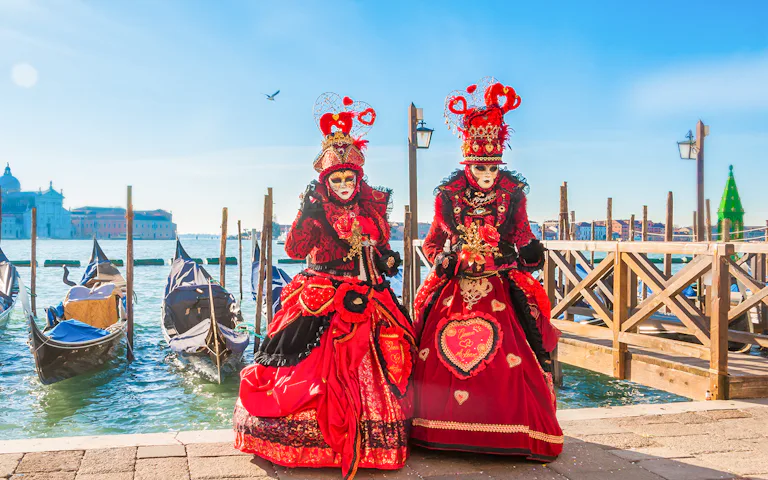
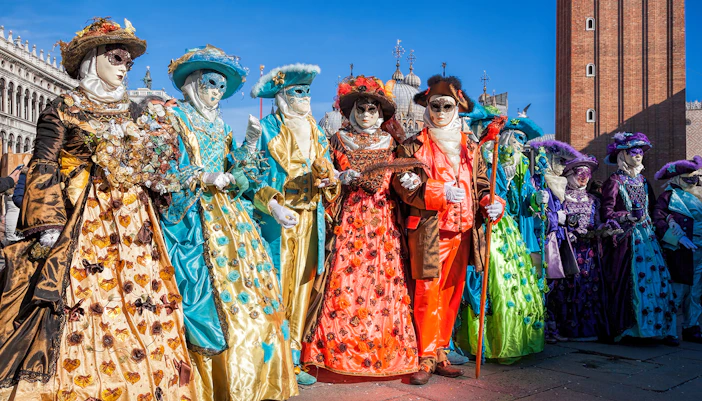
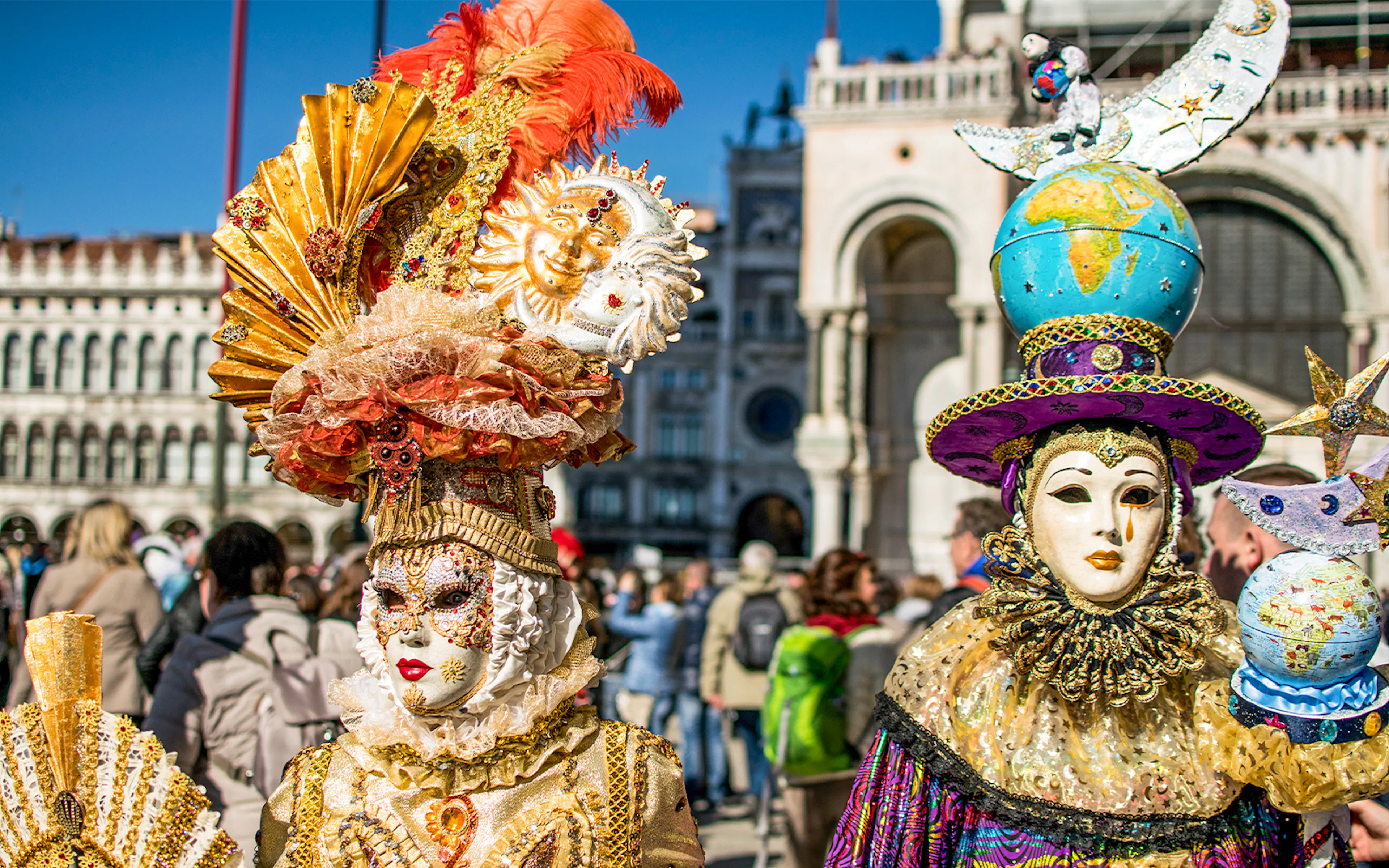
The Venice Carnival Mask isn’t just an accessory—it’s a gateway to a world of intrigue, elegance, and centuries-old tradition. Dating back to the 12th century, these masks allowed Venetians to blur social lines, indulge in secrecy, and celebrate without restraint. Though once banned, they made a grand comeback and remain the heart of Venice Carnival today. Whether worn at proper masquerade balls or paraded through the city’s streets, these masks keep the magic alive!
More than just a costume: The meaning behind Venice Carnival masks
1/3
A city of masks, a city of equals
During the Carnival, masks erase identity—no titles, no ranks, just pure anonymity. In historical Venice, this meant that a merchant could chat freely with a noble, and a commoner could dance with an aristocrat. For a brief time, society’s rigid divisions melted away, replaced by a world where anyone could be anyone.
Freedom, mischief, and a hint of mystery
Beyond the grand celebrations, masks also had a more mischievous side. They allowed people to indulge in forbidden pleasures—gambling, secret romances, and political discussions without fear of consequence. Some Venetians took it further, using masks year-round to navigate the city’s power plays and intrigue.
Today’s Carnival: A nod to tradition
While masks no longer serve as tools for secrecy, they remain a vital part of the Venice Carnival experience. Whether you choose an ornate Bauta or a delicate Colombina, slipping on a mask lets you step into the magic of a centuries-old tradition—where for just a moment, you can be whoever you want to be.
Types of traditional Venice Carnival masks
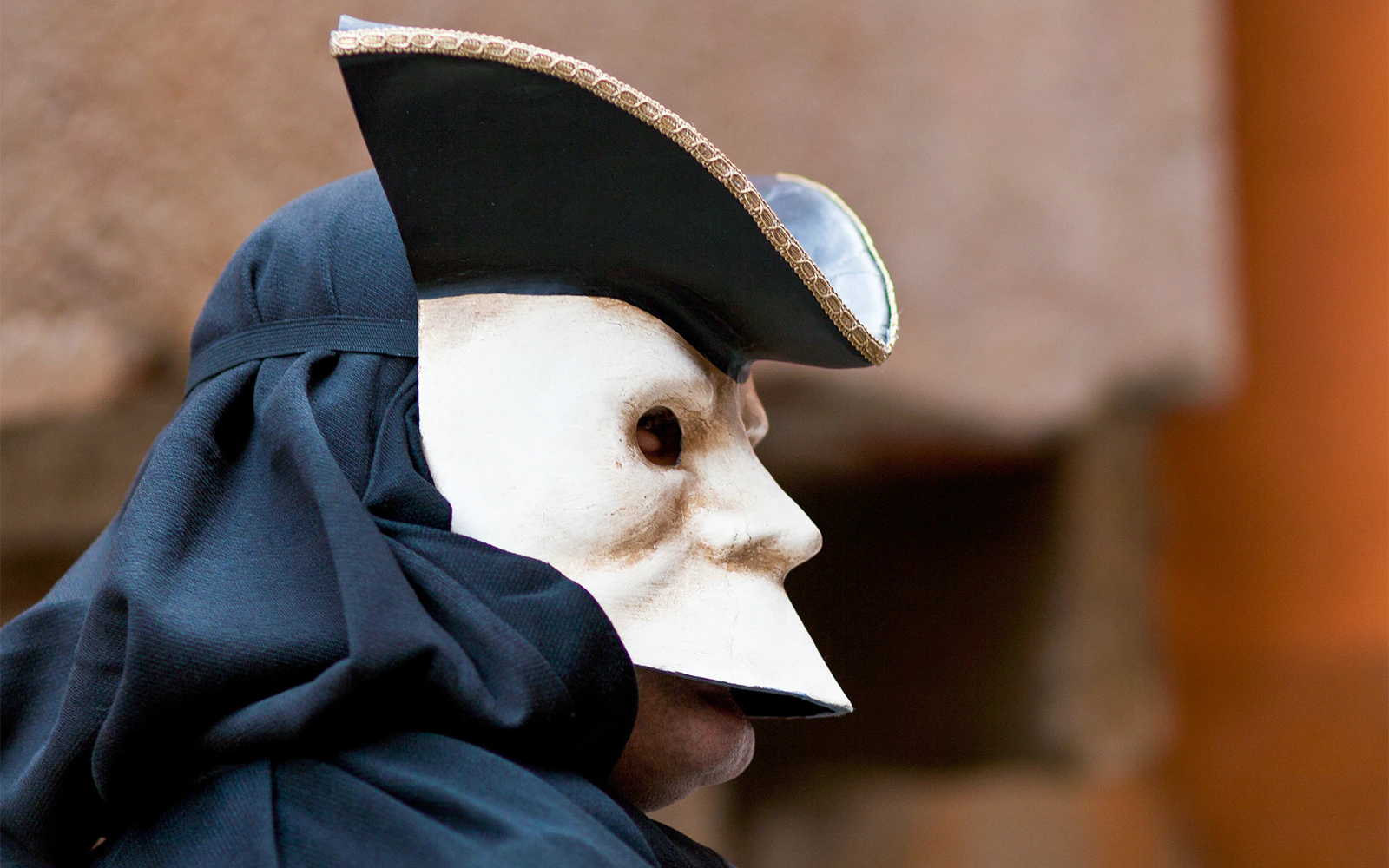
Bauta
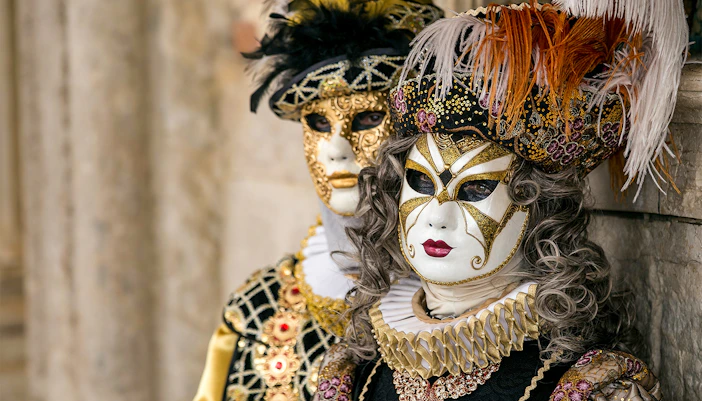
The Bauta is an all-white mask with a pointed chin, allowing wearers to eat and drink without removing it. It is often paired with a tricorn hat and a cloak.
Significance: Popular among nobles and politicians, the Bauta symbolizes anonymity and freedom during the Carnival.
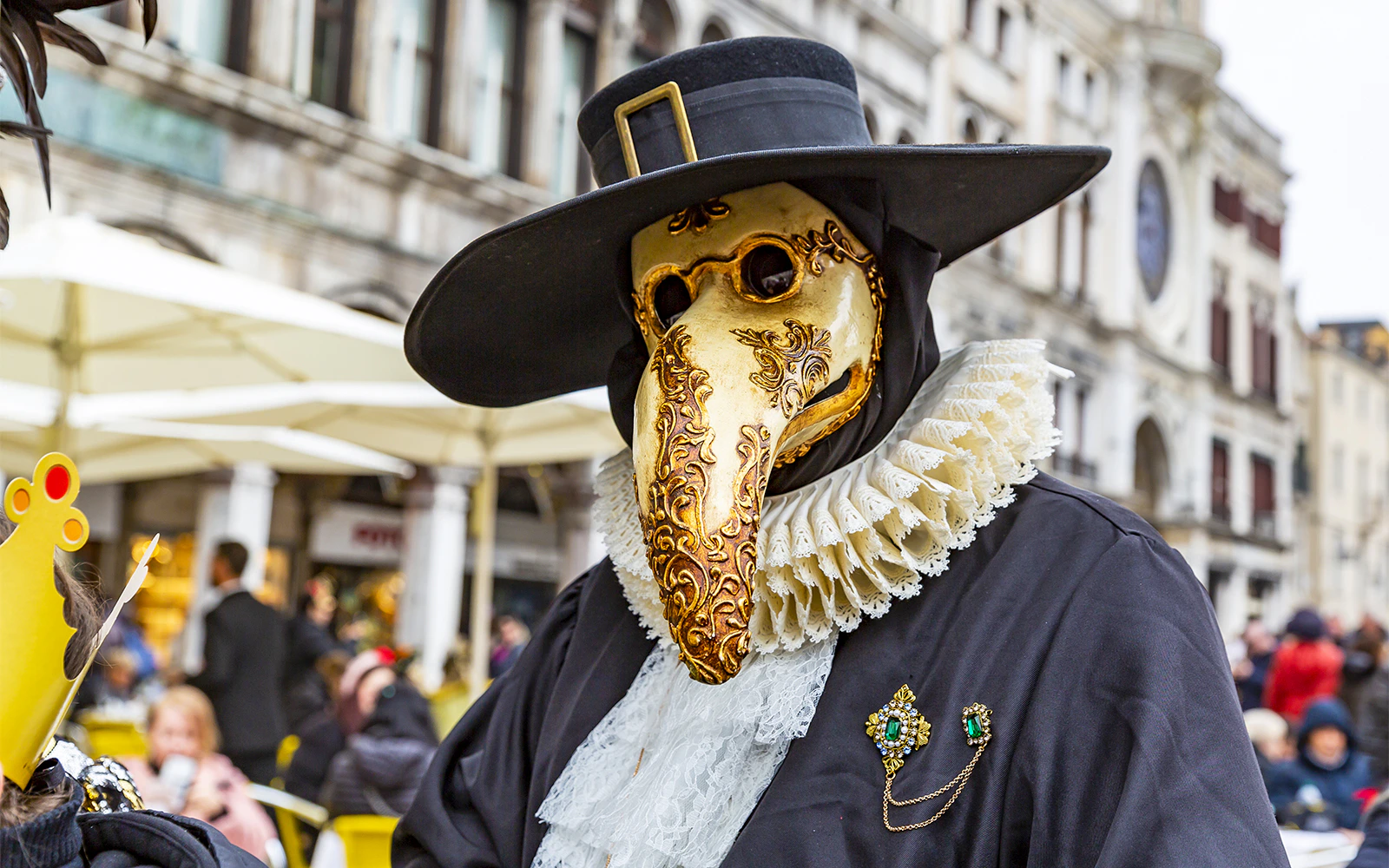

The evolution of Venice Carnival masks—A timeline
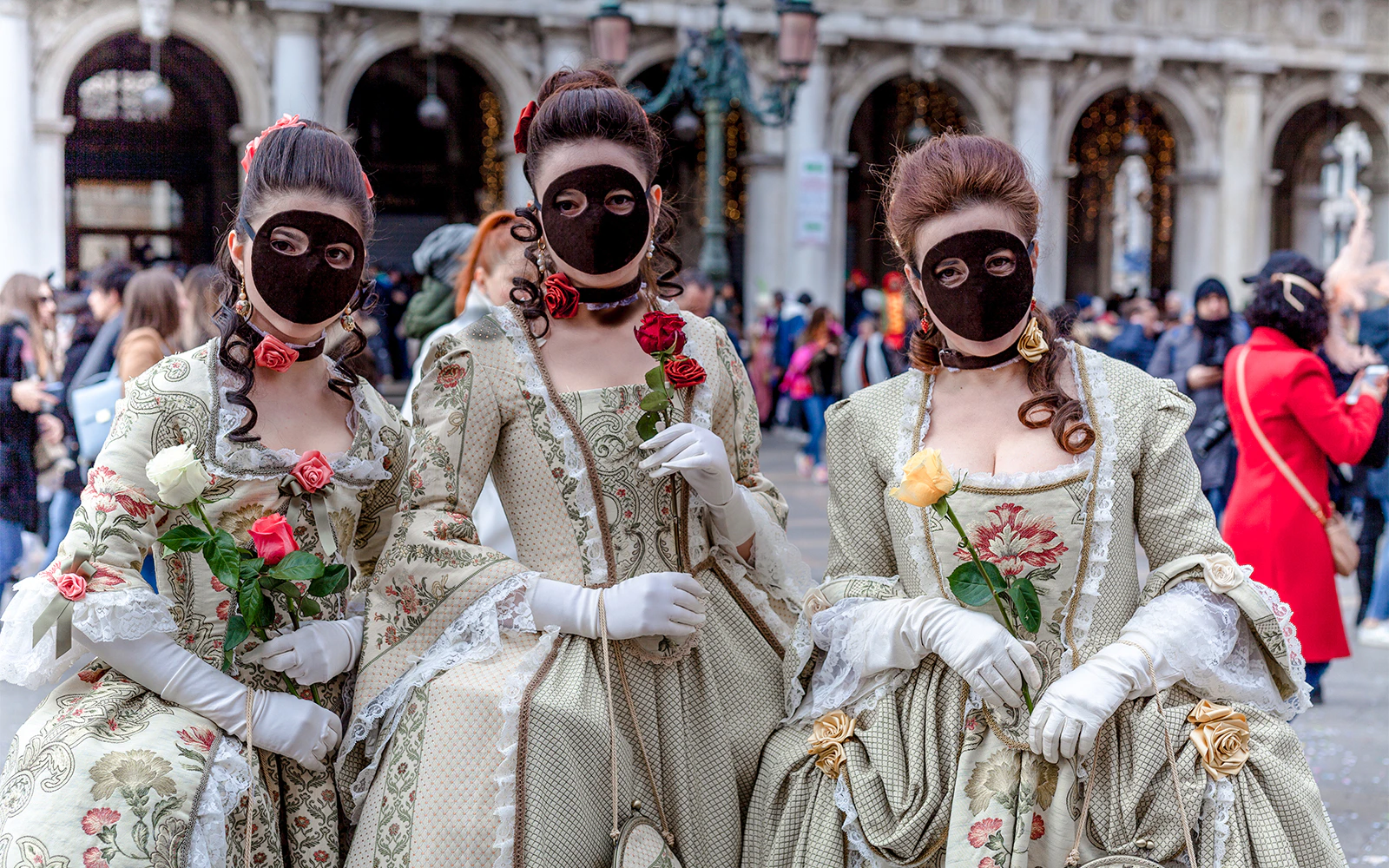
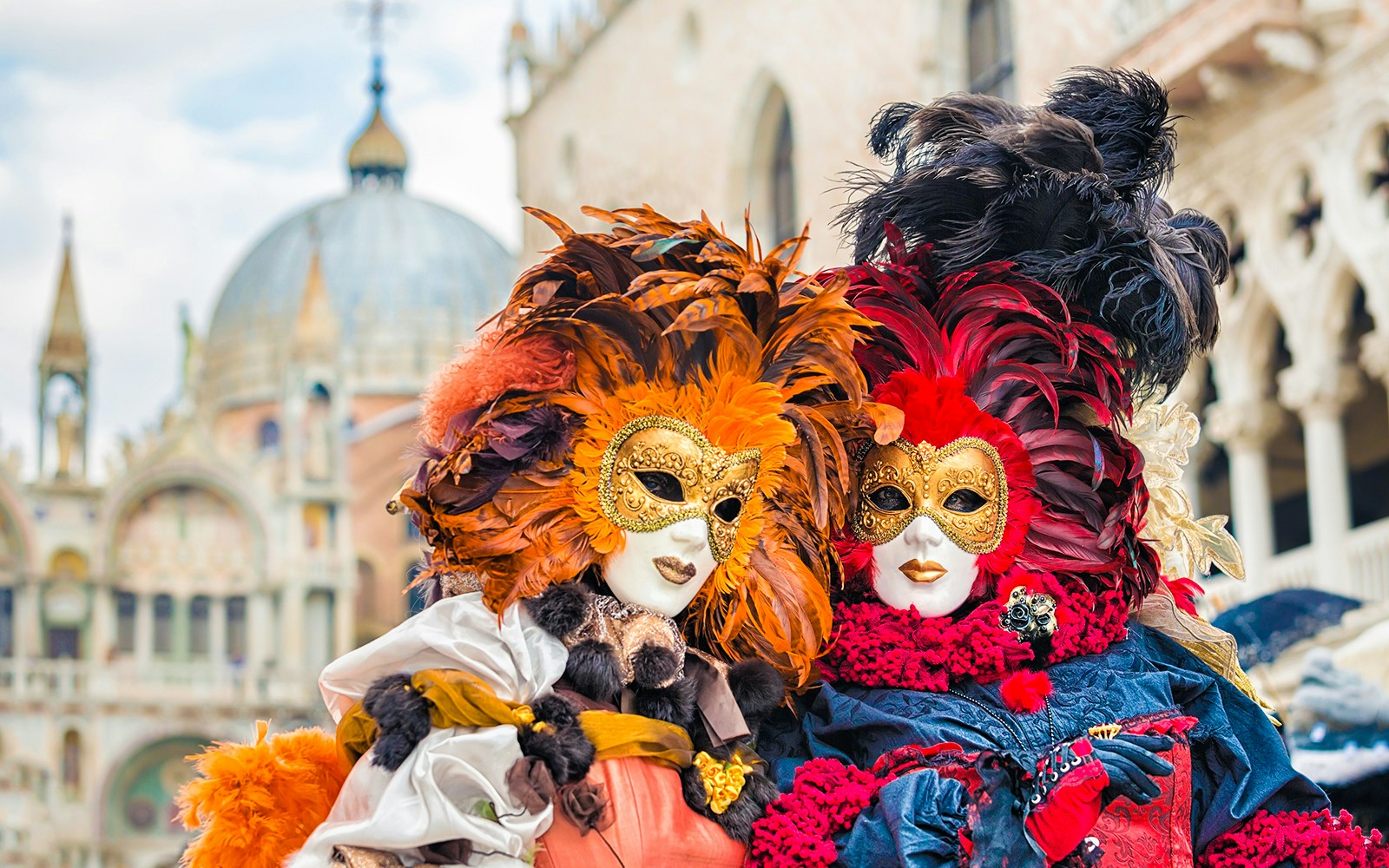
Venice Carnival masks have been around for centuries, adding an air of mystery and rebellion to the city’s grandest celebration. But how did they go from simple disguises to iconic cultural symbols? Let’s take a fun stroll through history!
13th century: The origins
📜 1268 – The first recorded law restricting mask use appears—meaning masks were already a thing! Venetians loved them for blurring social lines, letting nobles and commoners celebrate side by side.
14th century: Carnival’s favorite accessory
👺 Masks become a must-have during Carnival, turning the city into an anonymous playground. They gave Venetians the freedom to break social norms, indulge in forbidden pleasures, and embrace secrecy.
15th century: Worn beyond carnival
✨ The Renaissance era sees masks becoming an everyday affair—not just for Carnival but for gambling, secret rendezvous, and masquerade balls. They symbolize freedom, fun, and a little mischief.
16th century: The masquerade boom
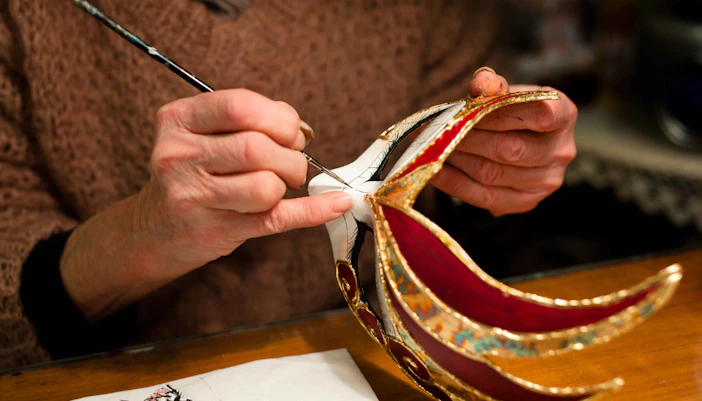
🎭 1580 – The Venetian Senate officially legalizes masks for Carnival. With demand soaring, mask-makers (mascherari) establish their own guild, crafting intricate designs that turn masks into high art.
17th Century: Theatrical & cultural icons
🎭 Masks take center stage in Commedia dell'Arte, a form of theater that popularizes character masks like the mischievous Arlecchino and the sly Pantalone.
18th Century: The golden age of masks
🎉 The 1700s bring peak mask-wearing freedom—Venetians can wear them for up to six months a year! Gambling houses, operas, and high-society parties become hotspots for masked intrigue.
19th Century: A sudden decline
⚠️ With the fall of the Venetian Republic, Austrian rulers crack down on Carnival traditions. Mask-wearing is largely banned, and the once-thriving mascherari trade fades.
20th Century: The grand revival
🌟 1979 – Venice decides to bring Carnival back in full glory! Artisans dust off old techniques, and mask-making returns as a celebrated craft.
21st Century: A global phenomenon
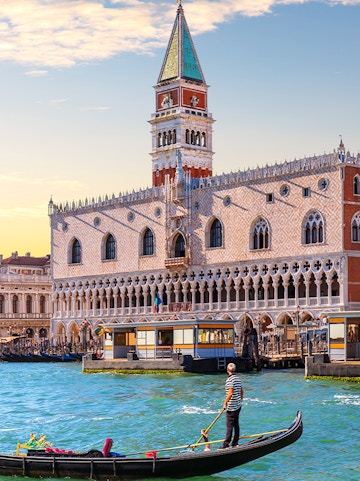
🌍 Today, Venice Carnival attracts visitors from all over the world. Be a part of a centuries-old tradition that still dazzles with mystery and charm.
And who knows? Put on a mask, and you just might feel a little Venetian magic yourself!
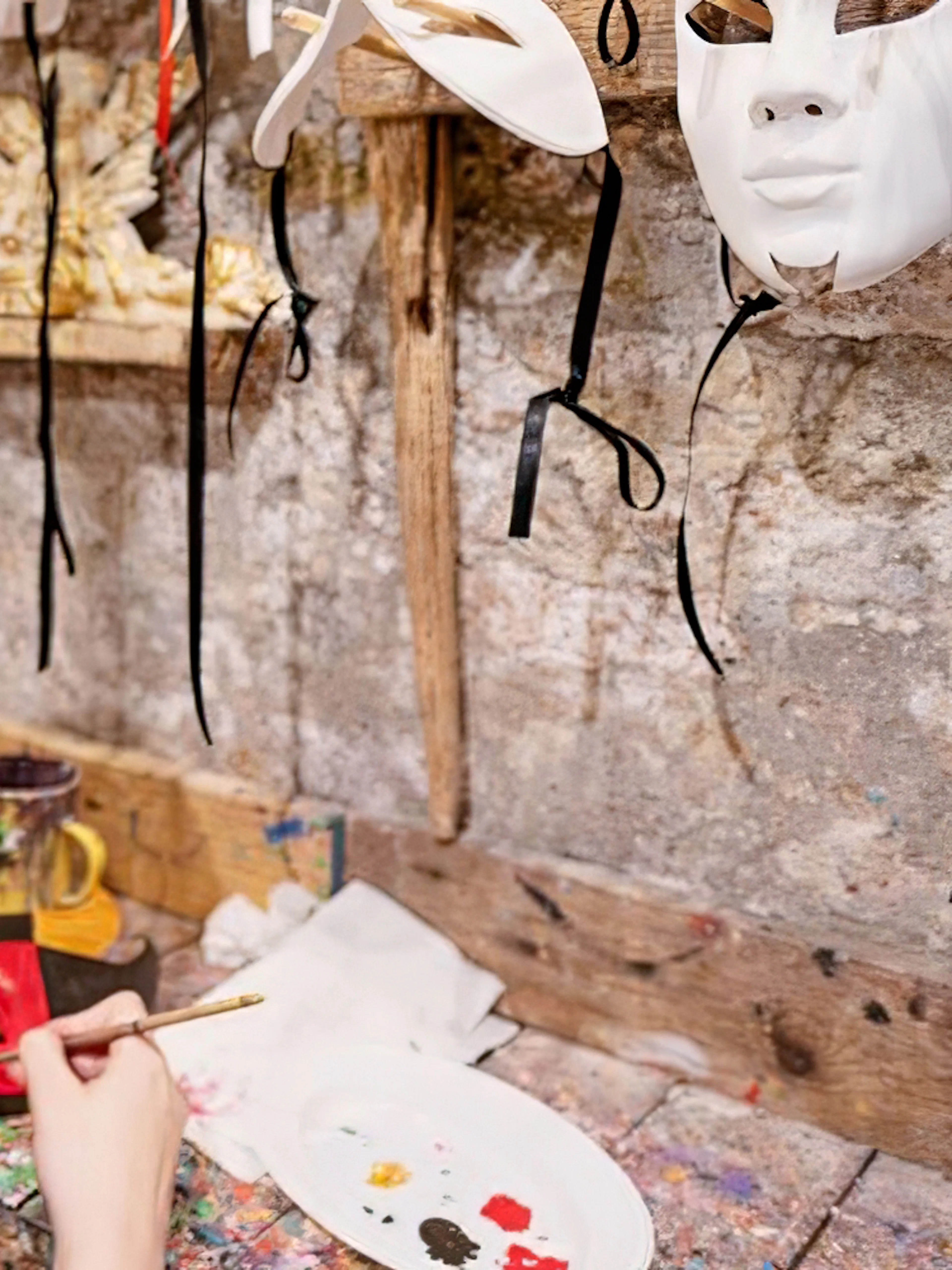
The art of Venetian mask making
Fun facts & myths about Venice Carnival masks
Where to buy authentic Venice Carnival masks?
Frequently asked questions about Venice Carnival masks
You don’t have to, but why miss out on the fun? Wearing a mask is part of the magic, letting you fully immerse yourself in the Carnival’s mystique. Plus, many events, like masquerade balls, require one!
Yes! Join a mask-making workshop where you can decorate your own mask under the guidance of expert artisans. It’s a hands-on way to take home a unique souvenir.
Not necessarily! While some attendees don elaborate costumes, you can still fully participate by wearing a beautiful mask with semi-formal attire. For grand masquerade balls, a full costume is essential, but for roaming the streets and attending smaller events, a mask alone will suffice.
Opt for a half-face mask if the event has a black-tie dress code, or any mask (full-face, half-face, or Venetian character) if it's a themed masquerade party. Consider masks from the Filigree metal range if you wear heavy foundation, as they are breathable and comfortable.
Comfort is key! Try on different masks to ensure they fit well and allow you to move, eat, drink, and dance easily. Also, inquire with the event host about any specific mask requirements. Avoid plastic masks and instead go for papier-mâché masks that adjust to your face over time.
Masks cannot be rented for hygienic reasons. It's better to purchase a mask so that you can ensure its cleanliness and comfort.
If you are wearing a mask with a Venetian costume, it is important to prep your make up for wearing a mask. It’s essential to focus on the visible parts of your face. Highlight your lips with a bold color that complements your mask and consider wearing a mask that doesn't detract from beautiful eyes.
Mostly, yes! But some places, like banks or government buildings, may ask you to remove it. Otherwise, you’re free to roam the city in full Carnival style!