Tickets Venice

Everything to Know About Doge’s Palace History - Timeline, Construction & more

Step into the timeless magic of Doge's Palace, Venice's iconic jewel! With its origins dating back to the 14th century, this majestic masterpiece served as the residence of Venetian Doges and a seat of power. Rich in history and architectural splendor, the palace lures tourists from around the world. Delve deeper into its fascinating past on this page, and let it ignite your curiosity for an unforgettable visit!

Doge's Palace History - The Timeline

doges palace history
  • 9th Century: First wooden palace erected on the site, serving as the residence of the Doge.
  • 14th Century: Construction of the current Doge's Palace begins in Venetian Gothic style.
  • 1577: A massive fire ravages the palace, leading to its reconstruction and renovation.
  • 1797: Venice falls to Napoleon, marking the end of the Venetian Republic, and the palace becomes a museum.
  • 1923: Doge's Palace is declared a national monument, preserving its historical significance.
  • 1996: The entire St. Mark's Square, including the palace, listed as a UNESCO World Heritage Site.
  • Present: Doge's Palace stands as a timeless symbol of Venetian power, artistry, and culture.
  • Ongoing: Visitors flock to witness its grandeur and explore the secrets of Venice's captivating past.

Doge's Palace History Explained

The Birth of Doge's Royal Residence

9th Century

In the early 9th century, the first wooden palace rose on this very site, serving as the Doge's residence. Over time, it evolved into the majestic Doge's Palace we know today. This transformation mirrored Venice's rise as a maritime power and a republic.

Flourishing Political Hub & Gothic Splendor

14th Century**

During the 14th century, the construction of the current Doge's Palace commenced, embracing the exquisite Venetian Gothic architectural style. Beyond its architectural magnificence, the palace became the epicenter of Venetian politics, housing the Doge and governing bodies, emphasizing its crucial role in the republic's administration.

A Fiery Ordeal

1577

In 1577, disaster struck as a devastating fire swept through the palace, threatening its existence. However, the subsequent reconstruction and renovation efforts magnified its opulence, preserving its historical charm while showcasing the city's resilience in the face of adversity.

Napoleon's Conquest & Palace's Transformation

1797

The year 1797 marked a significant turning point when Napoleon's forces conquered Venice, signaling the end of the Venetian Republic's era. Doge's Palace transitioned into a museum, celebrating the city's illustrious past and opening its doors to curious visitors worldwide.

A National Treasure

1923

In 1923, Doge's Palace received official recognition for its immense historical importance when it was declared a national monument. This designation solidified its status as a cultural treasure and ensured its preservation for generations to come.

A UNESCO Gem

1996

In 1996, Doge's Palace received international acclaim when UNESCO inscribed the entire St. Mark's Square, including the palace, as a World Heritage Site. This prestigious recognition further solidified the palace's global significance as a cultural and architectural marvel.

Construction of Doge's Palace

In the 14th century, Venice embarked on an ambitious project that would shape its destiny - the construction of Doge's Palace. Master architects Filippo Calendario and Giovanni Bon were entrusted with bringing the Venetian Gothic vision to life. They ingeniously blended Eastern influences from Byzantine architecture with Western elements, crafting an awe-inspiring amalgamation.

The construction posed formidable challenges, including the marshy ground on which the palace was to be built. To counter this, innovative wooden pilings were driven deep into the soft ground, forming a solid foundation that defied the Venetian lagoon's sway.

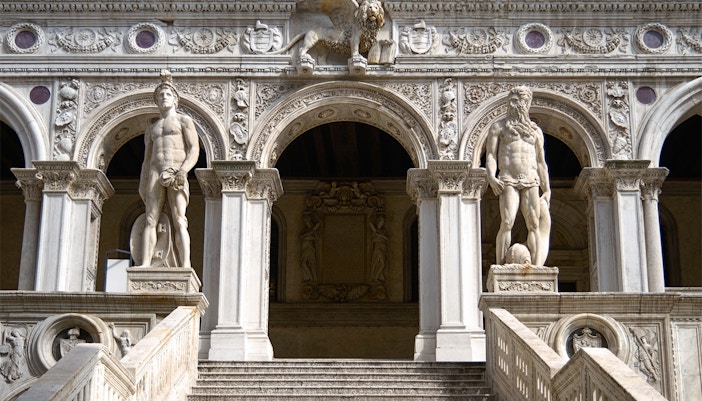
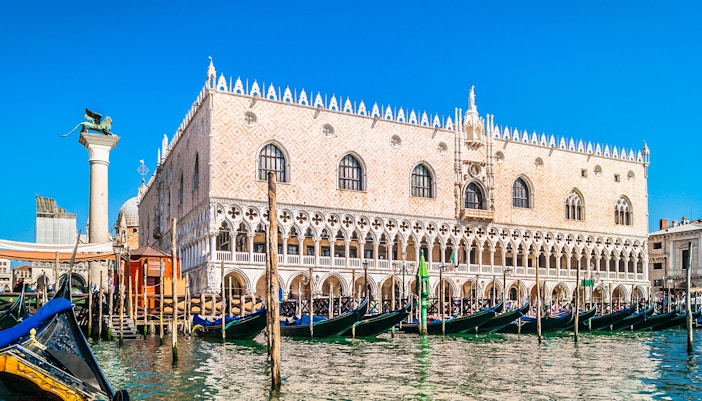
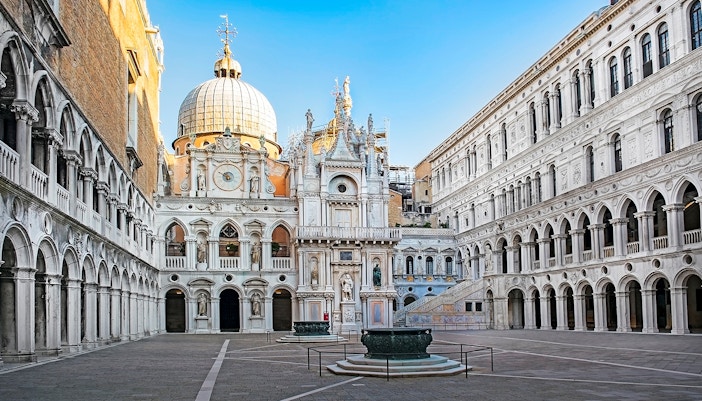
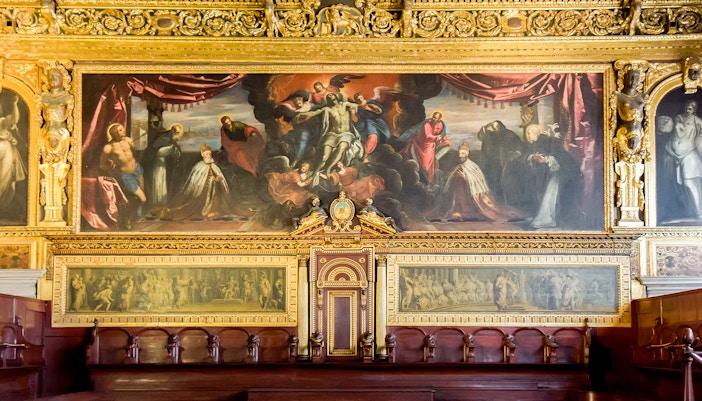
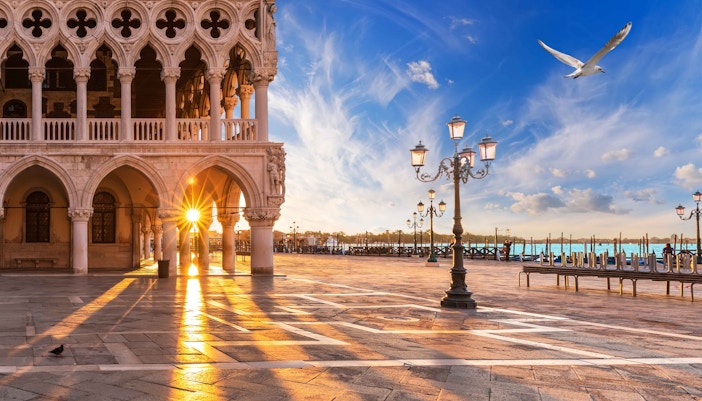
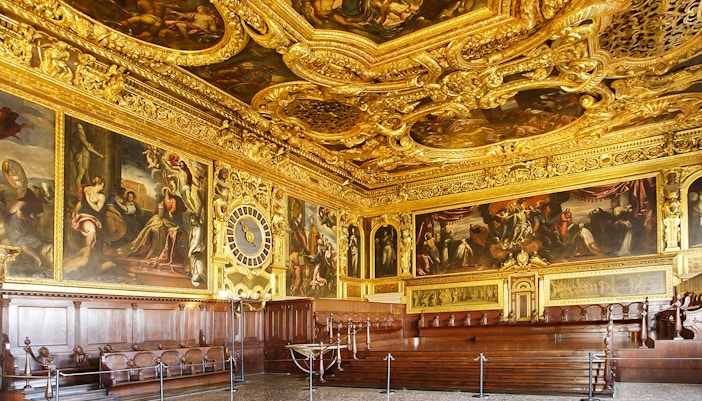
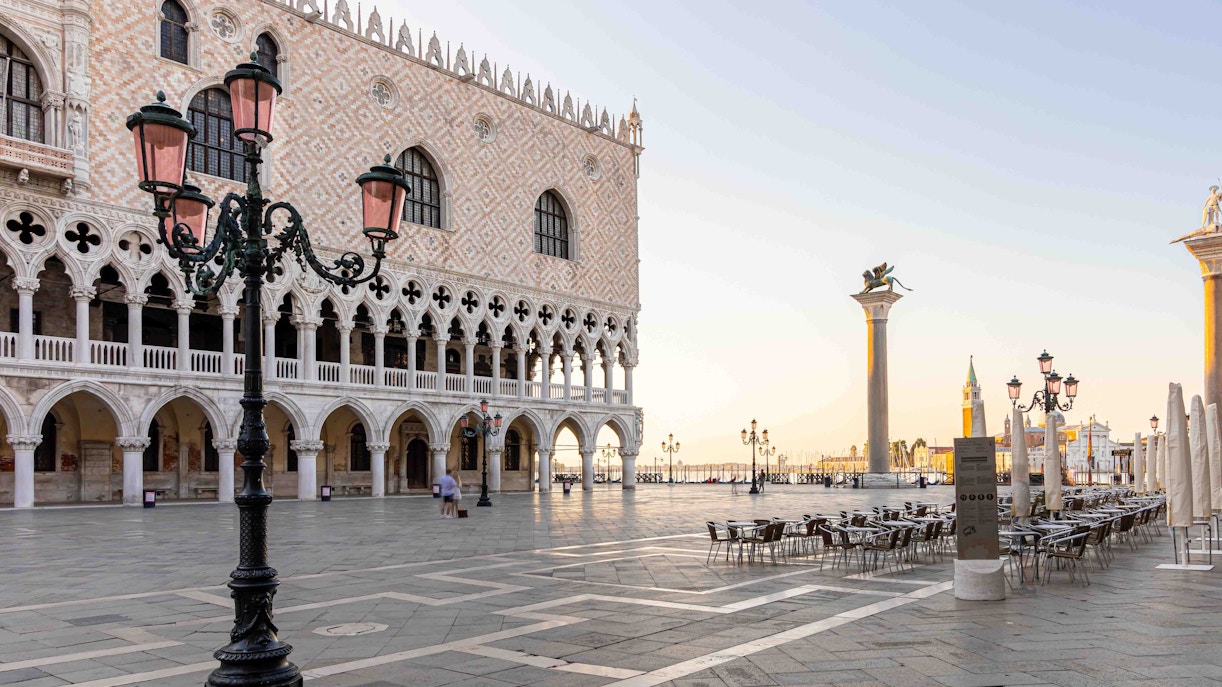
The Venetian Gothic style manifested in the palace's pointed arches, intricately carved stone traceries, and lacy window designs. Delicate pink Verona marble adorned the façade, while stunning mosaics and frescoes adorned the interiors. As the palace's grandeur took shape, it became a testament to Venetian power, artistry, and the fusion of cultures. Today, Doge's Palace stands as a living legacy, whispering tales of Venetian glory, inviting you to embark on a timeless journey through history.

More about Doge's Palace
Doge's Palace Today

Doge Palace Today

Doge's Palace weaves itself into the cultural fabric of Venice, leaving a lasting impression on every visitor. Its grandeur, intricate architecture, and historical importance make it a must-visit attraction. As a symbol of Venetian power and governance, it offers visitors a deep insight into the city's political and artistic heritage. Designated as a national monument and a UNESCO World Heritage Site, it represents not only Venice's past but also its enduring global significance. A visit to Doge's Palace is a journey through time, immersing travelers in the heart of a city that has long been a beacon of culture, art, and historical influence.

Plan your visit to Doge's Palace

Frequently Asked Questions About Doge's Palace History

Doge's Palace dates back to the 14th century, showcasing centuries of Venetian history.

More Reads

Opening Hours

Getting There

Skip the Lines