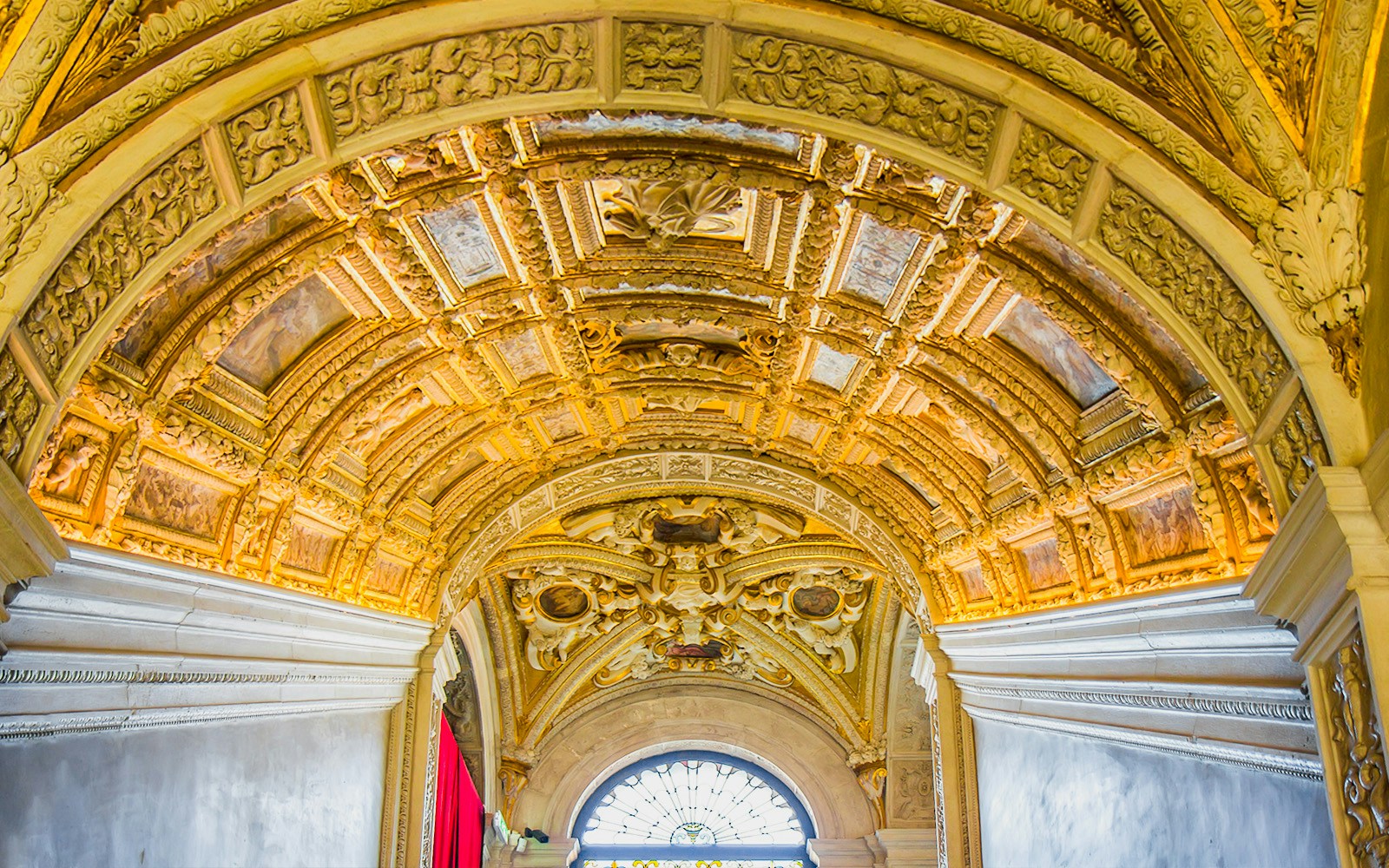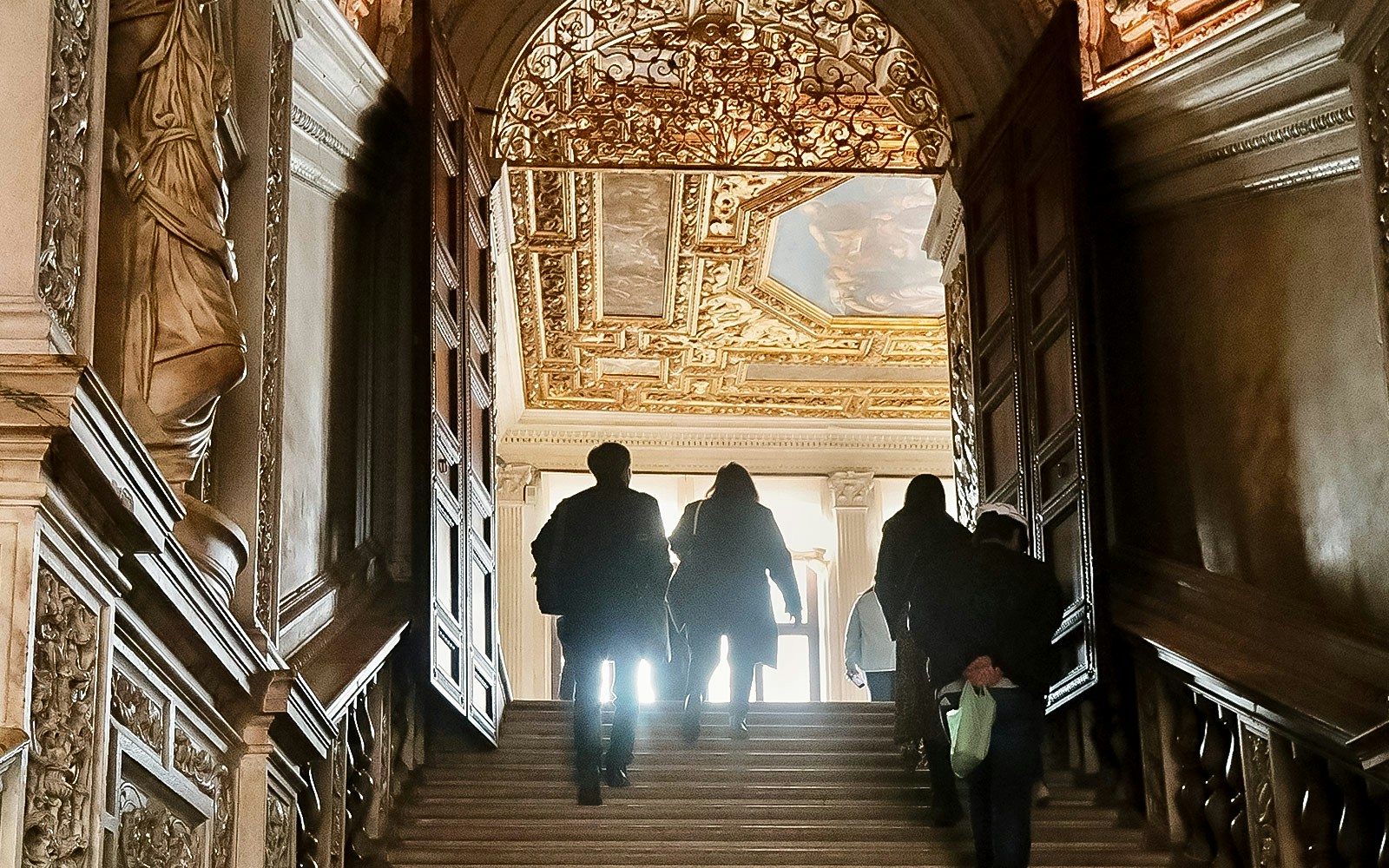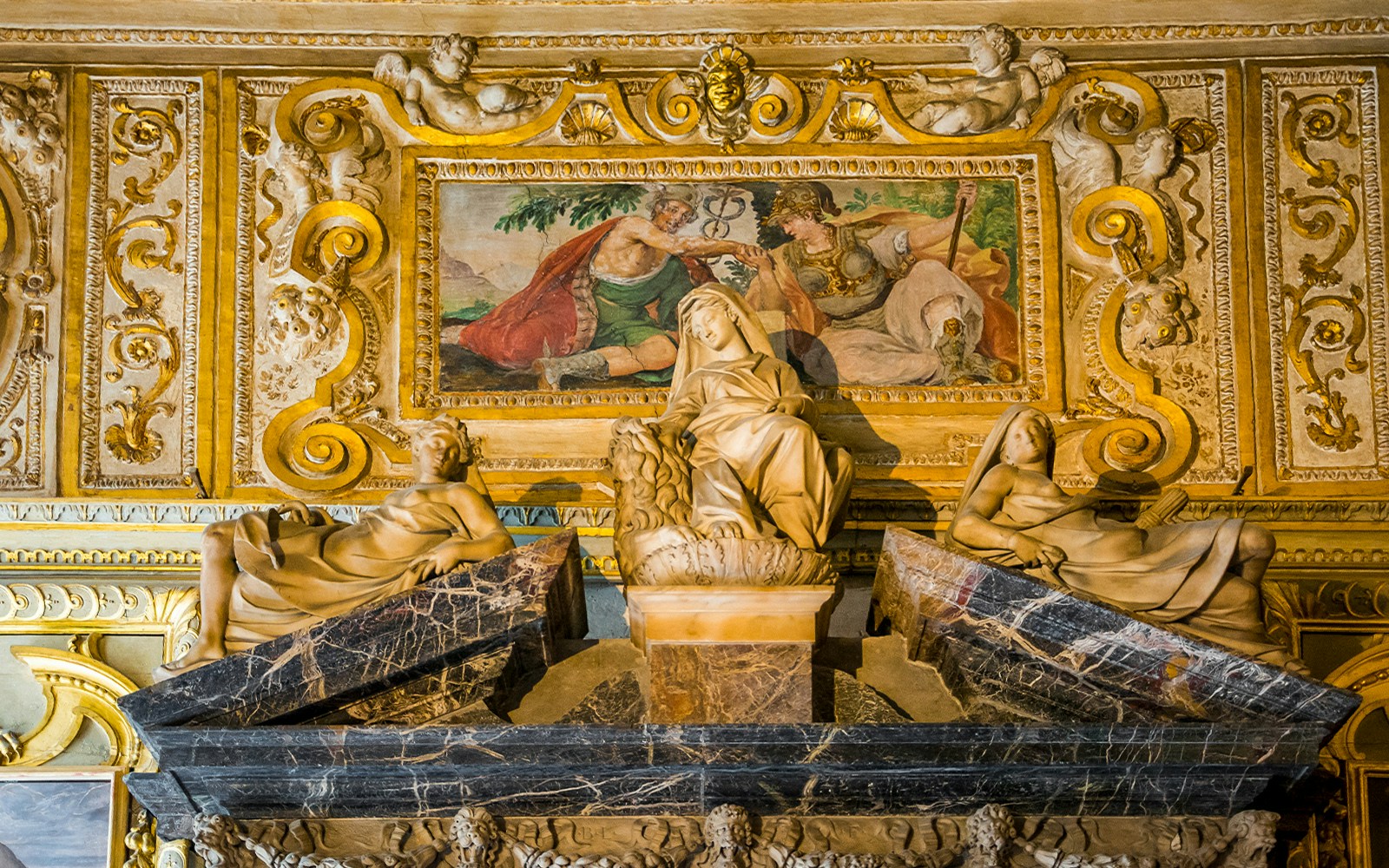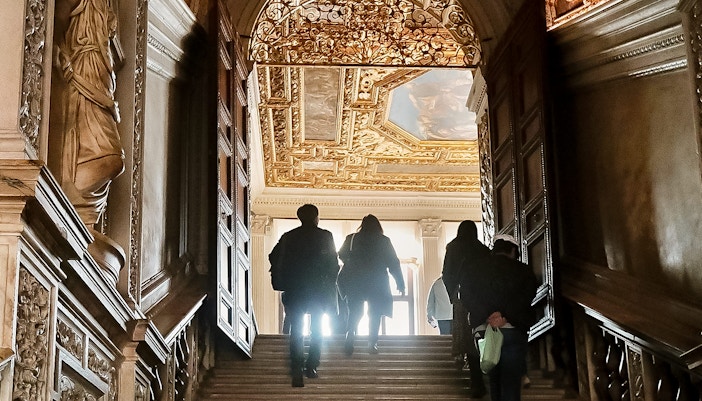


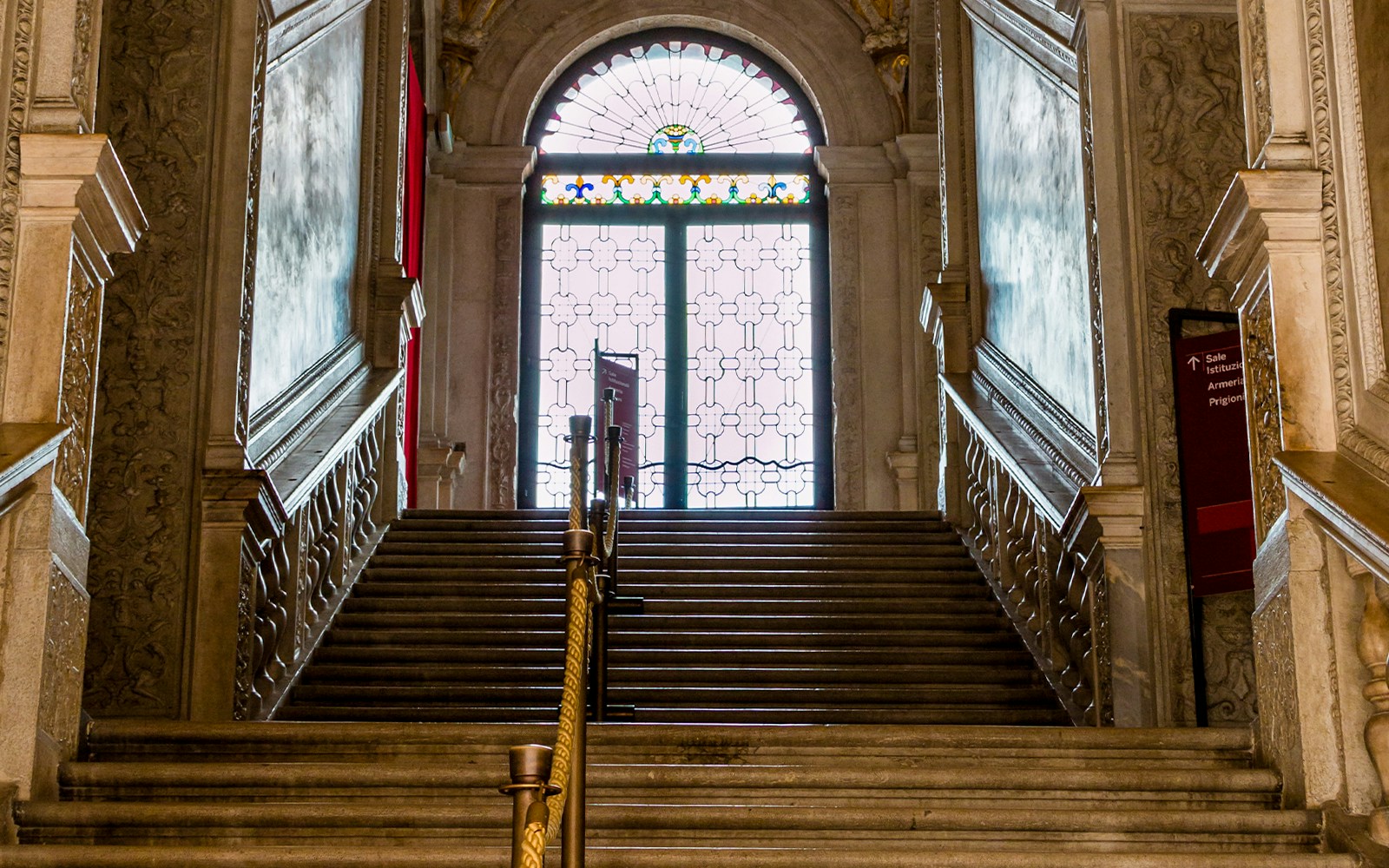
The Scala d'Oro, or Golden Staircase was used as an exclusive route for esteemed guests and dignitaries to access the Doge's apartments and state rooms. It was named for its lavish gold stucco decorations.
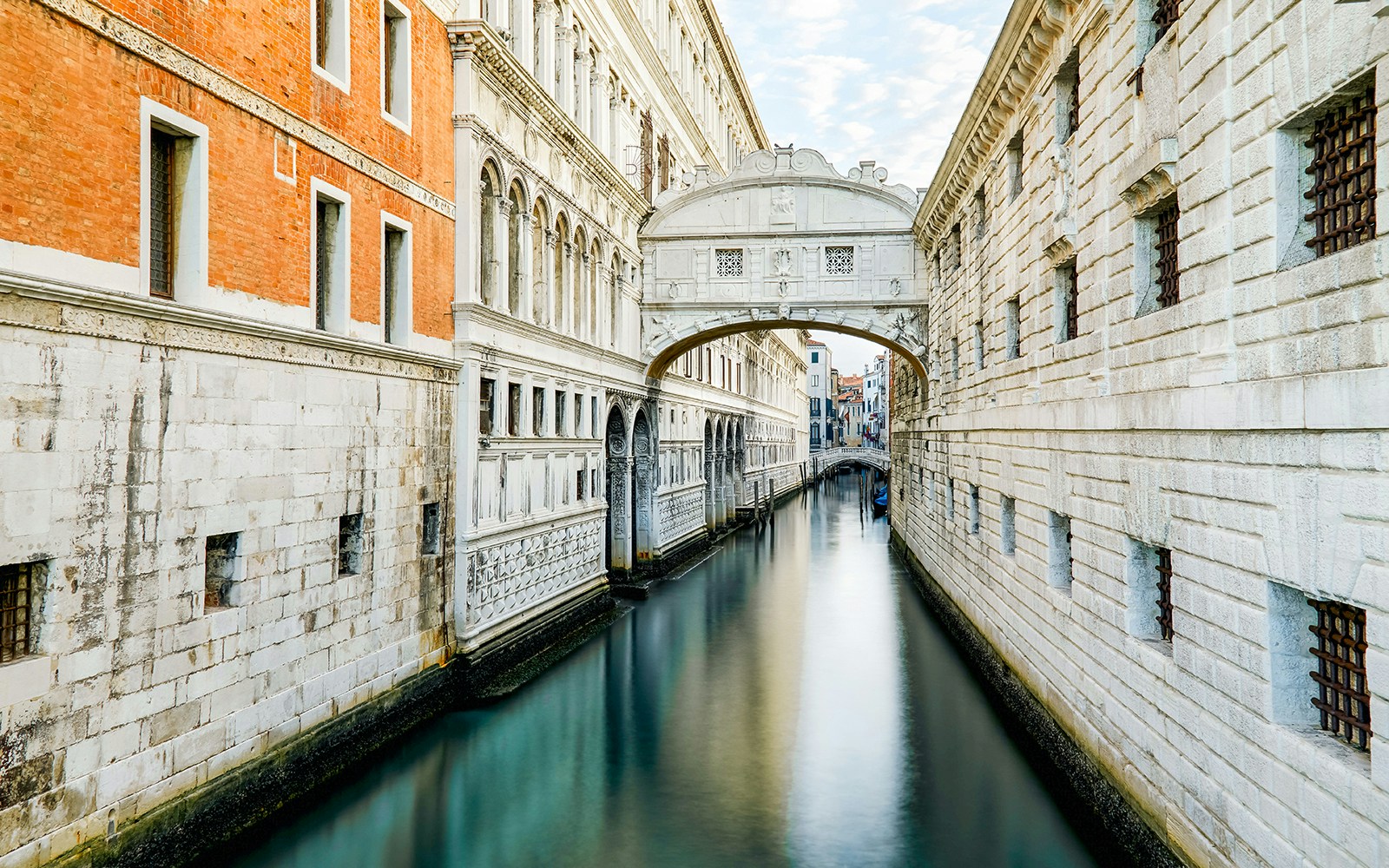
The palace's infamous "Bridge of Sighs" earned its name as it connected the interrogation rooms to the New Prisons, and prisoners would reportedly sigh at their final view of Venice.
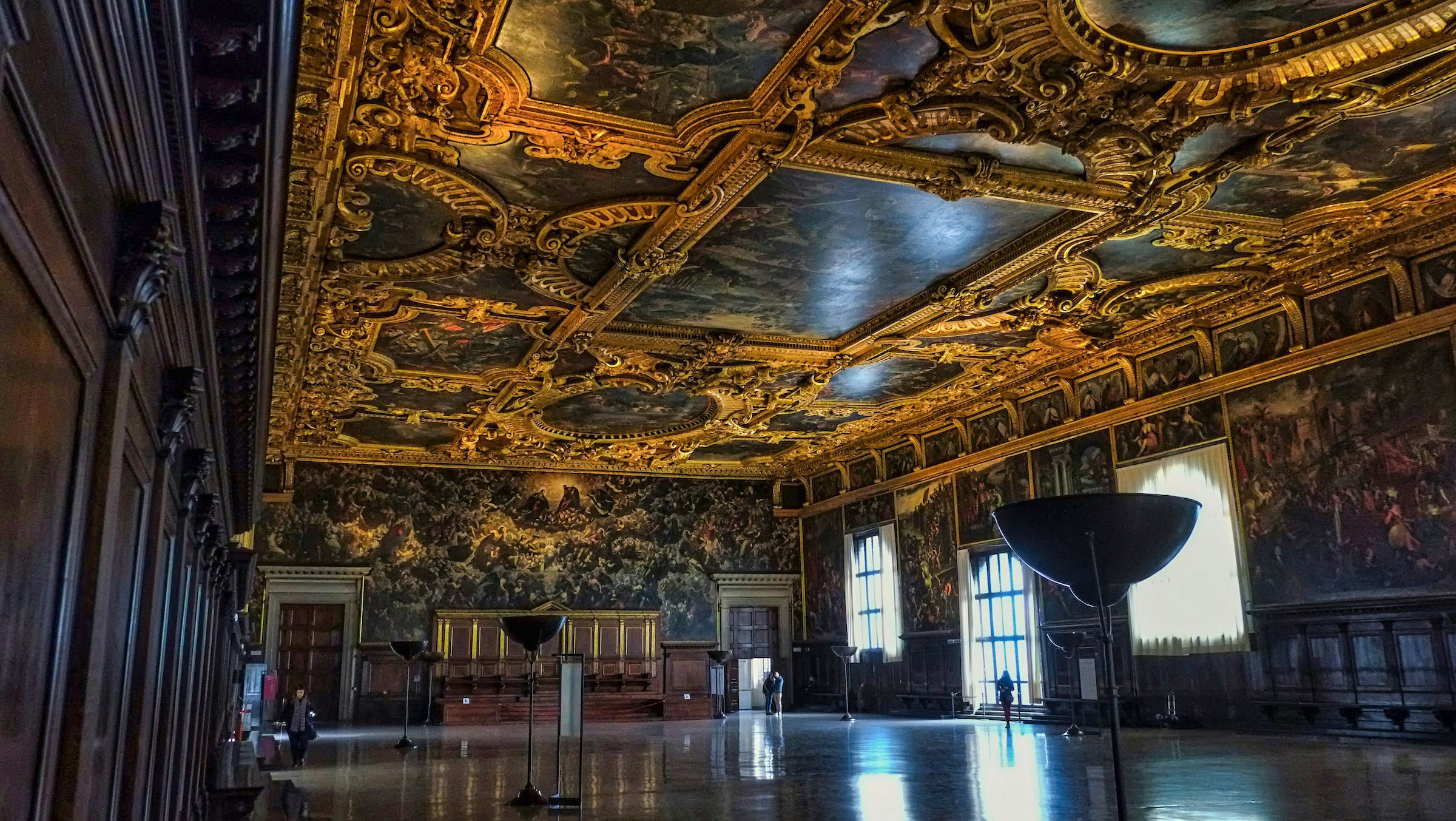
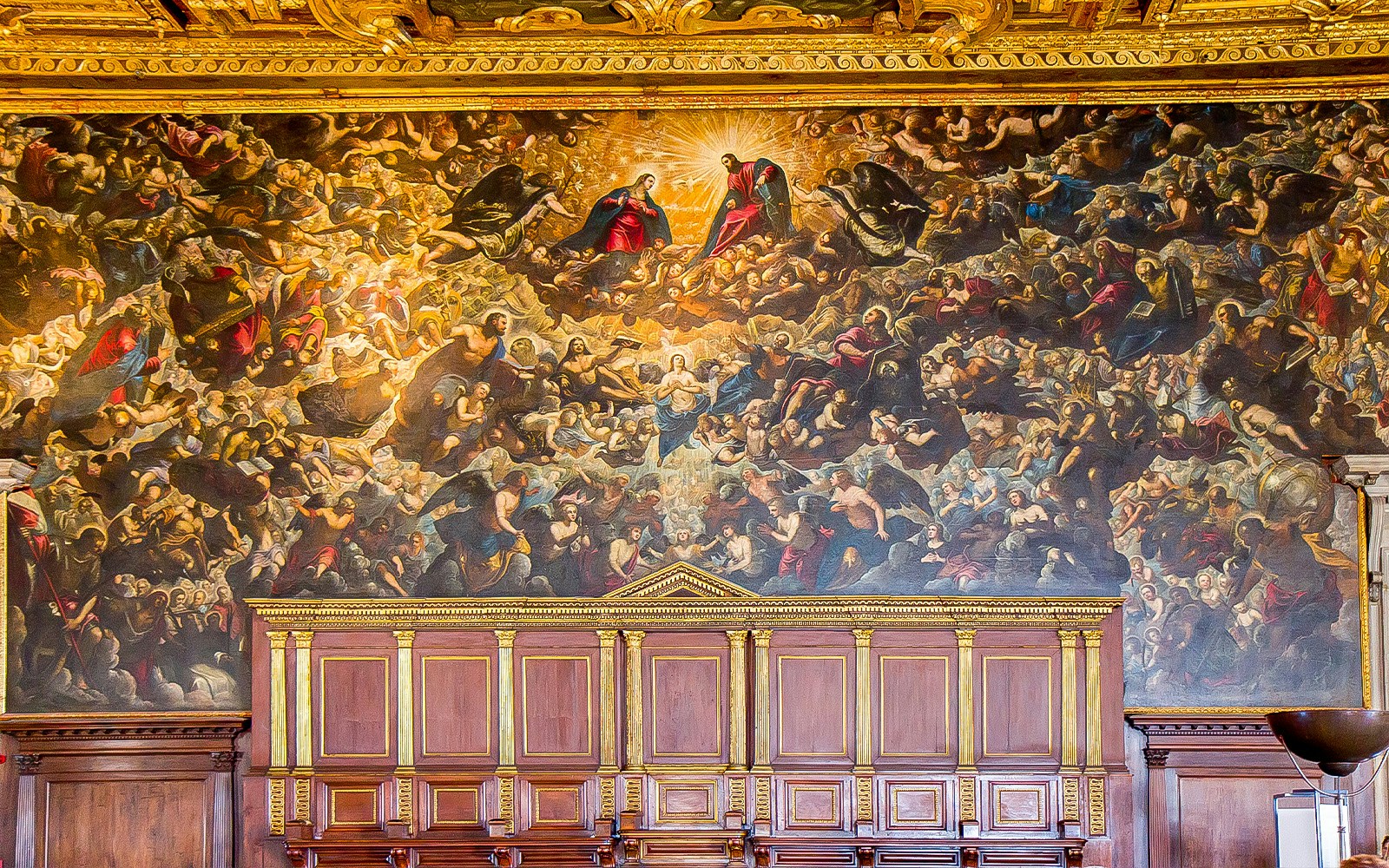
The Doge's Palace is home to the largest canvas in Venice, titled Il Paradiso by Jacopo Tintoretto. It depicts over 500 figures, ready to ascend Heaven, with Jesus and Mary in the middle.
Interesting things to see inside Doge's Palace
1/13
Golden staircase
This grand staircase is a highlight, embellished with ornate gold decorations and intricate frescoes. It was once reserved for visiting dignitaries and is a testament to Venetian opulence. It's a perfect trailer of what's waiting for you inside.
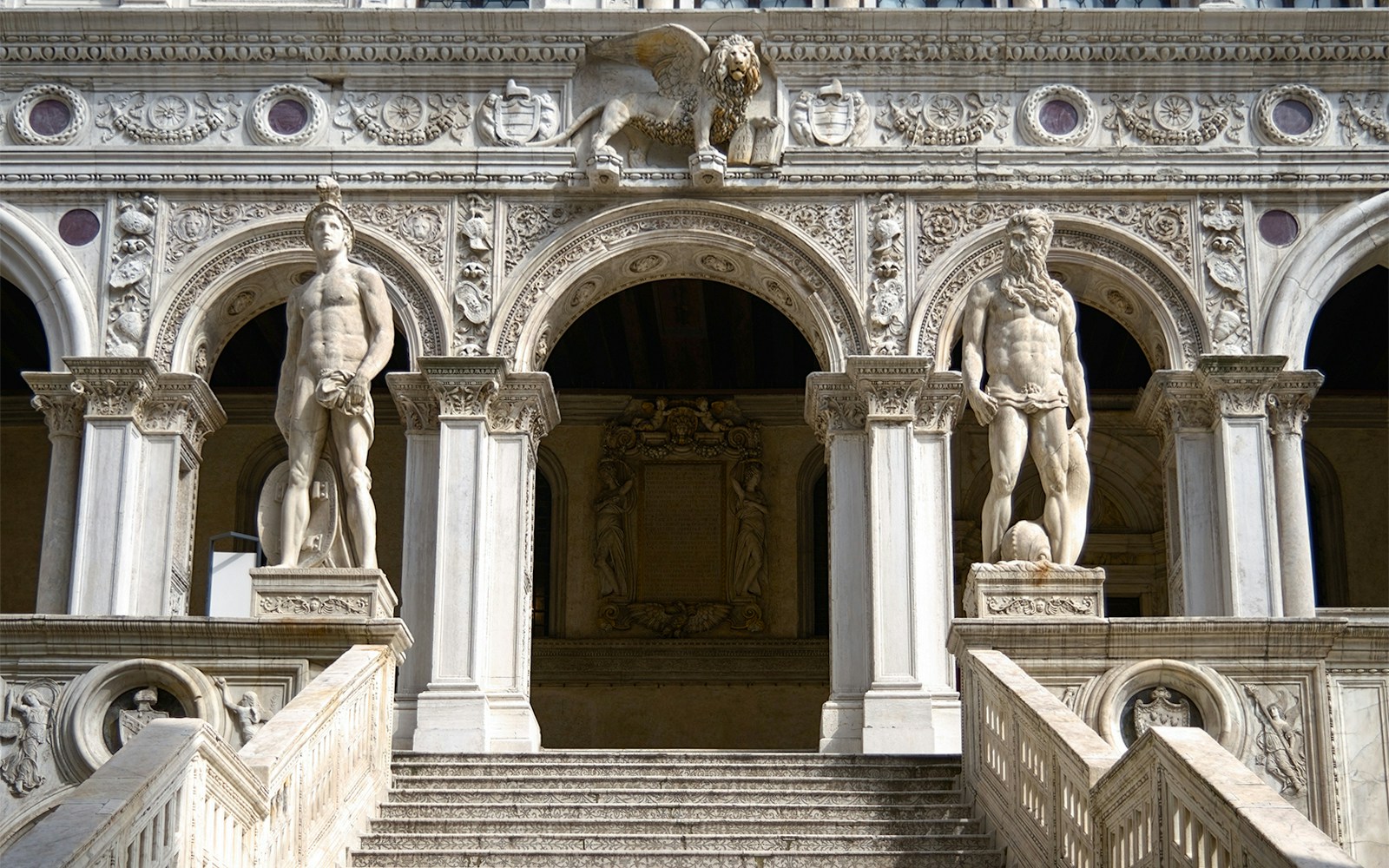
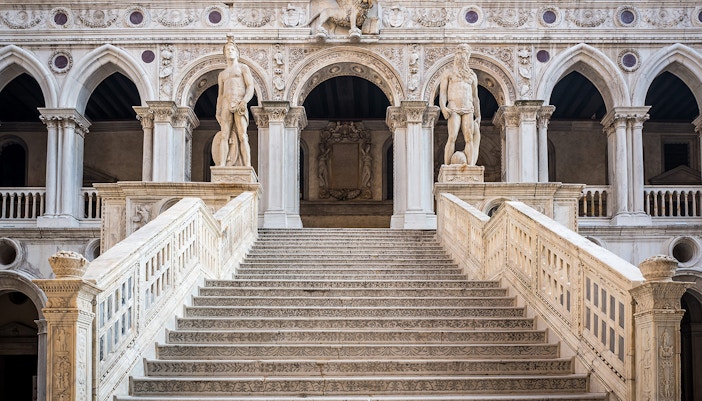
This staircase features statues of Poseidon and Mars at its entrance, leading to the Doge's private quarters. As you climb, keep an eye out for the Winged Lion of St. Mark at the summit. This enduring symbol represents both Venice's strength and its patron saint, St. Mark.
The Doge's Apartments
These lavishly decorated rooms were the private quarters of the Doge. Highlights include the Doge’s private chapel, the Hall of the Shield with a globe displaying Venetian territories, and numerous beautiful artworks.
The Great Council Chamber
One of the largest rooms in Europe, this hall was the political heart of the Republic of Venice. Its walls are adorned with masterpieces by Tintoretto, including the massive "Paradise," one of the largest oil paintings in the world.
The Chamber of the Council of Ten
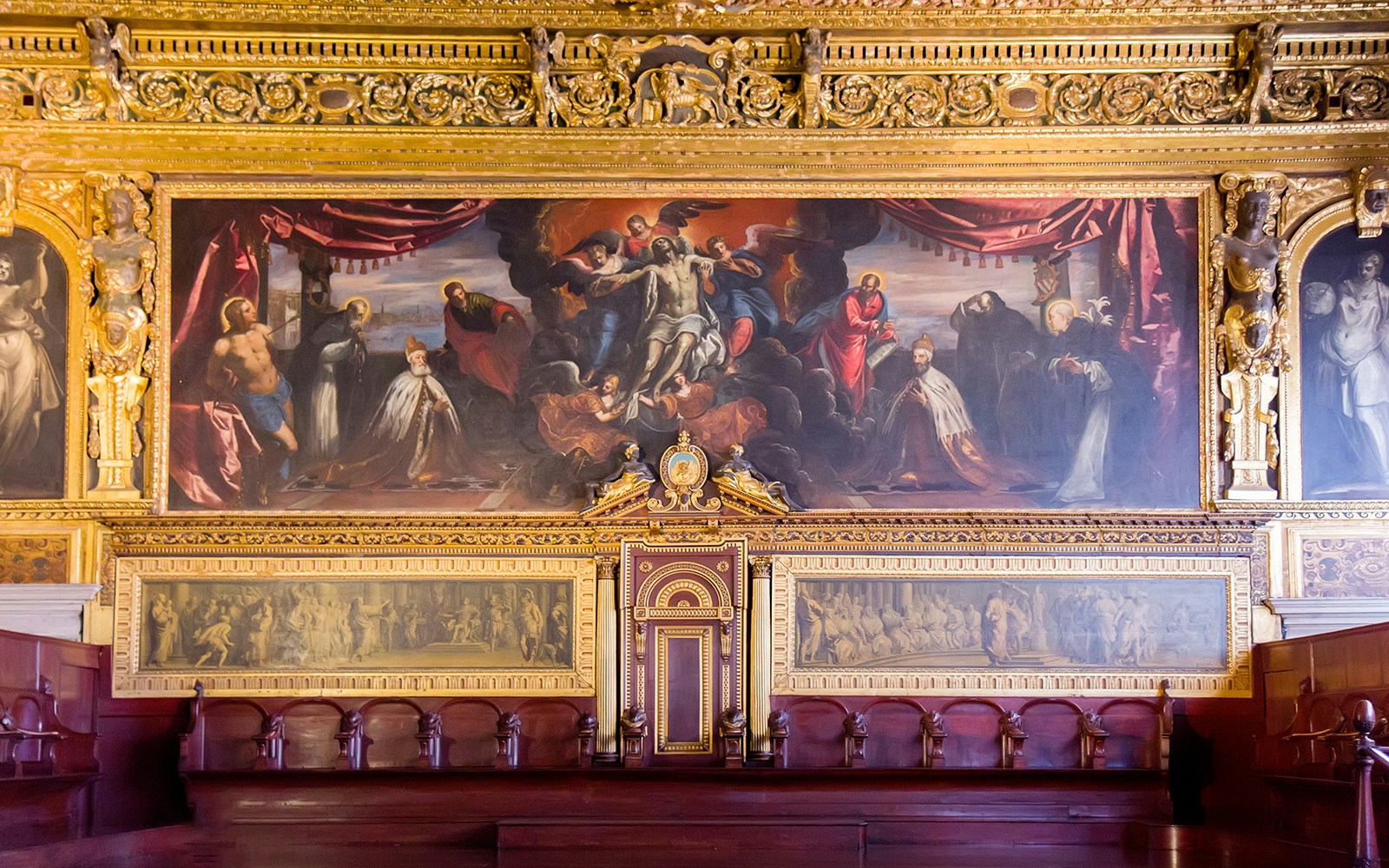
This room, where the secretive Council of Ten met, is filled with exquisite wood paneling, detailed ceiling frescoes, and paintings reflecting the power and influence of this governing body.
The Armory
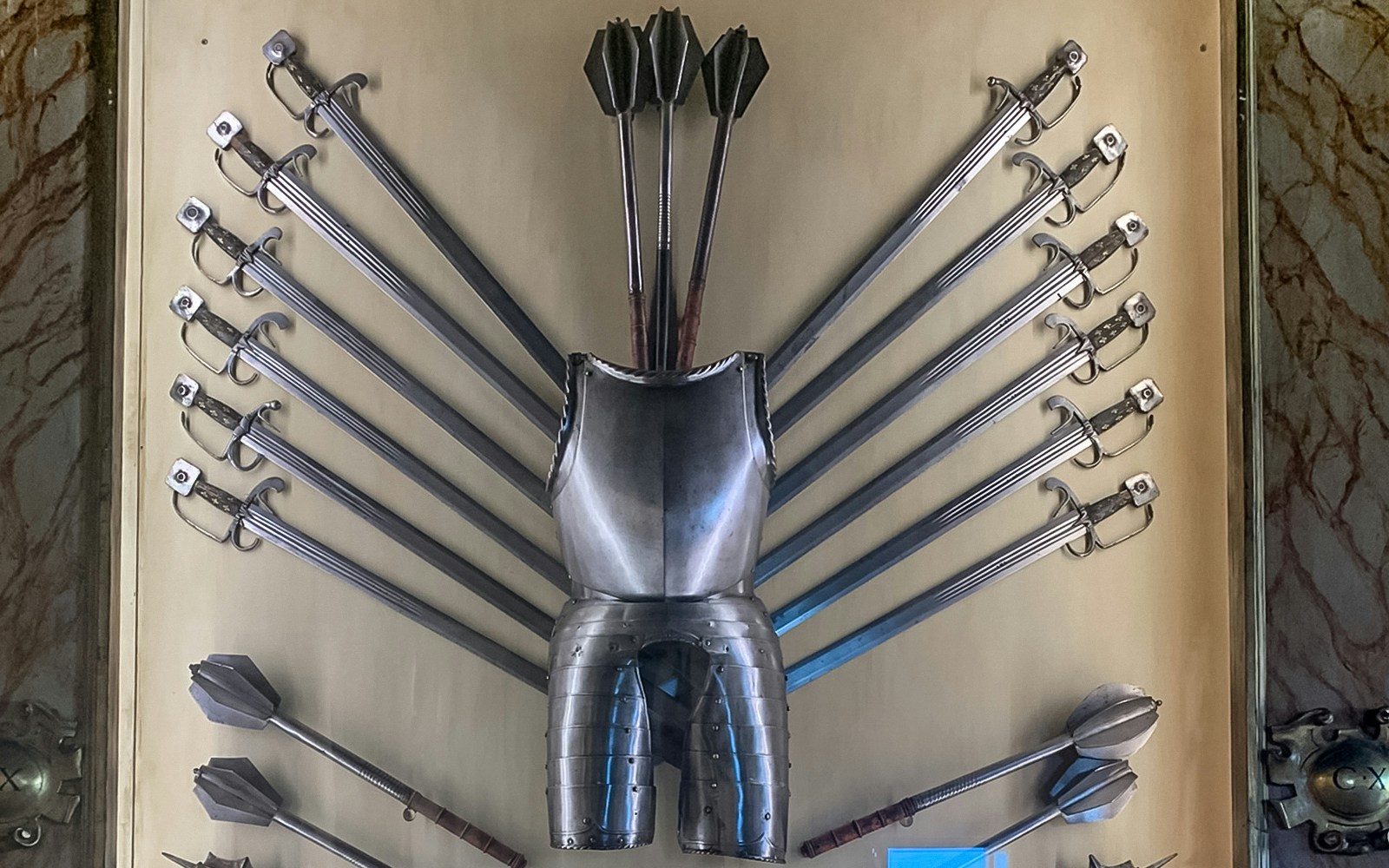
This section houses an impressive collection of weapons and armor, including swords, crossbows, firearms, and suits of armor used by the Venetian military and guards of the palace.
The Hall of the Four Doors
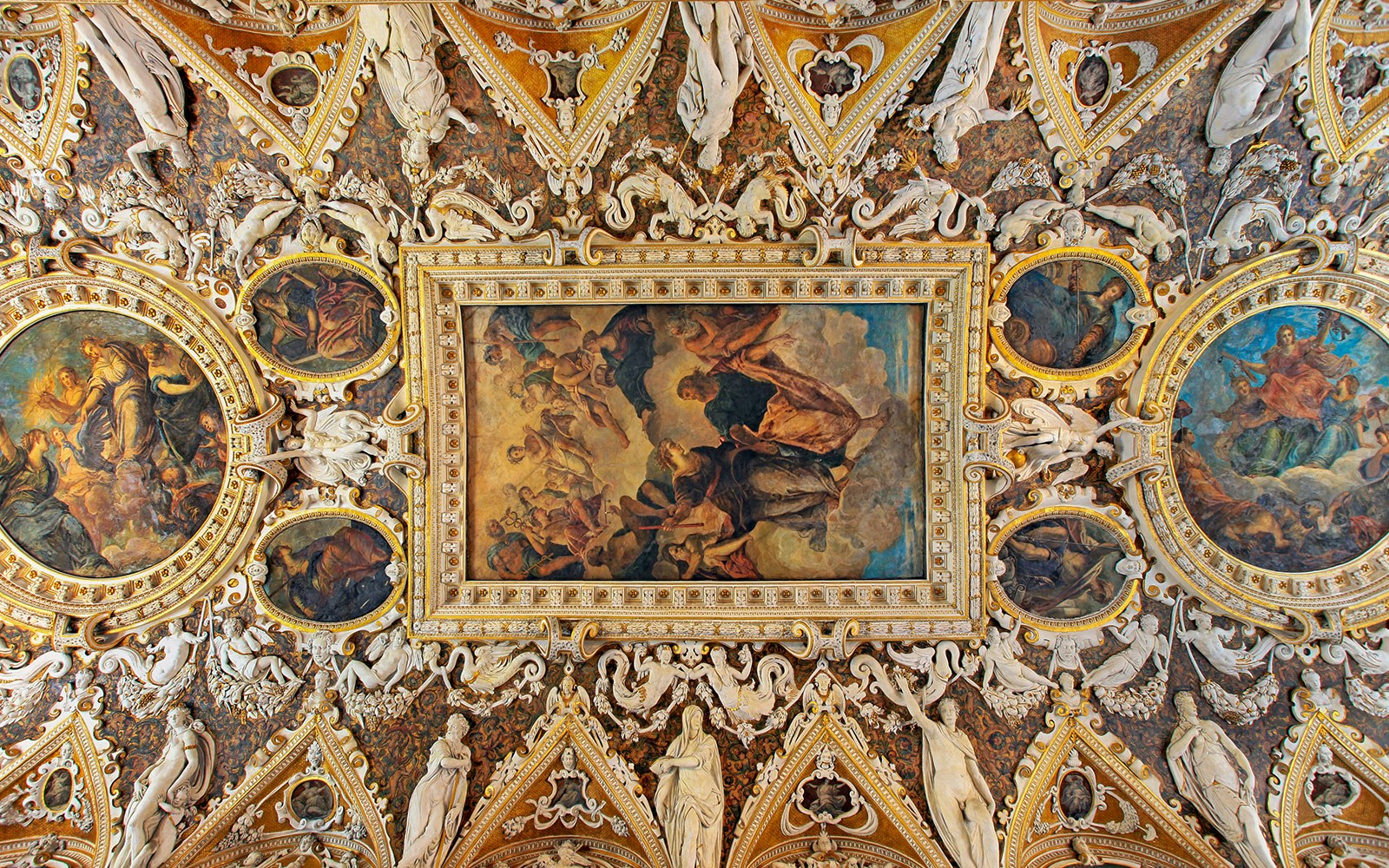
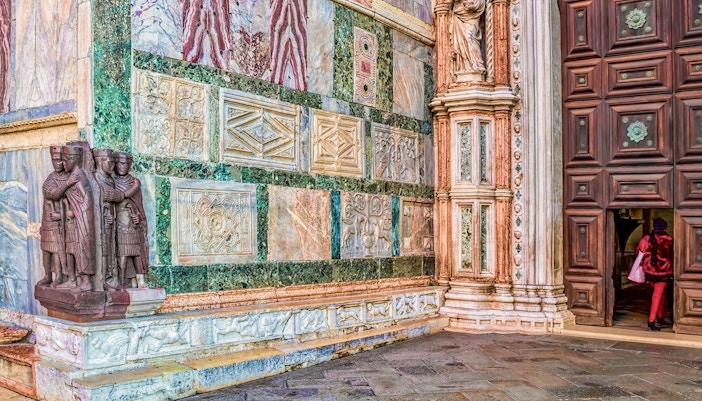
Known for its lavish decoration, this hall features four grand doors, stunning ceiling paintings by Tintoretto, and beautiful marble floors and walls.
The Hall of the Compass
Named after the compass rose on the floor, this room was where petitions were received. The room’s walls are lined with portraits of the Doges and artworks by Paolo Veronese.
The Bridge of Sighs
This enclosed bridge connects the palace to the prisons. It is named for the sighs of prisoners glimpsing their last view of Venice before imprisonment. Visitors can walk across the bridge and view the cells on the other side.
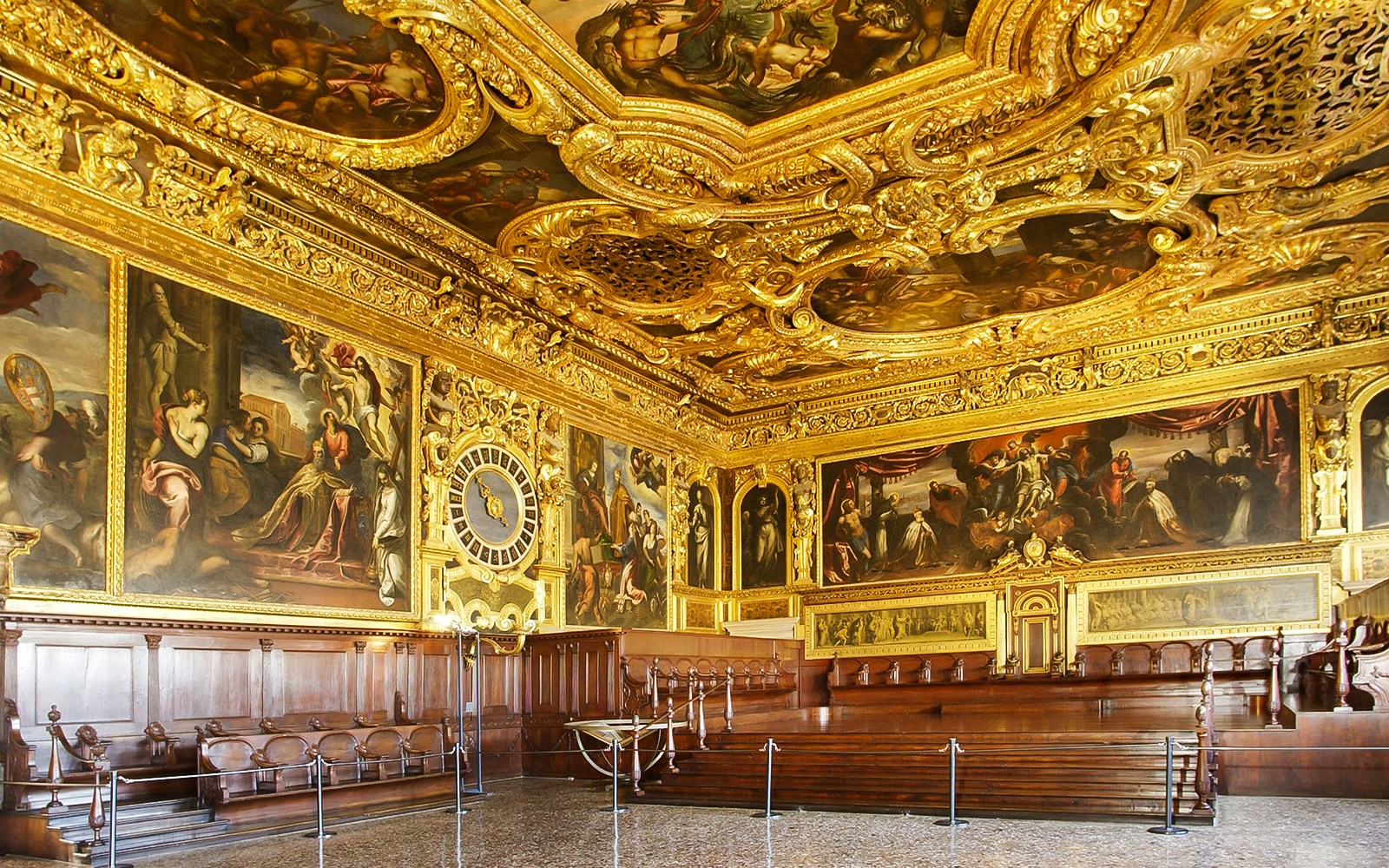
This room was used for the meetings of the Senate and features grand paintings depicting various scenes from Venetian history, as well as an elaborate ceiling fresco.
The Courtyard
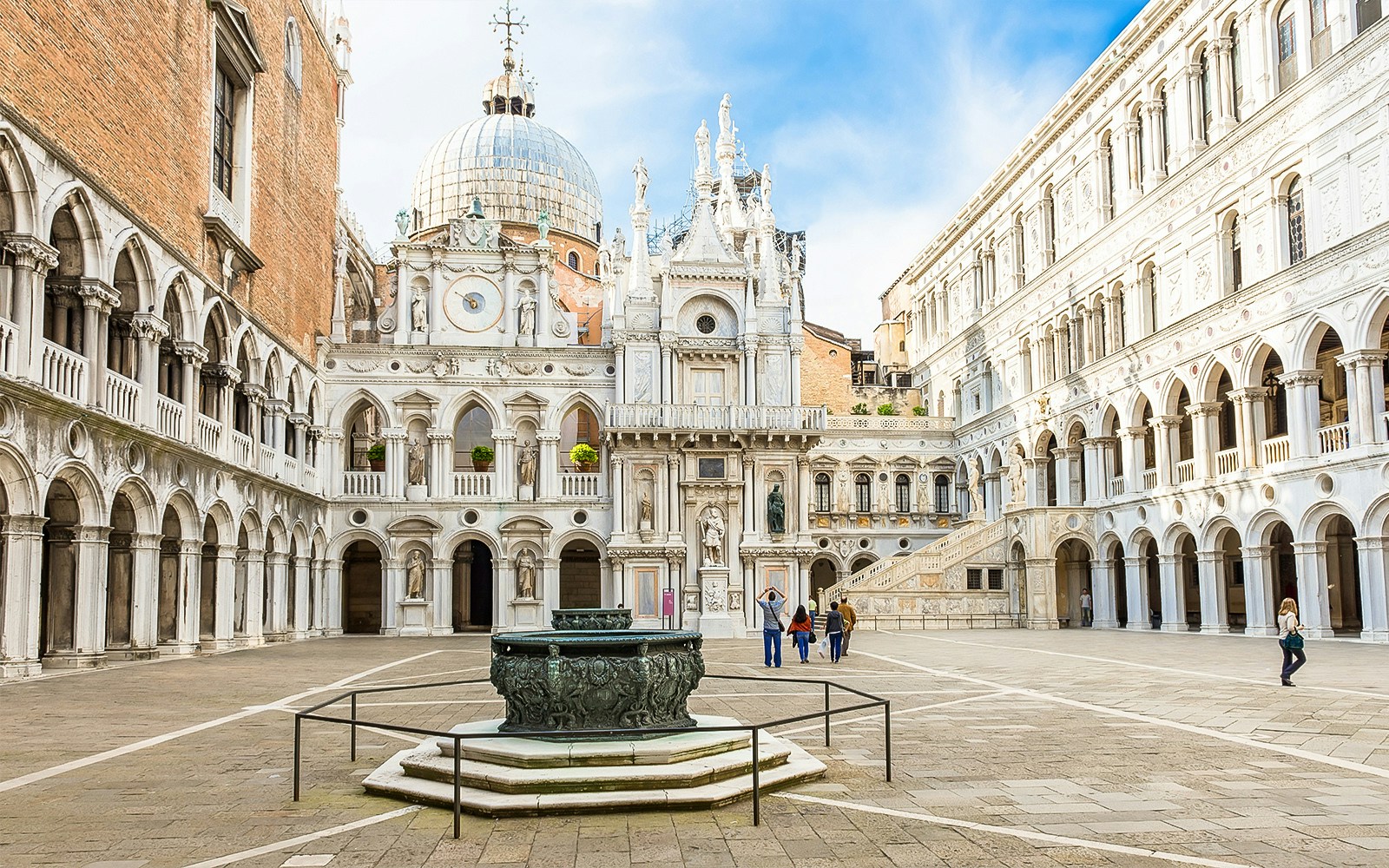
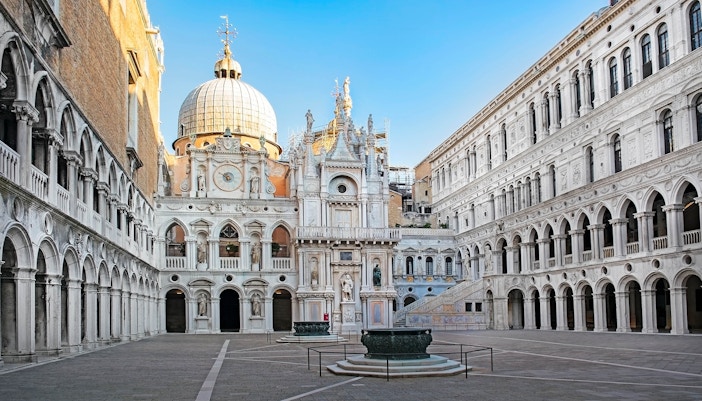
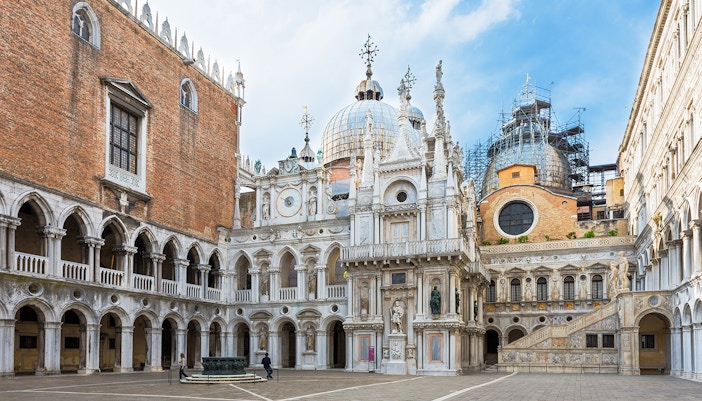
The palace courtyard is an elite example of Gothic and Renaissance architecture. Notable features include the Giant’s Staircase (Scala dei Giganti) flanked by statues of Mars and Neptune, symbolizing Venice’s power.
The Prison Cells
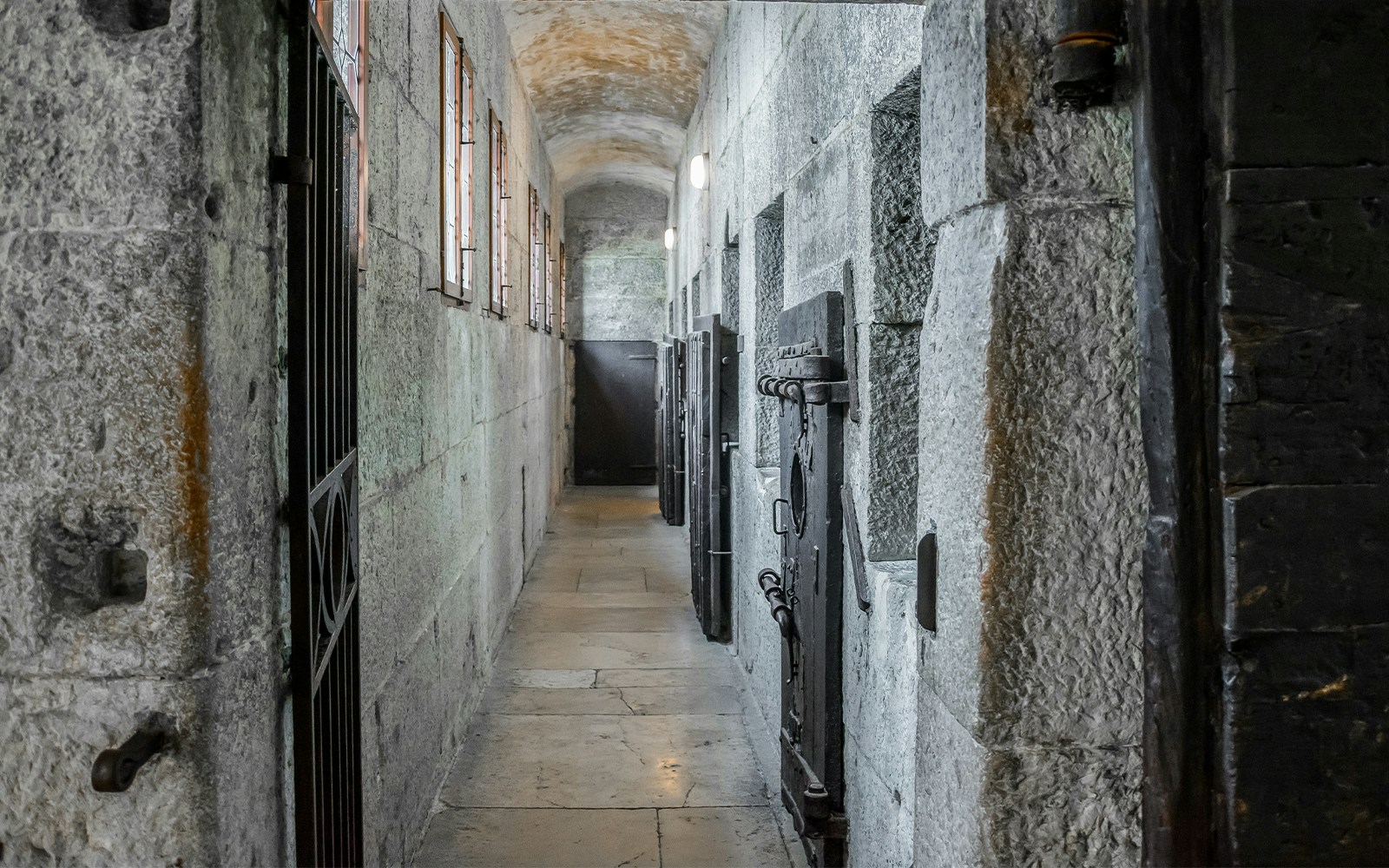
Known as the Piombi, these prison cells were notorious for their harsh conditions. Visitors can explore the cells and learn about famous prisoners like Giacomo Casanova who famously escaped.
This hall was used for the election of the Doge and important political decisions. It features remarkable ceiling frescoes and wall paintings depicting naval battles and victories.
Must-see artworks at Doge's Palace
"Paradise" by Tintoretto
Admire this colossal masterpiece on the ceiling of the Great Council Hall, showcasing the Last Judgment in vivid colors.
History of Doge's Palace
810: Doge Angelo Partecipazio establishes the first Doge's Palace in Rialto, though no trace of this building remains today.
10th-11th Centuries: The palace transforms into a fortified structure with walls, towers, and a large gateway. It houses government functions, courts, prisons, and even stables and armories.
1172-1178: A fire damages the palace. Doge Ziani rebuilds and significantly alters St. Mark's Square layout.
1340: Reconstruction of the lagoon-facing wing begins.
1365: The Great Council Chamber is decorated, marking the start of the present-day palace's appearance.
1424: The wing facing the Piazzetta is renovated in the Gothic style under Doge Foscari.
1430-1442: The Porta della Carta and Foscari Arch are built.
1483: A fire destroys the Doge's apartments. Rebuilding in Renaissance style is completed by 1510.
1515-1559: Further work is completed, including the Giants' Staircase.
1574: Another fire damages the palace, followed by swift restoration.
16th-17th Centuries: New prisons are built, connected by the Bridge of Sighs. The courtyard gains a marble facade, colonnade, and clock.
1797: Venice falls under foreign rule, and the palace serves various administrative purposes.
19th-20th Centuries: Extensive restoration addresses structural decay. The palace becomes a public museum. It joins the Civic Museums of Venice network.
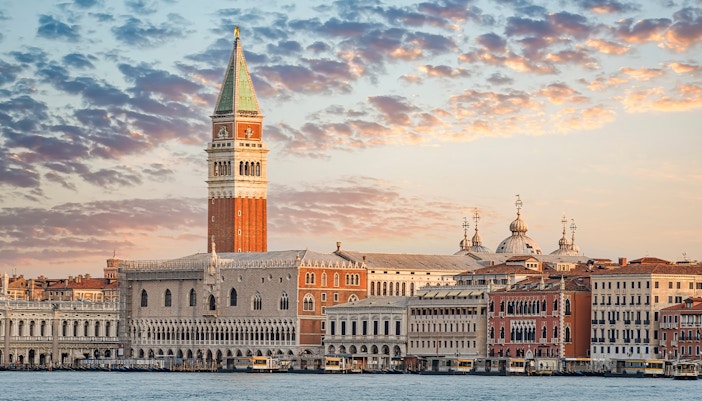
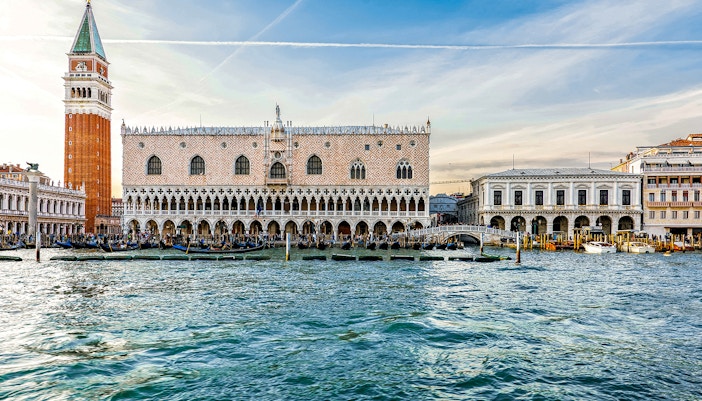
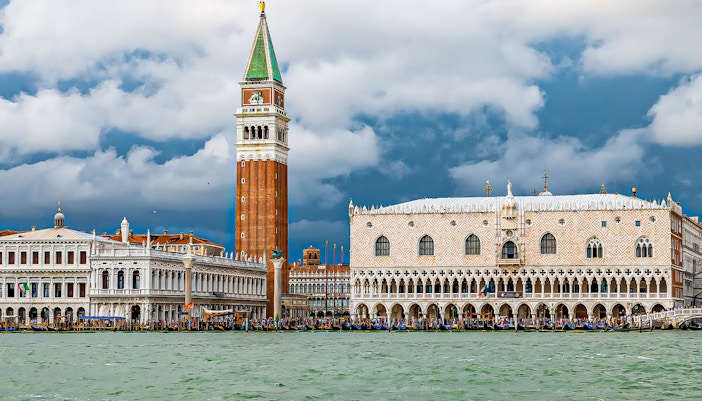
The Doge's Palace is a masterpiece of Venetian Gothic architecture, boasting intricate detailing on the exterior, ornate arches, delicate tracery, stonework, sculptural elements, a beautiful courtyard, grand halls with frescoes, and elegant furnishings. Here are some key architectural features and styles:
Venetian Gothic style
The palace is built in the Venetian Gothic style, characterized by the use of pointed arches, ribbed vaults, and ornate decorations. This style was popular in Venice during the 14th to 16th centuries and is seen in many of the city's iconic landmarks.
Orientalist elements
You’ll notice some Eastern flair in the palace’s design. Look for arches, columns, and decorative motifs inspired by Islamic art. This reflects Venice’s rich history of trade and cultural exchange with the East.
Subsequent influences
The design of the Doge’s Palace is a delightful mix of Byzantine and Gothic architecture, as evident in the pointed arches, decorative tracery on windows, and an overall sense of airiness. This blend reflects the cultural and artistic achievements of the Venetian Republic during the Renaissance.
Stilts and foundations
Like many buildings in Venice, the Doge's Palace is built on stilts. This ingenious method works perfectly with Venice’s watery foundation, allowing grand structures to stand tall without the need for massive foundations.
Porta della Carta
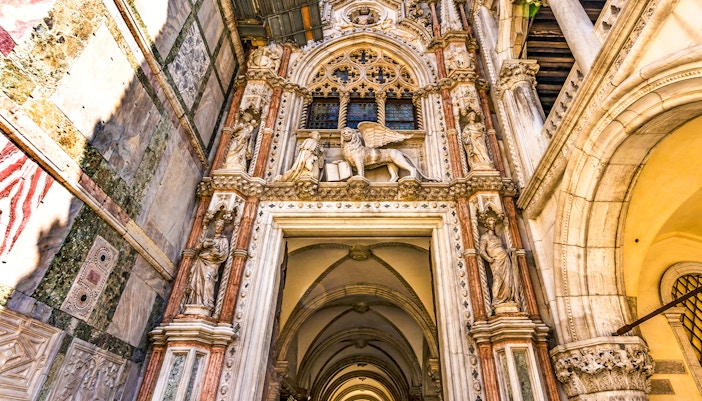
The main entrance, Porta della Carta, is a marvel to behold. Accessorized with Gothic pinnacles, it features a statue of Doge Francesco Foscari kneeling before the Lion of Saint Mark. This ceremonial gateway also features figures of the Cardinal Virtues and a bust of Mark the Evangelist.
Imposing mass on piers
Despite the lighter elements, the overall structure is quite massive. This is because the palace is built on wooden piles driven into the lagoon floor. The base is hidden, giving the impression of the palace rising directly from the water.
Frequently asked questions about Doge's Palace
The Doge's Palace, originally built in the 9th century, served as the residence of the Doge of Venice, the supreme authority of the Venetian Republic. It was the political and administrative heart of Venice for centuries.
The palace showcases a blend of Gothic, Byzantine, and Renaissance architectural styles. This mix reflects Venice's diverse cultural influences and its role as a major trading hub.
The palace was built on stilts to accommodate Venice’s watery foundation, avoiding the need for massive foundations and allowing it to stand firm despite the lagoon's fragility.
Key exterior features include the Gothic lace-like stonework, the Porta della Carta (the ornate main entrance), and the pink and white checkerboard marble facade. The Giants' Staircase, with statues of Mars and Neptune, is another highlight.
The Great Council Chamber is one of Europe’s largest rooms, adorned with masterpieces by Tintoretto and Veronese, including Tintoretto’s "Paradise," one of the largest oil paintings in the world.
The Bridge of Sighs connects the Doge's Palace to the prisons. It is named for the sighs of prisoners who would see their last view of Venice through its windows before their imprisonment.
Yes, the palace is home to stunning frescoes and artworks by renowned artists such as Titian, Veronese, Tintoretto, and Tiepolo, decorating its grand halls and chambers.
The Doge’s Apartments, located in the Renaissance wing, served as the private quarters of the Doge. They are lavishly decorated and include private chapels, the Hall of the Shield, and various living spaces adorned with historical artifacts.
Several fires, particularly those in 1483 and 1574, led to significant reconstruction efforts. These events prompted the introduction of Renaissance architectural elements and the rebuilding of many rooms, while maintaining the palace’s overall historical design.
Today, Doge's Palace is a public museum managed by the City Council of Venice. It is part of the Civic Museums of Venice network and remains a key cultural and historical attraction, offering visitors a glimpse into Venice's illustrious past.
Extensive restoration efforts have taken place since the late 19th century to address structural decay and preserve the palace’s intricate details. Significant funds have been allocated for ongoing maintenance to ensure its historical integrity remains intact.
Lesser-known aspects include the hidden prison cells known as the Piombi, the intricate wood paneling in the Chamber of the Council of Ten, and the various secret passages used for discreet movements within the palace.
The palace embodies Venice’s political power and cultural achievements through its grand architecture, historic council chambers, and the artistic works that celebrate the Republic’s rich heritage and influence.