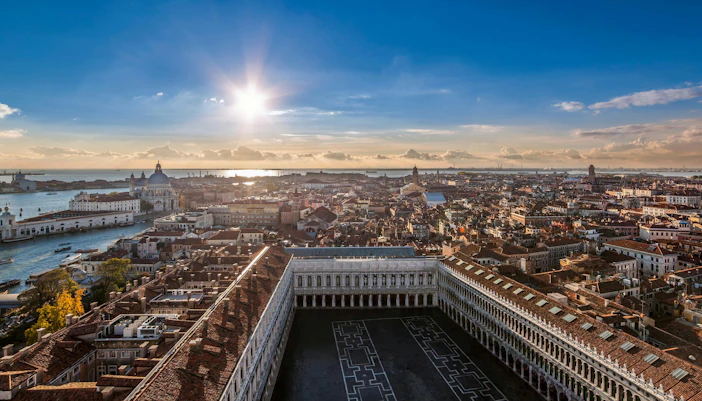
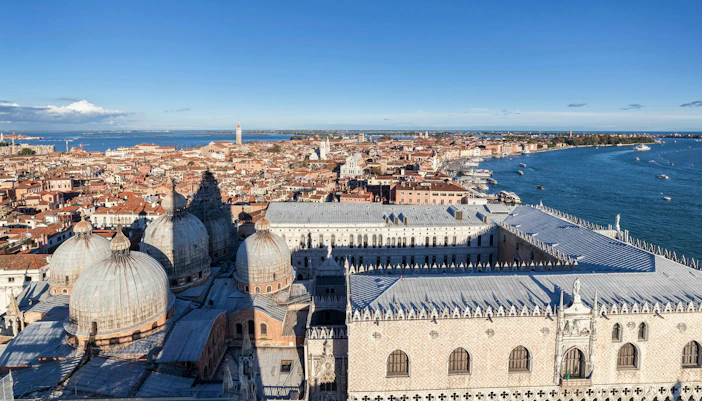
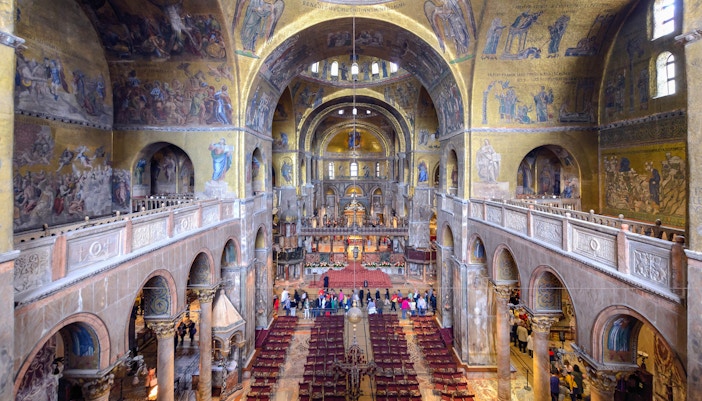
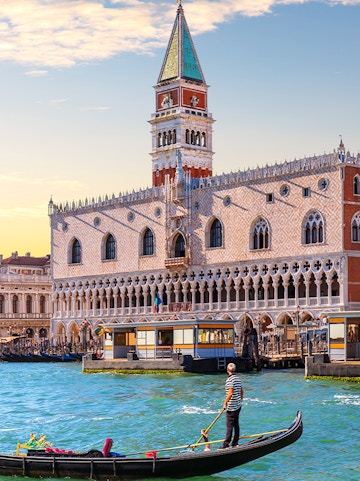
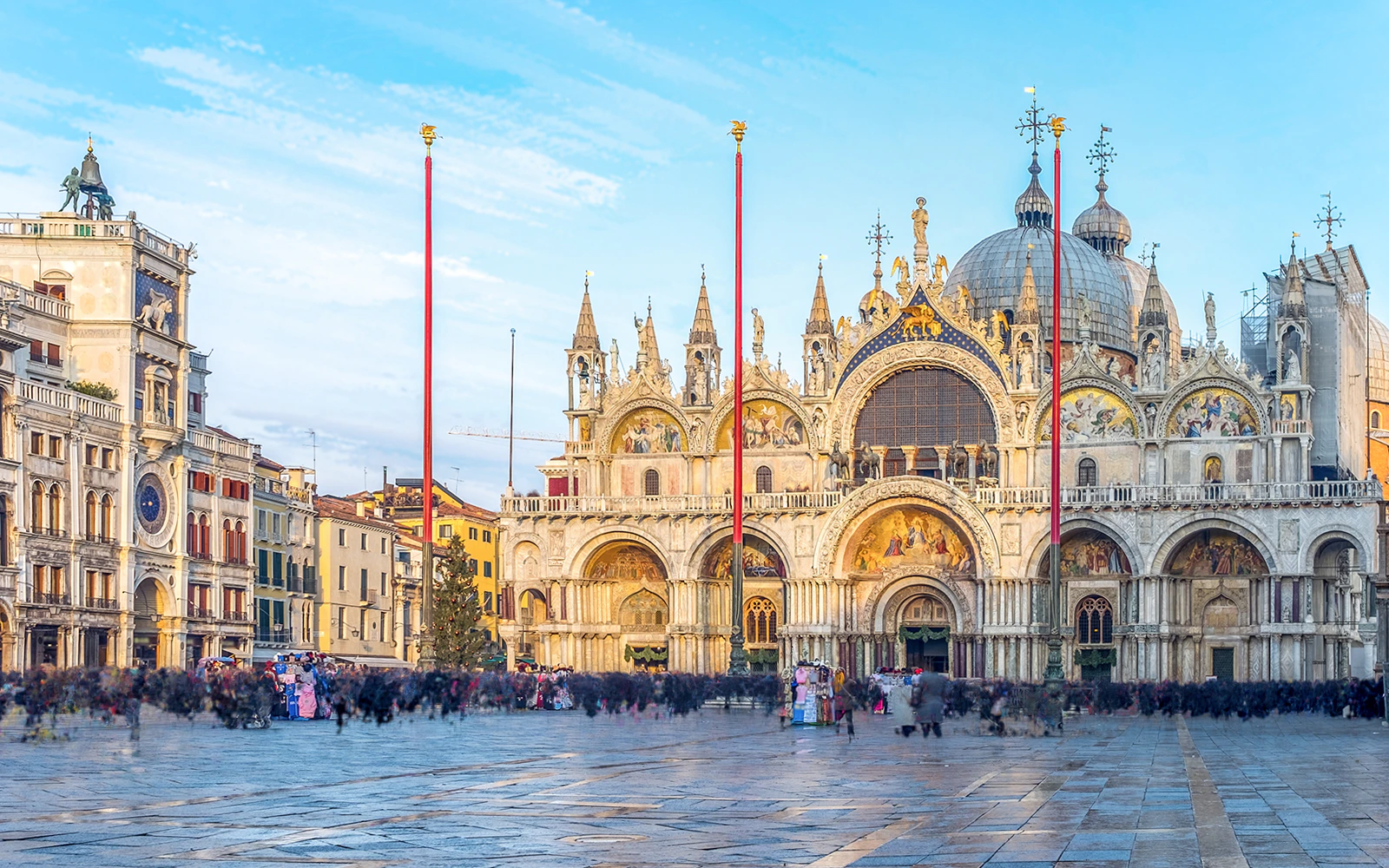
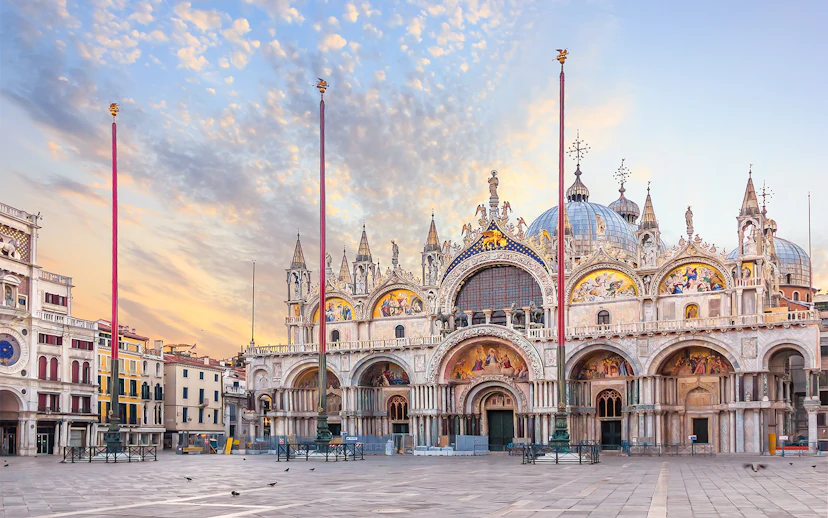
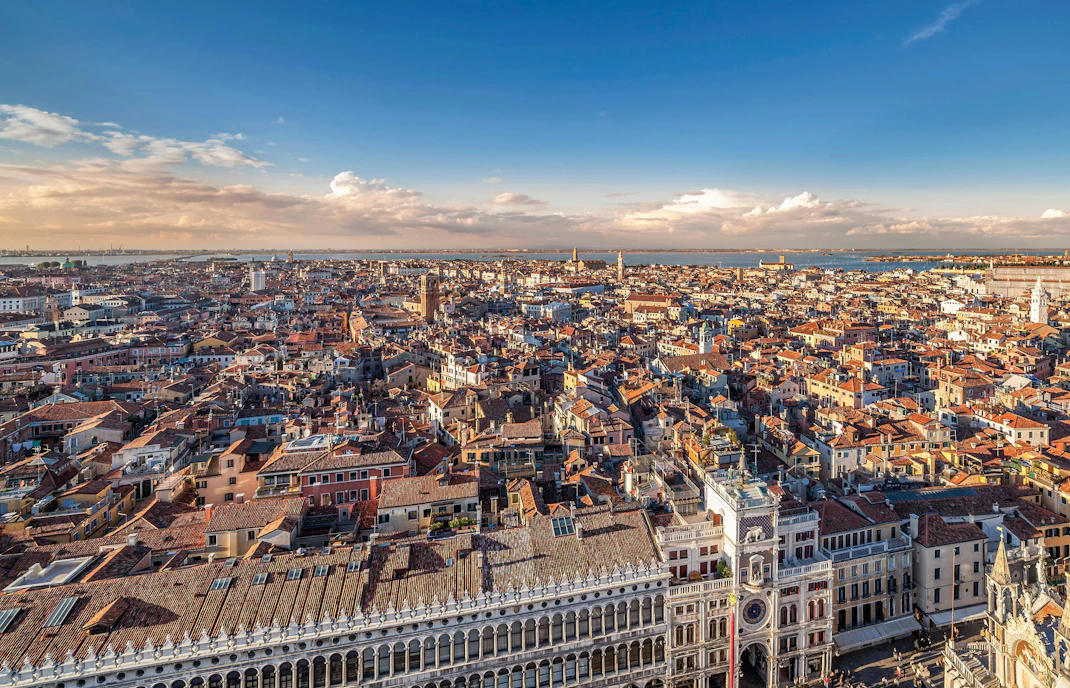
- Want a basilica view that looks out over Piazza San Marco, not just up at mosaics.
- Care about the bronze-horses story and want the upper museum context.
- Prefer a fuller self-guided visit over the standard short interior route.
- Are booking ahead and want an upgrade that changes the visit materially.
Quick overview
- Access: Included in select tickets only.
- Separate ticket: Not required. Upgrade your basilica ticket to include Terrace access.
- Price difference: Approx. €20 more than standard St Mark’s Basilica entry.
- Visit duration: 20–30 min additional to your basilica visit.
- Best time: First morning slot on a weekday. Piazza San Marco views are clearer before late-morning square crowds build.
- Physical requirements: The museum upper floor has elevator access, but the open terrace itself is not wheelchair accessible due to steep and uneven surfaces.
Things to know before booking your St. Mark’s Basilica Terrace tickets
- Terrace access is an upgrade: Not all St. Mark’s Basilica tickets include terrace access. Choose the terrace upgrade with your skip-the-line entry to access the open-air terrace, Loggia dei Cavalli, and St. Mark’s Museum.
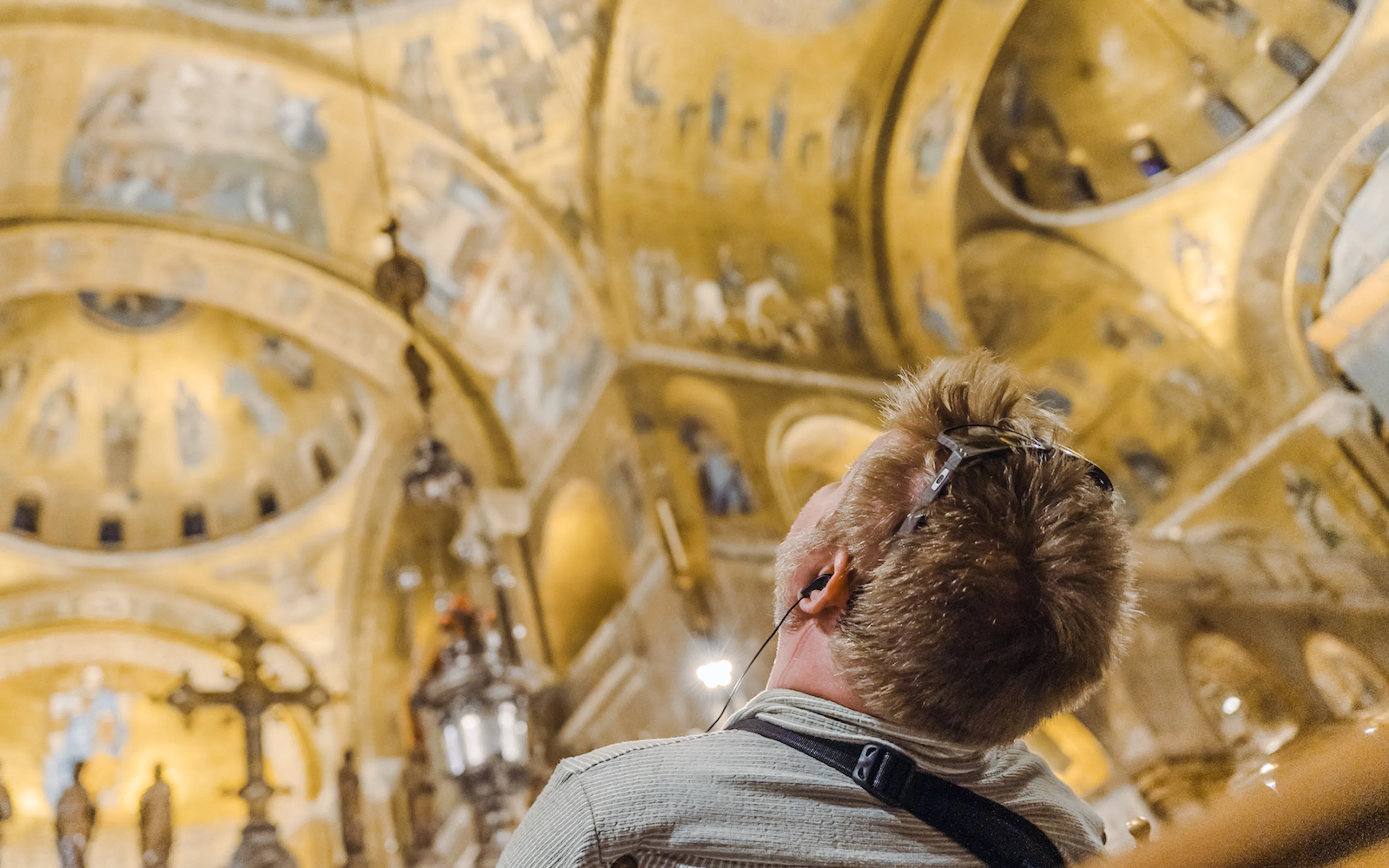
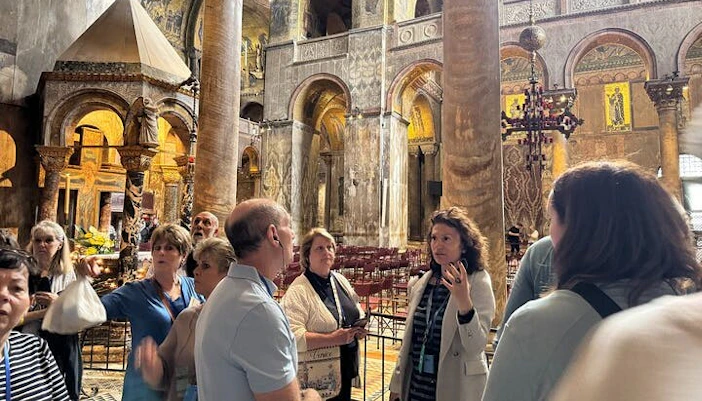
- Explore at your own pace: Use the multilingual audio guide in English, French, Italian, or German to understand the basilica’s mosaics, architecture, and the history of the Loggia and terrace as you explore.
- Booking ahead matters: Terrace-inclusive inventory is more limited than standard basilica entry, so book ahead during busy periods rather than relying on same-day availability.
- Budget enough time: Allow around 45–60 minutes for check-in, the museum and Loggia, terrace time, and the route through the basilica.
- Follow the designated route: Terrace access is reached via the Museum and Loggia dei Cavalli, rather than directly from Piazza San Marco.
- Accessibility: The terrace route involves stairs and is not fully step-free, so guests with mobility concerns should check the route before booking.
Is it worth it?
Go for it if you
Skip it if you
- Mainly want to step inside once and move on.
- Have mobility concerns, because the terrace itself is not fully accessible.
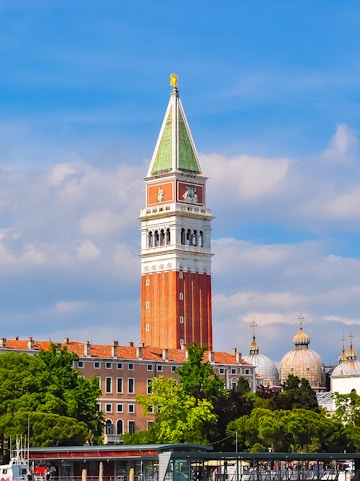
- Already plan to visit St. Mark’s Bell Tower and only need one elevated view.
- Are booking last-minute and would rather secure any basilica slot first.
Exploring inside St Mark’s Terrace
1/6
The upper route
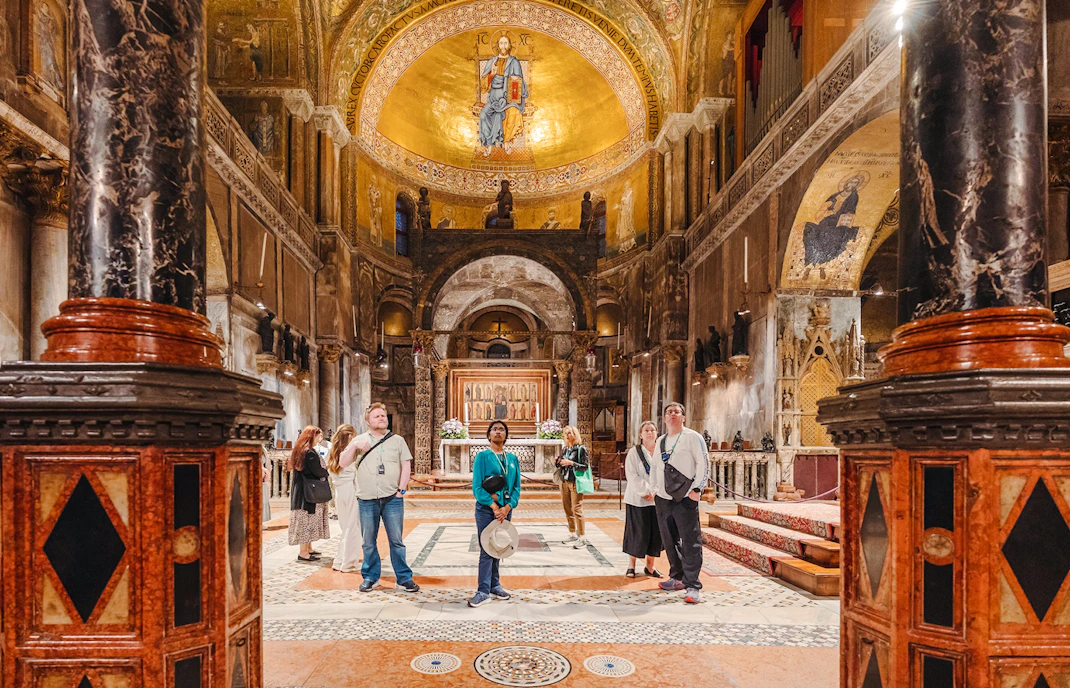
The terrace visit begins with the upper museum approach, which already changes your perspective before you step outside. Instead of looking up from the nave, you start reading the church horizontally. This is where San Marco stops feeling like a single room and starts revealing itself as a layered monument built for ceremony, display, and political theater.
The horses context
What many visitors call the terrace is really tied to the Museum and Loggia dei Cavalli. The horse story matters because it connects the upper level to Venice’s 1204 haul from Constantinople. Even if you came mainly for the view, pause here first. It gives historical weight to the terrace and explains why this upper zone was never just decorative.
The façade at eye level
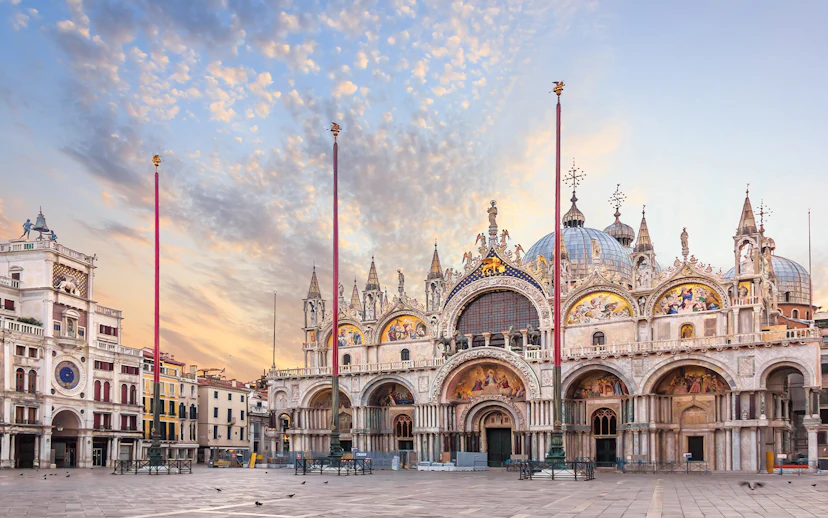
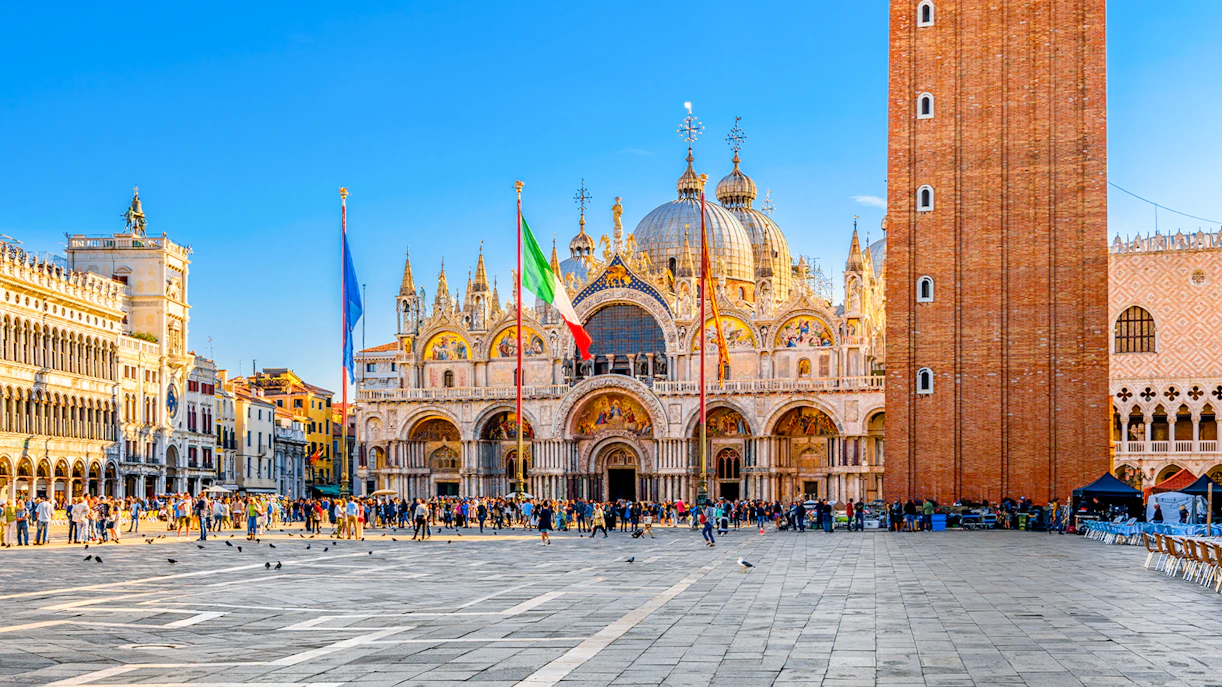
Once outside, don’t rush to the far edge immediately. First look sideways and up. At terrace level, the façade details stop blending into one glittering surface. You can separate arches, marble framing, and mosaic fields in a way that’s impossible from Piazza San Marco. This is the terrace’s biggest architectural advantage over the Bell Tower.
The Piazza San Marco view
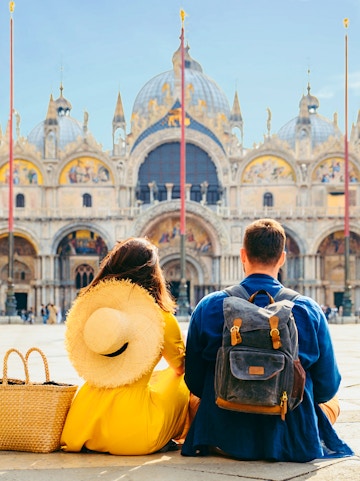
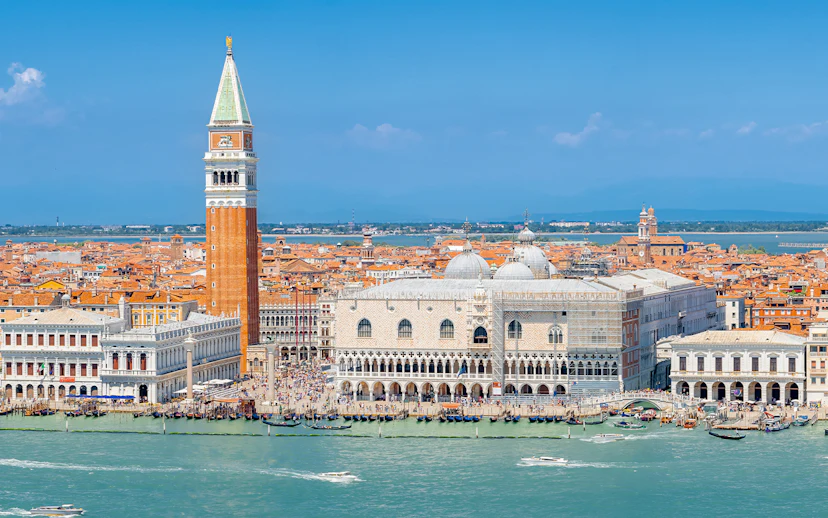
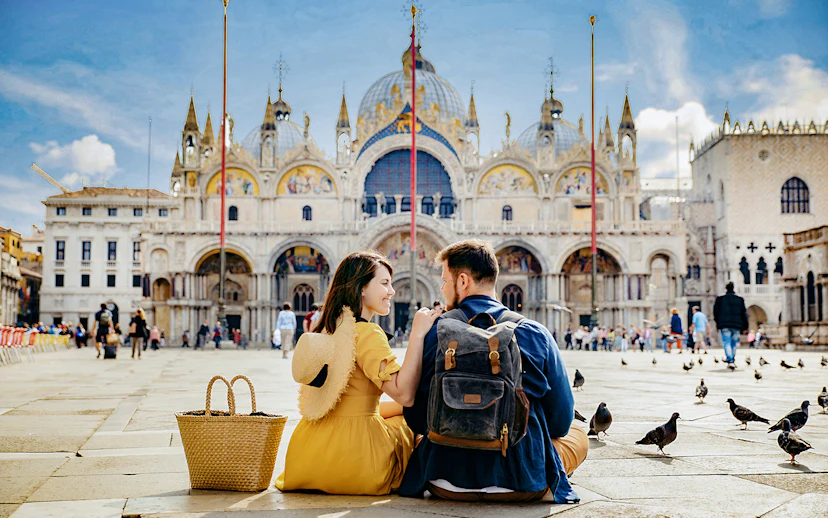
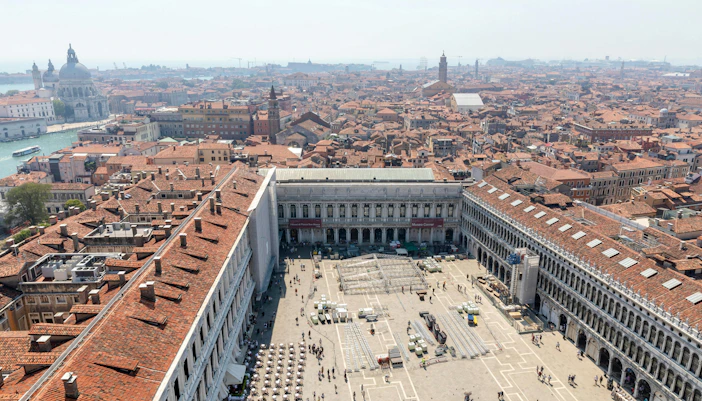
Now turn outward. From here, Piazza San Marco makes more sense as a ceremonial stage, not just a crowded square. The elevation is modest compared with the Bell Tower, but that’s the point: you’re still close enough to read the basilica’s relationship to the piazza, the Doge’s Palace, and the flow of people below.
The museum return
On the way back through the museum level, don’t treat it as the exit corridor. This is where the terrace experience becomes complete rather than scenic. The displays anchor what you just saw outside, especially if you’re trying to understand San Marco as both a religious building and a statement of Venetian wealth, conquest, and spectacle.
The last look back
Before you descend, take one final look toward the façade opening rather than the square itself. The best memory from this upgrade is often not the panorama, but the sense of standing within the basilica’s outer skin. That threshold view; part museum, part balcony, part monument; is what standard basilica entry never gives you.
How to best experience St Mark’s Terrace
Best time to visit
The terrace works best in the first weekday slot, before Piazza San Marco fills and the upper route starts feeling stop-start. You get cleaner sightlines, calmer pacing, and a better chance to linger at the loggia edge. Book early if views matter.
Terrace vs Bell Tower
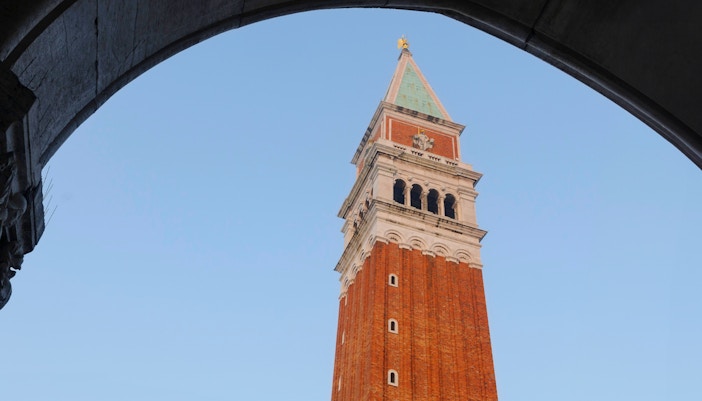
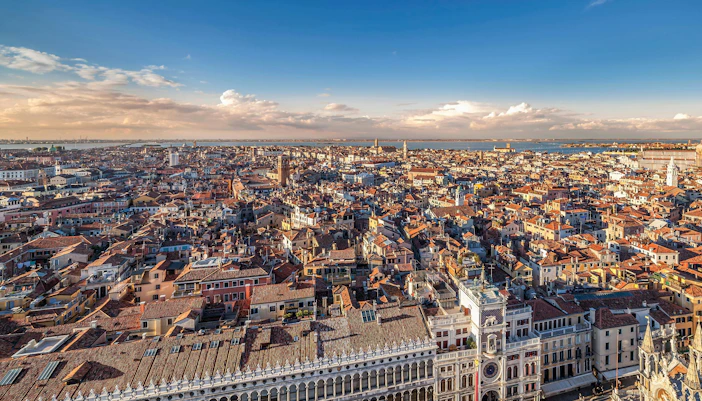
The terrace is better for architectural proximity; the Bell Tower is better for a full-city panorama. From the terrace, you stand almost level with San Marco’s façade details. If you want context and closeness, choose the terrace. For skyline, choose the tower.
How long to spend
Don’t treat the terrace as a fast photo add-on. The best version includes the museum section, the horse context, and time to look back over the square. Give it enough time to deepen your basilica visit, not just interrupt it.

Crowd patterns
Timed entry helps, but the upper route still feels tighter once late-morning groups arrive. The view doesn’t disappear, your ability to pause does. Earlier slots feel calmer and make the museum-to-terrace sequence easier to enjoy at your own pace.
What to prioritize if time is short
Go straight to the loggia edge facing Piazza San Marco first, then step back inside for the museum displays. Most people do the reverse. Start with the outward view while the space feels open, then use the museum to explain what you saw.
Common mistakes to avoid
The biggest mistake is booking a guided basilica tour and assuming terrace access comes with it. The second is rushing outside without studying the façade at close range. Check inclusions first, then slow down once you’re upstairs.
Historical and cultural significance of St. Mark’s Basilica Terrace
What most visitors call the terrace was not created as a modern viewpoint at all. Its deeper significance comes from 1204, when Venice brought the horse-related spoils and other objects from Constantinople to San Marco. The upper loggia began as part of the basilica’s ceremonial façade, not a sightseeing deck. Today, terrace access lets you experience the church the way Venice presented it publicly — elevated above the square, theatrical, and inseparable from civic power.
Know before you go
- Basilica hours: Monday–Saturday, 9:30am–4:45pm last entry; closes at 5:15pm.
- Sundays and national holy days: Sightseeing entry to the basilica runs from 2pm–4:45pm last entry; closes at 5:15pm.
- The Museum and Loggia dei Cavalli run from 9:30am–4:45pm last admission daily; close at 5:15pm.
- On Sundays from 9:30am–2pm, only the museum is open because Mass takes place in the basilica.
- Terrace access follows your timed basilica entry and upper museum route.
- Arrive early for hosted, guided, or priority-entry products. Late arrival is risky.
- Address: San Marco, 328, 30124 Venice, Italy | Find on Maps
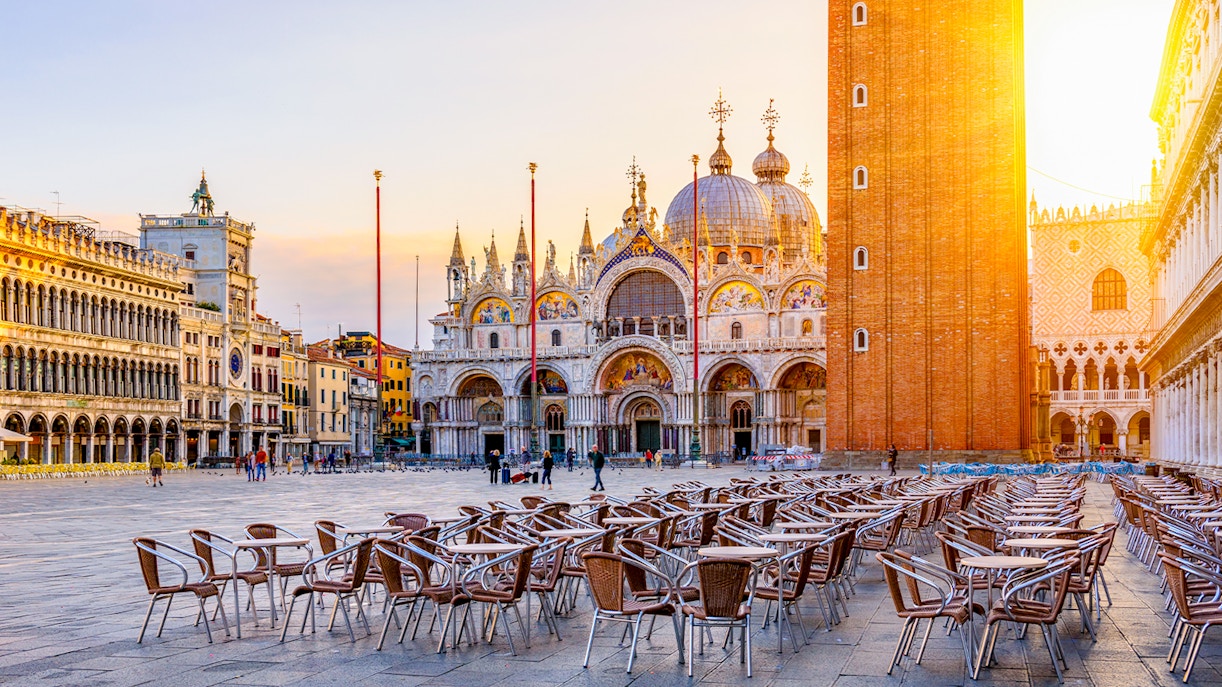
- The terrace is not accessed directly from Piazza San Marco. You enter through the basilica and continue via the Museum and Loggia dei Cavalli route.
- Individual timed visitors are typically routed through Porta San Pietro.
- Guided groups are typically routed through Porta San Clemente.
- Accessible entry is via Porta dei Fiori on the left side of the basilica.
- From Doge’s Palace, the basilica is an adjacent 1–2 minute walk along the square edge.
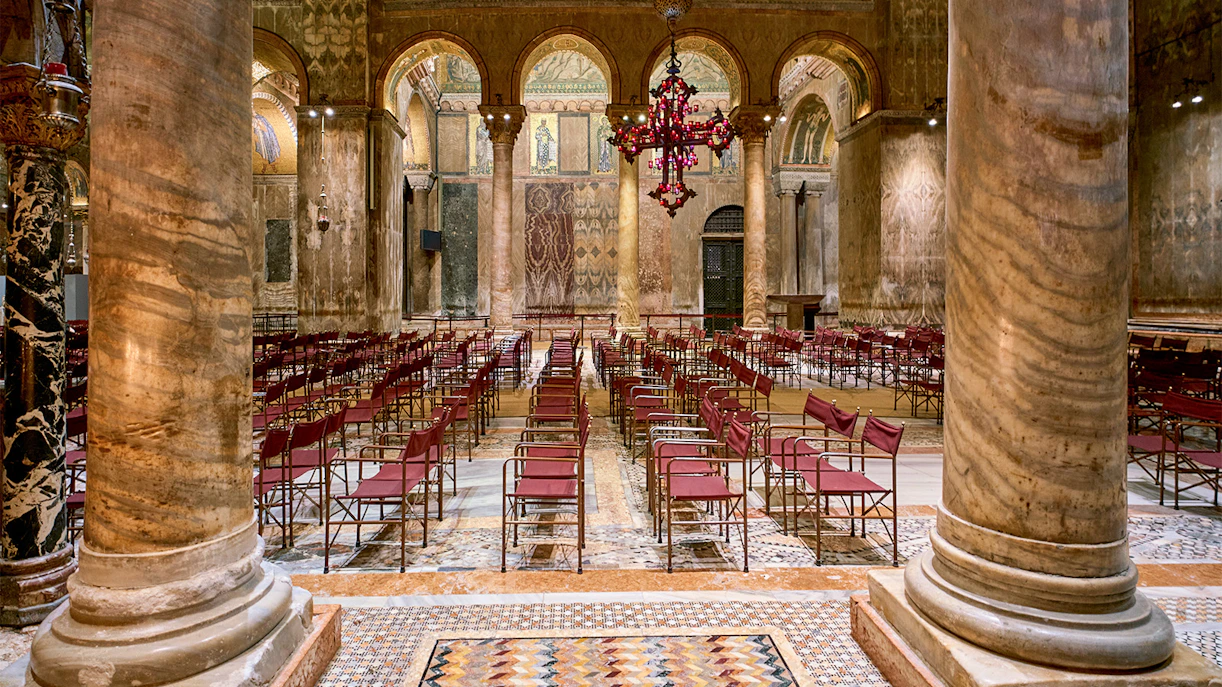
- Visitors with mobility disabilities can enter through Porta dei Fiori, which has a ramp.
- Basilica staff can assist visitors through the most suitable access route.
- The museum upper floor has an elevator and a stairlift/servoscala.
- The main basilica is mostly wheelchair accessible.
- The terrace itself is not wheelchair accessible due to steep and uneven surfaces.
- If you need a fully step-free experience from start to finish, stick to the basilica floor and skip the terrace.
- You must arrive within your booked time window.
- Hosted-entry products require you to enter with the host or escort.
- Large backpacks and bags are not allowed inside the basilica.
- Food and drinks are not permitted inside the attraction.
- Photography is not permitted inside St Mark’s Basilica.
- Religious services can affect sightseeing access even for ticket holders.
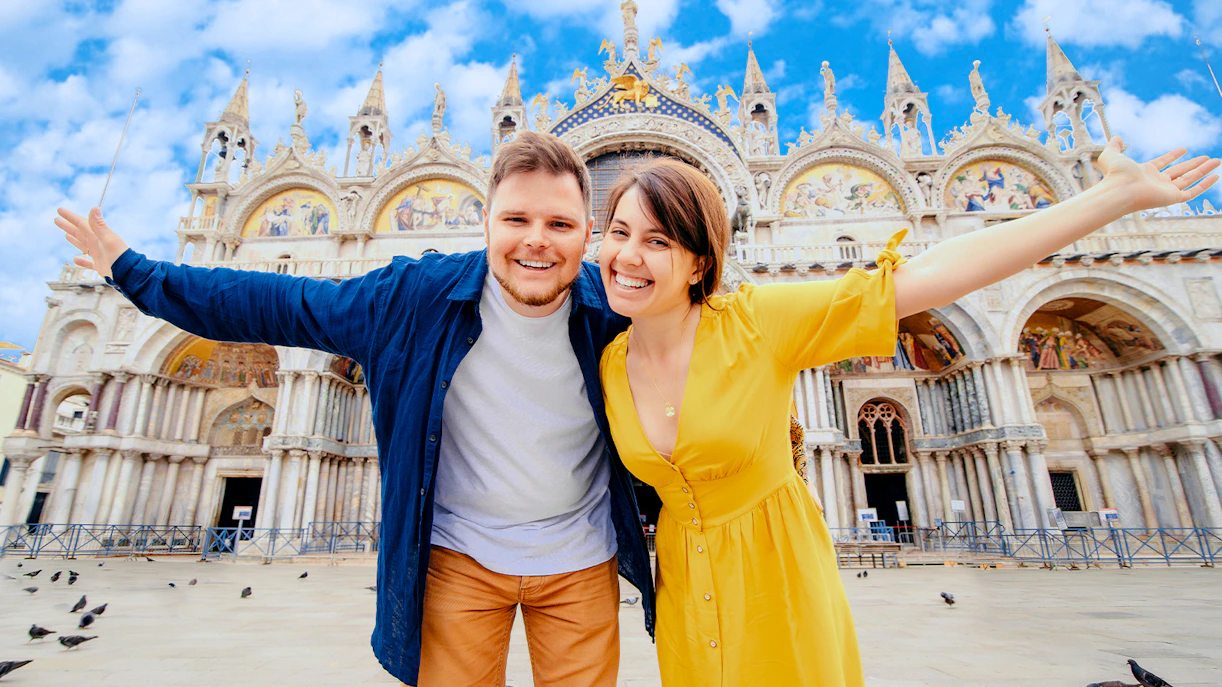
- Shoulders and knees must be covered for entry.
- Shorts, short skirts, and tank tops may lead to refusal at the entrance.
- The dress code is enforced because St Mark’s Basilica is a functioning religious site.
- These rules still apply if your main reason for booking is the terrace or museum.
Frequently asked questions about St. Mark's Basilica terrace tickets
No. Terrace access is not included with all St. Mark’s Basilica tickets. It is available as an upgrade to timed-entry tickets, with the terrace-inclusive option also covering access to the St. Mark’s Museum and Loggia dei Cavalli, plus a multilingual audio guide.
Yes, if you want more than the basilica’s interior. The terrace adds open-air views of St. Mark’s Square, access to the Loggia dei Cavalli and its famous bronze horses, and a closer look at the basilica’s upper-level details. It’s worth it for architecture, history, or photography, but you can skip it if you only want the interior or already plan to visit the Bell Tower for panoramic views.
No. Terrace access is not a standalone daytime visit; it is tied to a basilica entry product.
Plan on about 20–30 extra minutes upstairs, or closer to 45–60 minutes total once entry handling and the museum route are included.
Yes. Terrace-inclusive slots are more limited than standard basilica entry, and busy Venice dates make same-day availability less reliable.
Partly. The museum level has elevator access, but the terrace itself is not wheelchair accessible because of steep and uneven surfaces.
Choose guided for explanation. Choose the terrace-inclusive self-guided option if the upper loggia view matters more, because many guided basilica tours stop below.