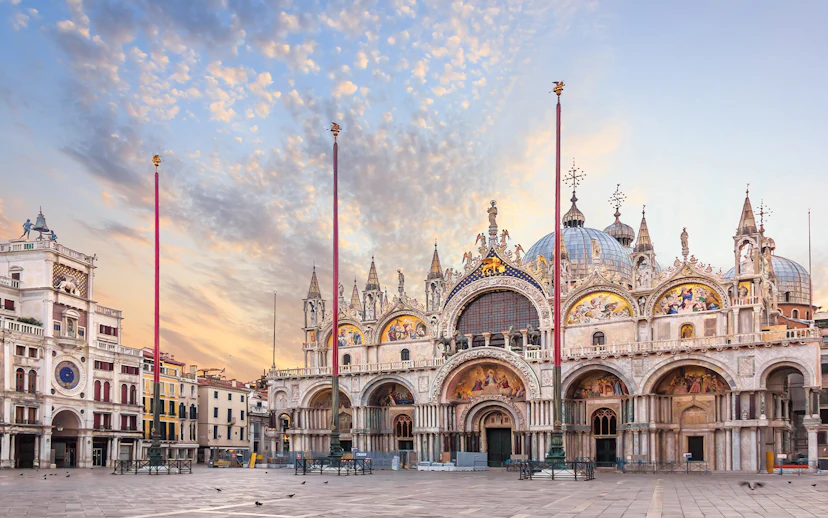
Plan your visit to St. Mark's Basilica
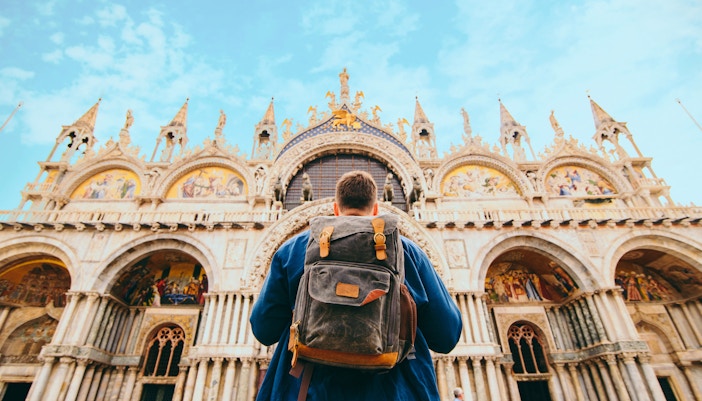
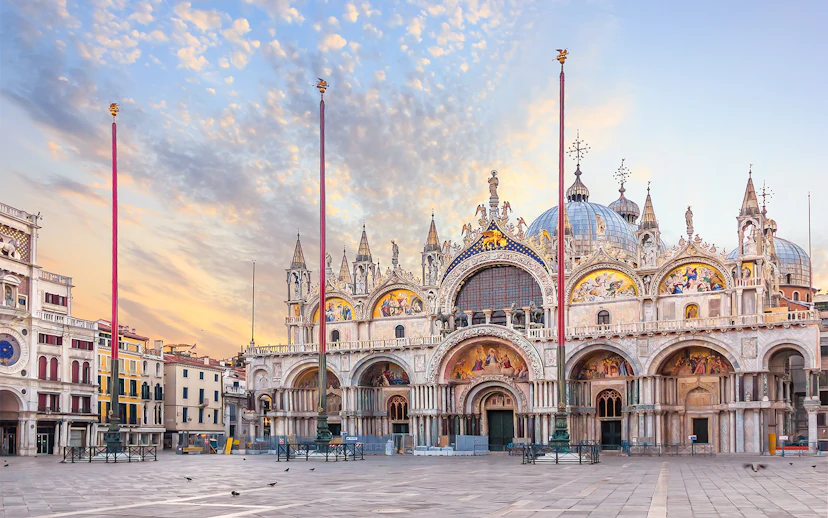
St. Mark's Basilica is Venice's most famous church, best known for its gold mosaics, Byzantine domes, and the sheer richness of its interior. The visit itself is shorter than many people expect, but it feels more intense because entry is timed, the route is controlled, and the interior can be crowded and surprisingly dim outside the illumination window. The biggest difference between an average visit and a great one is timing: choose between brighter mosaics at midday or easier movement at opening or late afternoon. This guide covers the hours, entrances, tickets, route, and practical details that matter most.
Quick overview: St. Mark's Basilica at a glance
If you're deciding when to go, how much time to allow, and whether to book more than basic entry, start here.
- When to visit: Monday-Saturday 9:30am-5:15pm, Sunday and holy days 2pm-5:15pm for tourist visits; 9:30am-10am is noticeably calmer than 11:30am-1pm, because tour groups converge just as the mosaics are specially illuminated.
- Getting in: Only €23 for a timed skip-the-line slot . Guided tours usually start from about €32, and advance booking matters most from spring through early fall when timed entries and guided departures sell out first.
- How long to allow: 45-60 min works for most visitors. It stretches closer to 90 min if you add the Pala d'Oro and St. Mark's Museum/terrace, or want to linger for the midday lighting.
- What most people miss: The Pala d'Oro and the upstairs museum/terrace add far more than a basic nave visit, and many visitors also rush past the rippling marble floor because they're only looking up.
- Is a guide worth it? Yes if you want the mosaics, relics, and layout explained properly; if you mainly want fast entry and a short look inside, a timed ticket plus audio guide is usually enough.
🎟️ Slots for St. Mark's Basilica sell out days or even weeks in advance during summer, long weekends, and major holidays. Lock in your visit before the time you want is gone. See ticket options
Jump to what you need
Where and when to go
A quick main-route visit can take as little as 20-30 min, which is why some first-timers underestimate it. Give yourself 45-60 min if you want to properly absorb the nave, the mosaics, and the flow of the space. Add another 20-30 min if you're including the Pala d'Oro or the museum/terrace. Guided tours usually run about 1 hour, while night experiences can stretch closer to 1.5 hours.
Which St. Mark's Basilica ticket is best for you
| Ticket type | What's included | Best for | Price range |
|---|---|---|---|
St. Mark's Basilica skip-the-line access | • Hosted timed entry • Optional audio guide, Pala d'Oro, Terrace & St. Mark's Museum | • Skip the ticket queue • Explore at your own pace | From €23 |
St. Mark's Basilica guided tour | • Skip-the-line entry • Expert guide • Piazza San Marco & Basilica tour • Museum entry | • Learn the basilica's history • Cover highlights efficiently | From €32 |
St. Mark's Basilica + Doge's Palace guided tour | • Skip-the-line entry to both sites • Expert guide • Bridge of Sighs & New Prisons | • See Venice's top landmarks together in one booking • Deep dive into Venetian history | From €63 |
Combo: St. Mark's Basilica + Doge's Palace & Museums | • Hosted basilica entry with audio guide • Doge's Palace entry with Museo Correr, Archaeological Museum & Marciana Library • Optional ACTV pass | • Best value for multiple attractions • Explore at your own pace | From €55 |
St. Mark's Basilica night tour | • After-hours basilica entry • Expert guide • Optional Doge's Palace | • Fewer crowds, more ambience • Exclusive after-hours access | From €129 |
⚠️ Watch out for unofficial sellers. Street vendors and kiosks near St. Mark's Basilica often sell overpriced or unclear entry options. Buy only through the official site or a verified partner - an invalid or mistimed ticket still leaves you joining the longest queue, with no recourse.
How do you get around St. Mark's Basilica?
What are the most significant spaces in St. Mark's Basilica?
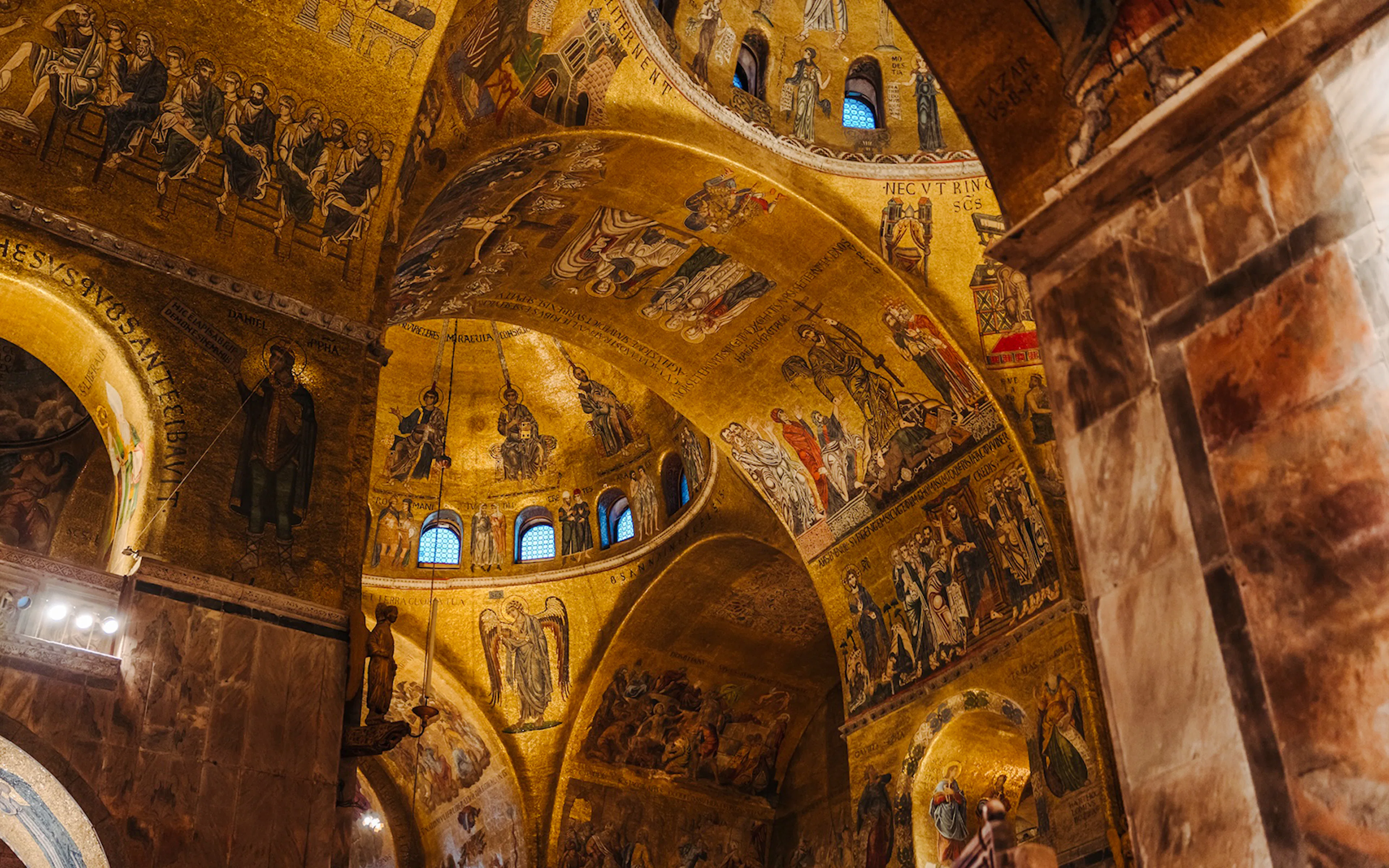
Golden mosaics of the domes
Era: 11th-13th-century gold-ground mosaics
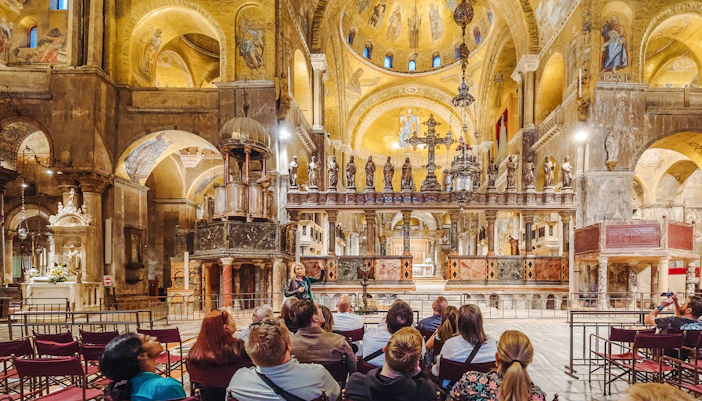
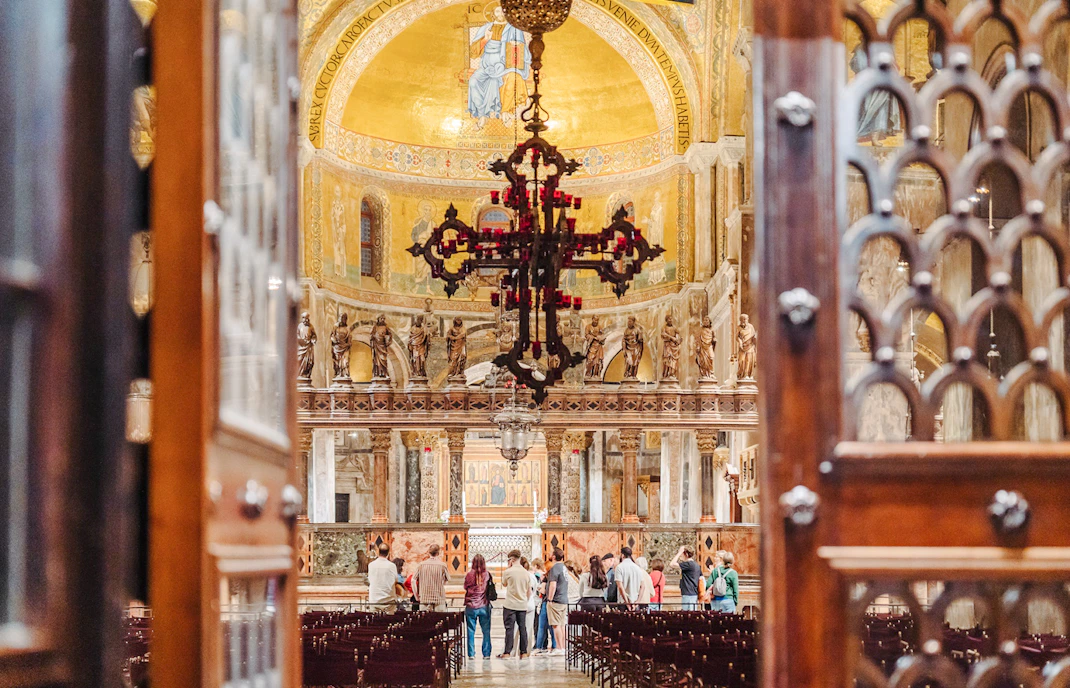
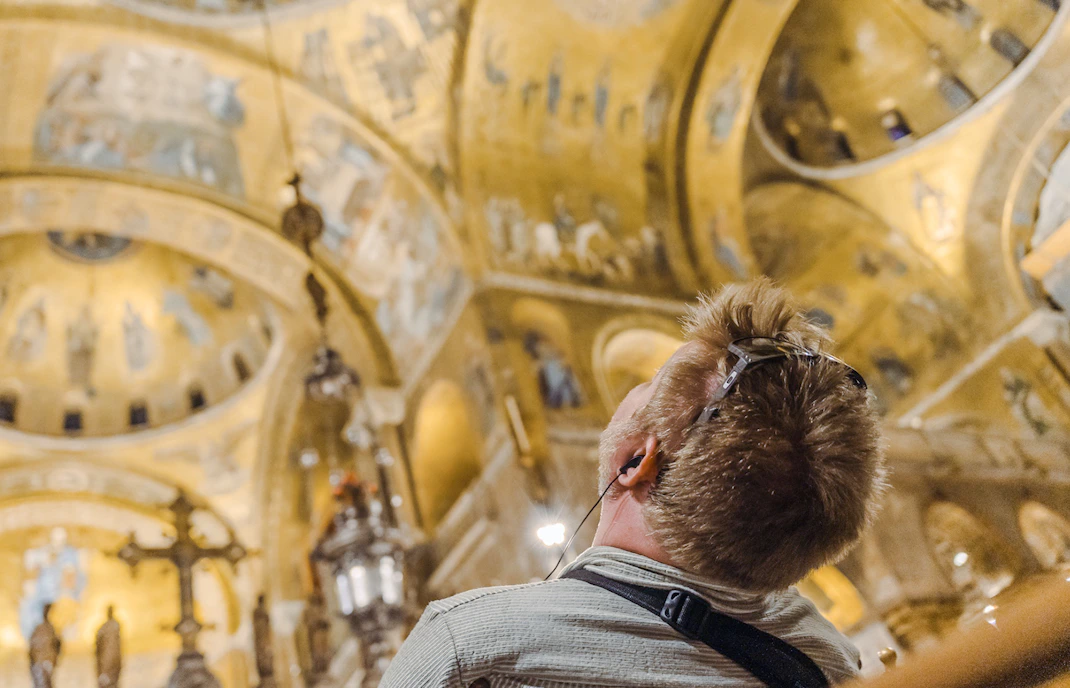
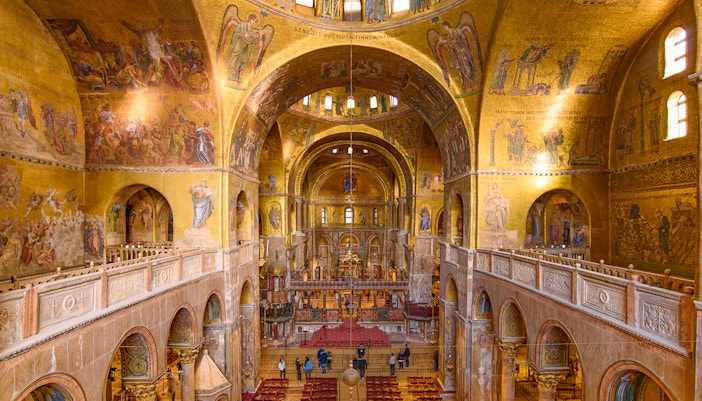
The basilica's 8,000 sq. m of golden mosaics earned it the nickname Church of Gold. Their brilliance depends on the light, so pause in the narthex to let your eyes adjust before exploring further.
Where to find it: Look up from the narthex and central nave, especially beneath the main domes.
Pala d'Oro
Type: Byzantine jeweled altarpiece
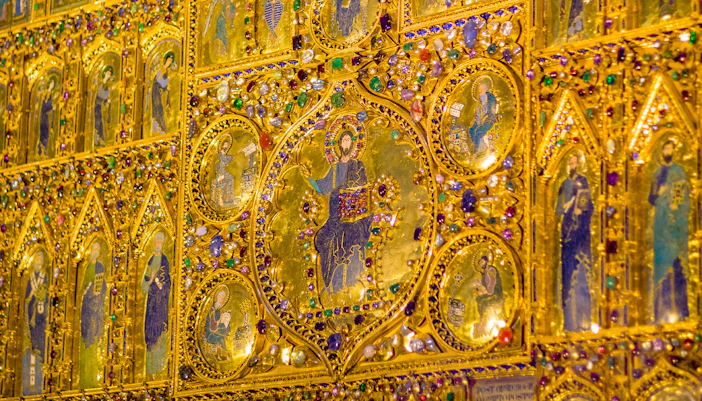
The Pala d'Oro, the basilica's gilded altarpiece, is adorned with intricate enamels and nearly 2,000 gems. It requires a separate ticket or an included tour, making it the most worthwhile upgrade for art lovers.
Where to find it: Behind the main altar at the eastern end of the basilica.
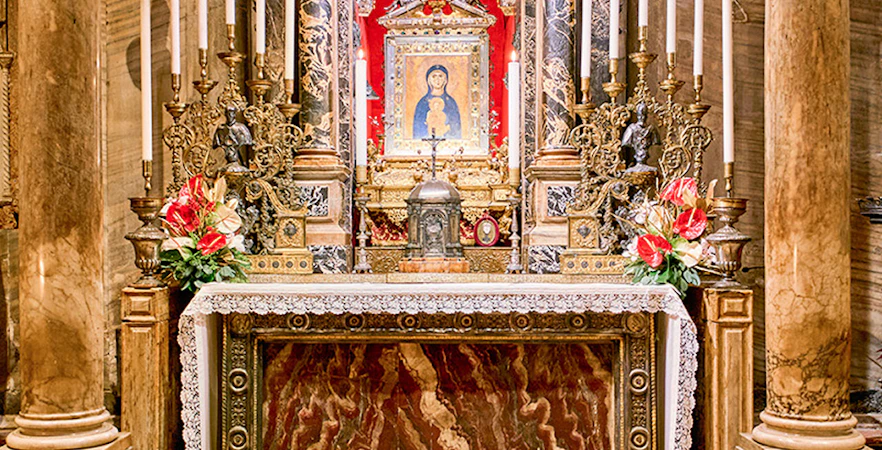
St. Mark's tomb and high altar
Significance: The basilica's spiritual center
Built to house the relics of St. Mark, the basilica's high altar is its spiritual heart. Pause here to appreciate the altar, surrounding columns, and the purpose behind the entire church.
Where to find it: At the crossing beneath the central dome, around the main altar zone.
St. Mark's Museum
Collection: Original horses, liturgical objects, and architectural fragments
Visit St. Mark's Museum to see the original bronze Horses of St. Mark, as the façade displays replicas. It also offers a quieter, closer look at the basilica's history and treasures.
Where to find it: On the upper level, reached from the basilica interior stair/lift access.
Loggia dei Cavalli terrace
Type: Exterior viewing gallery
The terrace offers sweeping views of Piazza San Marco without climbing the Bell Tower. Access is included with the museum ticket, making it one of the basilica's most worthwhile upgrades.
Where to find it: Through the upper museum level, behind the horse gallery.
Marble floor
Material: Inlaid marble pavement
While the mosaics draw your eyes upward, the marble floor tells its own story through intricate patterns and subtle undulations shaped by time and Venice's lagoon.
Where to find it: Throughout the narthex and nave, especially in the central floor panels.
The basilica's crowd flow pushes everyone's attention upward, which is exactly why the rippling marble floor, the upstairs museum, and the terrace get missed so often. If you're paying for more than a 20-minute pass-through, build those into your route on purpose.
Facilities and accessibility
- 🎒 Cloakroom / lockers: Large bags are not allowed inside, but you can use the nearby free luggage drop at Ateneo San Basso before joining the queue.
- 🚻 Restrooms: There are no visitor restrooms inside the basilica, so use nearby public facilities before your timed entry.
- 🪑 Seating / rest areas: Seating is limited because the visitor route is controlled, so don't count on long indoor rest breaks once you're inside.
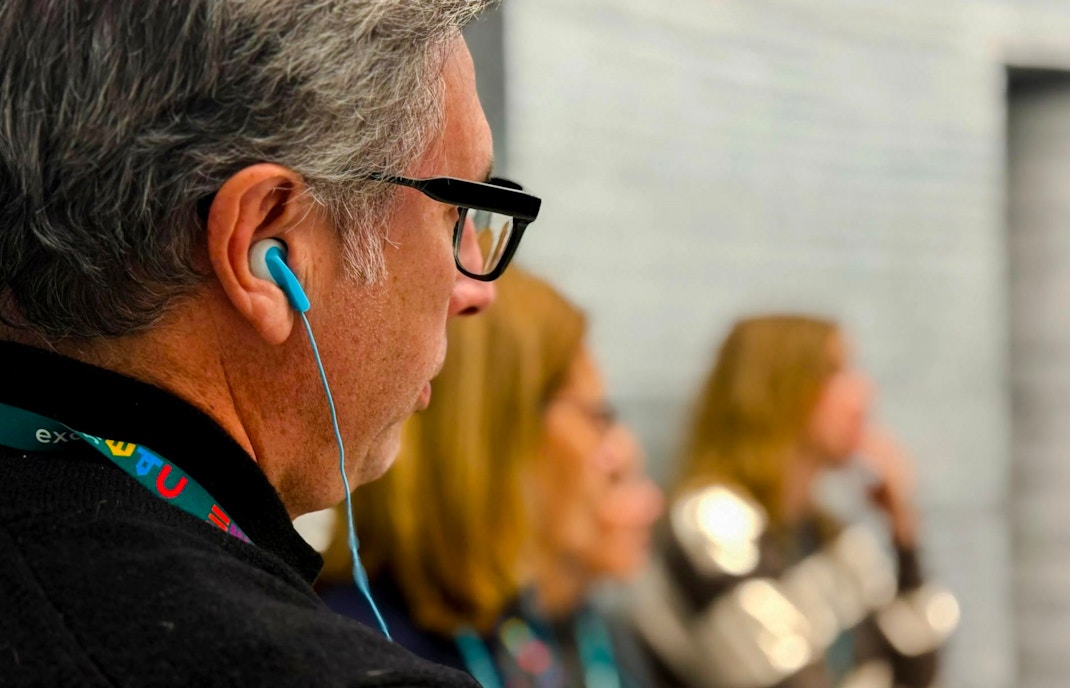
- 🔊 Audioguide: Selected tickets include an audio guide app in English, Italian, Spanish, French, and German, and earphones are required inside if you use it.
- ⛪ Prayer access: The basilica remains a functioning place of worship, which is why staff enforce silence, dress rules, and route control more strictly than at a typical museum.
- ♿ Mobility: The basilica is mostly wheelchair accessible, with ramped access at Porta dei Fiori and lifts for key areas, though the Loggia dei Cavalli terrace is not wheelchair accessible.
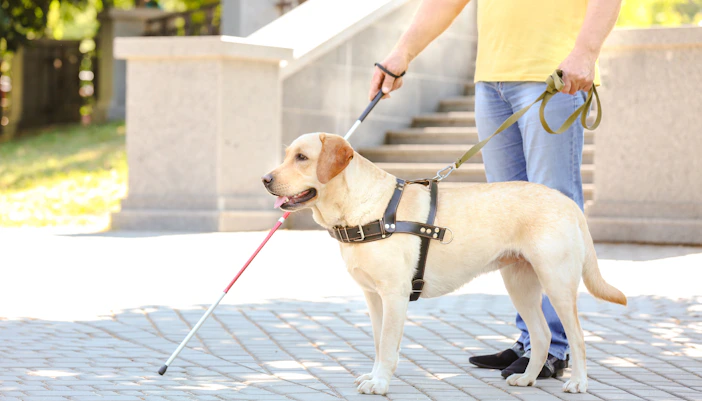
- 👁️ Visual impairments: Guide dogs and other service animals are allowed, and the audio guide helps with orientation if you're visiting independently.
- 🧠 Cognitive and sensory needs: The quietest window is usually right at opening or near last entry, while 11:30am-1pm is the loudest and most visually overwhelming because the illumination window draws large groups.
- 👨👩👧 Families and strollers: Prams and strollers are allowed, and the main route is generally manageable, but the crowd density at midday can make movement slow and stressful.
St. Mark's Basilica works best for children who can handle a short, visually rich visit and enjoy spotting details rather than touching or interacting with exhibits.
- 🕐 Time: 20-30 min is realistic with younger children for the main route, or up to 45-60 min if you're adding the museum and terrace.
- 🏠 Facilities: Stroller access helps, but the lack of restrooms inside means you should handle bathroom stops before security.
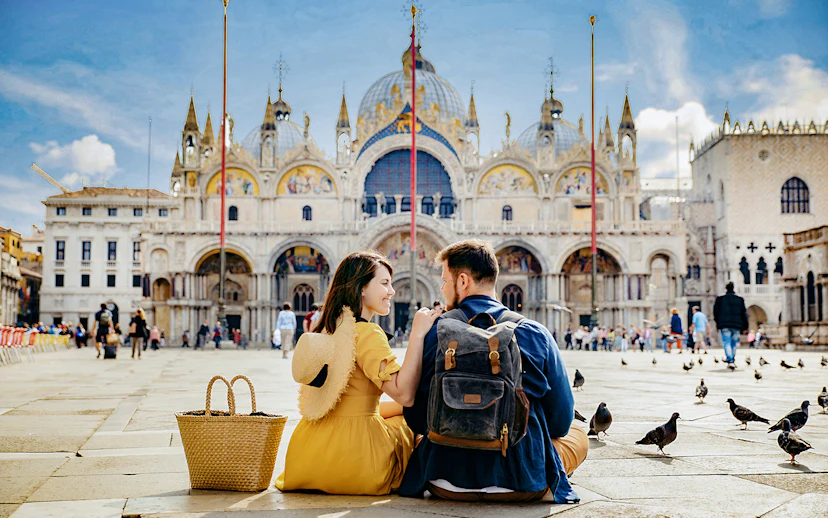
- 💡 Engagement: Ask children to look for the bronze horses upstairs and the animal patterns in the marble floor so the visit feels like a visual hunt instead of a lecture.
- 🎒 Logistics: Bring a light layer that can cover shoulders, carry only a small bag, and aim for the first slot of the day if your child is sensitive to crowds.
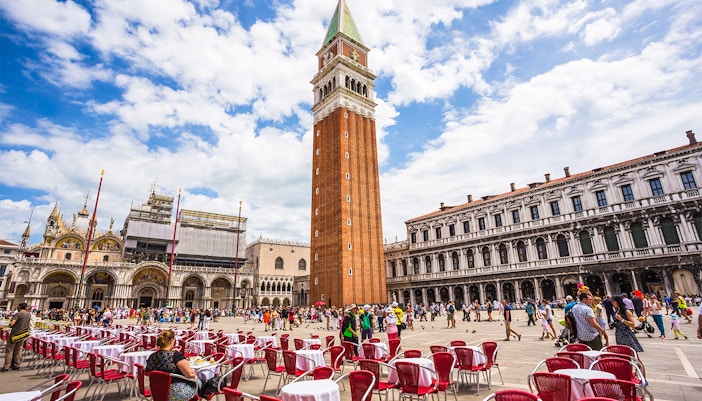
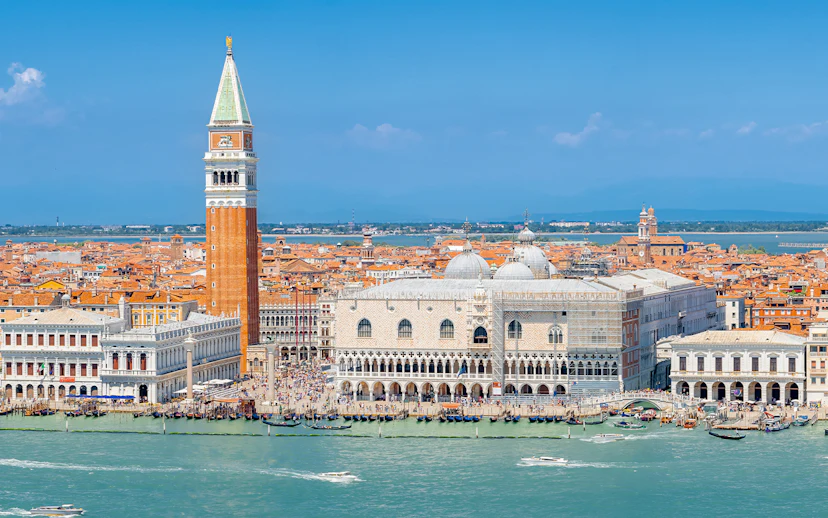
- 📍 After your visit: St. Mark's Campanile is the easiest nearby follow-up because the elevator ride adds a very different perspective without a long walk.
Rules and restrictions
⚠️ Re-entry is not permitted once you leave St. Mark's Basilica. Plan restroom stops, bag drop, and any meal break before entering - the nearest alternatives are outside the church, and returning at peak times means joining the security line again.
Practical tips
- Booking and arrival: Book timed entry several days ahead in spring and fall, and much earlier for July, August, and long weekends; on hosted tickets, late arrival can mean missing entry altogether.
- Pacing: Don't spend all your attention in the first five minutes under the main dome - save time for the Pala d'Oro and the upstairs museum/terrace, because that's where many rushed visits feel thin.
- Crowd management: Choose 9:30am or the last slot around 4:30pm if space matters more than lighting; choose 11:30am-12:45pm only if seeing the mosaics fully illuminated is your top priority.
- What to bring or leave behind: Carry a small bag only, because large backpacks mean an extra stop at the free cloakroom near Ateneo San Basso and can turn a 30-minute visit into a longer logistical loop.
- Food and drink: Eat before or after your slot rather than trying to squeeze lunch in between, since there are no restrooms or food service inside and a standard visit is often shorter than people expect.
What else is worth visiting nearby?
Eat, shop and stay near St. Mark's Basilica
- On-site: No café or restaurant operates inside the basilica itself, so eat before or after your timed entry rather than trying to build a meal stop into the visit.
- Caffè Florian (2-min walk, Piazza San Marco 57): Coffee, pastries, and light plates in Venice's most famous café; worth it for the atmosphere more than the price.
- Gran Caffè Quadri (2-min walk, Piazza San Marco 121): Venetian dishes and aperitivo with square views; a practical choice if you want a sit-down meal without leaving San Marco.
- Dal Moro's Fresh Pasta to Go (8-min walk, Calle de la Casseleria 5322): Quick takeaway pasta that works well after a short basilica visit if you want something more casual.
- 💡 Pro tip: Eat before 12 noon or after 2pm if you're staying in San Marco, because lunch traffic and basilica queues tend to peak at almost the same time.
- Libreria Acqua Alta: Books, stationery, and Venice-themed gifts in a memorable setting about 10 min away on foot, and a nicer detour than another souvenir stall in the square.
- Museum-area bookshops in San Marco: Art books, postcards, and Venice history titles close to the square if you want a more useful souvenir than generic masks or magnets.
San Marco is the easiest base for an early basilica slot or a last-entry visit, and it makes pre-9:30am starts much less stressful. The trade-off is price and crowding: you're paying for location, not neighborhood calm. If you want to step into Piazza San Marco before the day-tripper rush, it works very well; if you want better value or a more lived-in feel, there are smarter bases elsewhere.
- Price point: Mostly high, with occasional mid-range options in side streets away from the square itself.
- Best for: Short stays where walking to St. Mark's Basilica at opening or near last entry matters more than nightlife or budget.
- Consider instead: Castello if you want a quieter walkable base nearby, or San Polo and Santa Croce if you want better value and easier station access on a longer Venice stay.
Frequently asked questions about visiting St. Mark's Basilica
Most visits take 45-60 min, though a quick main-route pass can be done in 20-30 min. Add another 20-30 min if you're visiting the Pala d'Oro and the museum/terrace, or if you're timing your entry around the midday illumination and want to slow down.
Yes, booking in advance is the safer choice if you're visiting from spring through early fall or want a specific time slot. Same-day entry is possible, but timed reservations and guided tours are the first to sell out, and the public queue can stretch to 45-60 min at peak times.
Yes, skip-the-line is usually worth it from March to October and on weekends because it saves the long public queue. You still go through security, but that line is usually much shorter than the standard entry line that forms in Piazza San Marco.
Arrive at least 15 min early for a timed or hosted ticket. The basilica is strict about entry windows, and late arrivals can miss their slot, especially when hosts move groups through the Porta dei Fiori entrance on schedule.
You can bring a small bag, but large backpacks and bulky luggage are not allowed inside. The practical fix is to leave them at the nearby free luggage drop at Ateneo San Basso before you join the queue or meet your host.
No, photography and videography are not allowed inside St. Mark's Basilica. That rule applies throughout the church, and it also covers flash, tripods, selfie sticks, and commercial equipment, so plan to take your photos outside or from approved exterior viewpoints.
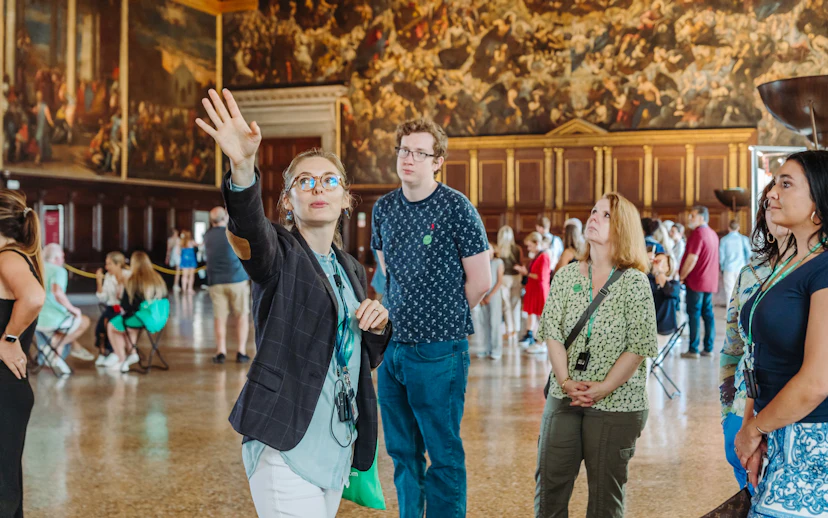
Yes, group visits are common, and guided groups are one of the easiest ways to understand the basilica quickly. If you're joining a group tour, expect timed entry, headsets for larger groups, and a structured route that keeps you moving through the busiest areas efficiently.
Yes, it can work well for families if you keep the visit short and choose a quieter time. The main route is visually striking for children, but the experience is still a church visit with strict rules, no photography, and no restrooms inside, so opening time is usually the easiest slot.
Yes, most of the basilica is wheelchair accessible, and Porta dei Fiori provides ramped access. Key parts of the upper level can be reached with lifts, but the Loggia dei Cavalli terrace is not wheelchair accessible, so it is better to treat the museum and terrace as partial rather than full access.
Food is available nearby, but not inside the basilica itself. Since a standard visit is usually under 1 hour and there are no restrooms inside, it's smarter to eat before or after your slot rather than trying to work a café stop into the middle of the visit.
Shoulders and knees must be covered for entry, and the rule is enforced for all visitors. Tank tops, very short shorts, and very short skirts can get you delayed or turned away, so carry a light layer even in summer. Check the dress code →
No, the basilica floor is generally reserved for worship on Sunday morning, and tourist visits start at 2pm. If Sunday is your only option, plan around the afternoon opening and remember that the shift concentrates crowds later in the day.