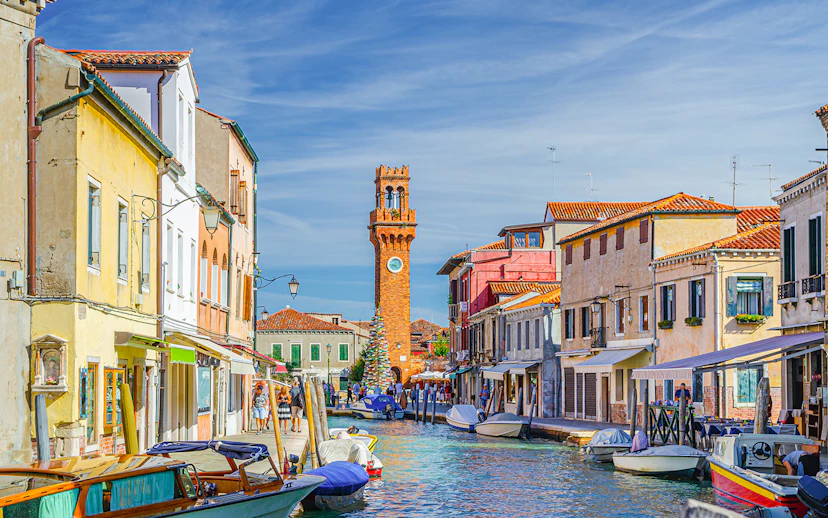
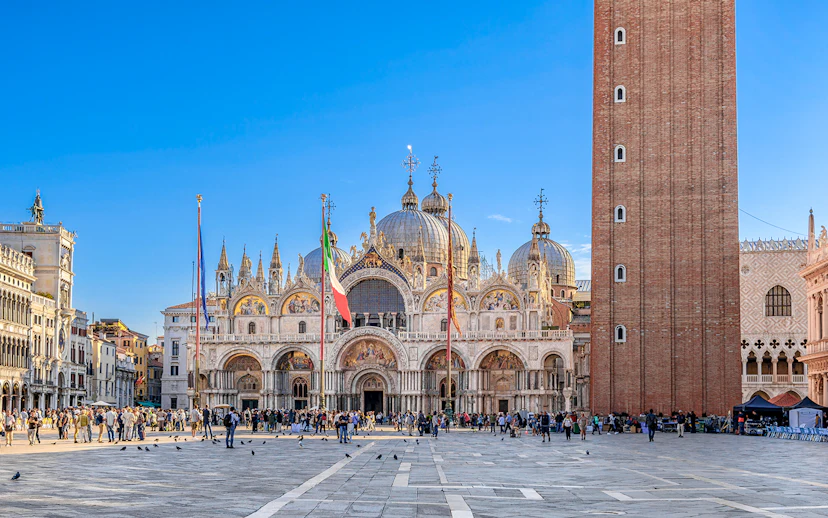
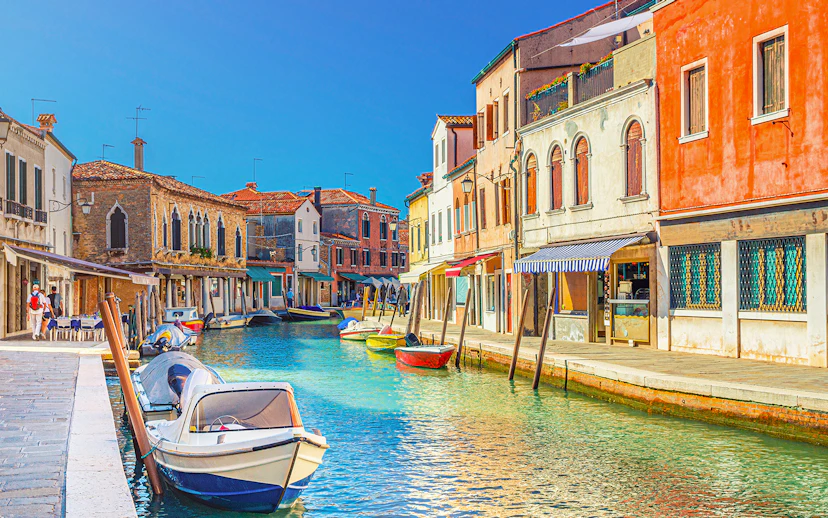
Visit earlier in the day if you want a slower look at the museum’s historic glass before Murano gets busier with day-trippers. The collection rewards close viewing, especially when you’re comparing techniques, colors, and decorative styles across different periods.
Quick overview
| Field | Field |
|---|---|
Entry | Paid entry; a museum ticket is required |
What you’ll see | Centuries of Murano glass, from archaeological finds to Renaissance works and modern design |
Time needed | Around 1–1.5 hours |
Best for | Glassmaking history, decorative arts & design lovers |
Where it is | Palazzo Giustinian, Fondamenta Marco Giustinian, Murano |
Murano Glass Museum is a ticketed attraction, so you’ll need admission to enter. You can book a standalone museum ticket or choose the Island Museums ticket, which also covers the Burano Lace Museum and Torcello Museum. The museum is housed in Palazzo Giustinian on Murano. Want to see glassmaking in action instead? Choose a Murano tour with a glass-factory demonstration.
How to best experience Murano Glass Museum
Best time to visit
How long to spend
Allow around 1–1.5 hours for the museum. That gives you enough time to move from Roman archaeological glass through Murano’s Golden Age, 19th-century revival, and 20th-century design without turning the visit into a rushed walk-through.
Where it fits in your day
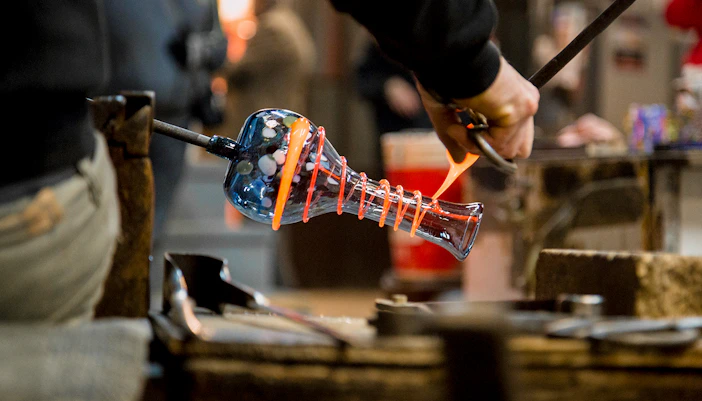
Use the museum as the context-setting stop for a Murano visit. See how the island’s glassmaking evolved here first, then visit a working furnace or glass factory afterward to watch the techniques behind the collection in action.
Crowd patterns
The museum is easier to appreciate when you have space to slow down in front of the cases. Large island-tour groups tend to move through Murano during the middle of the day, so earlier visits usually feel less rushed.
What to prioritize if time is short
Focus on the Golden Age galleries, the murrine and millefiori displays, and the 1900–1970 glass and design section. Together, they show Murano at its most technically inventive and visually distinctive.
Common mistakes to avoid
Don’t come expecting a live glassblowing show inside the museum. This is where you understand the history, techniques, and design evolution of Murano glass; for furnace demonstrations, pair the museum with a separate glass-factory visit.
What makes Murano Glass Museum worth visiting
1/4
See centuries of glassmaking in one place
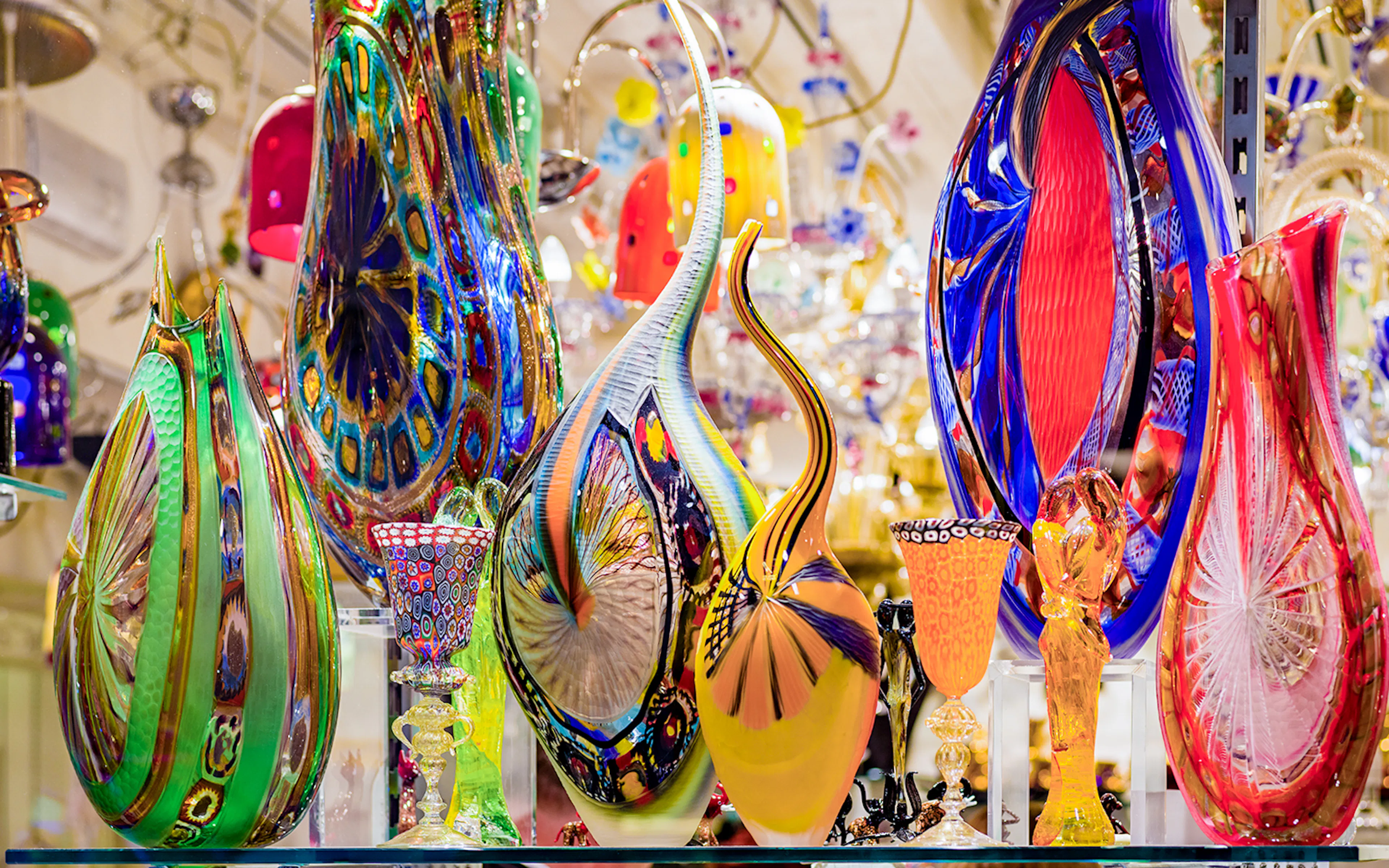
The collection stretches far beyond the Murano glass you see in shops today. Ancient finds, Renaissance pieces, elaborate historic works, and modern designs reveal how glassmaking changed across centuries while Murano continually reinvented the craft.
Spot techniques Murano made famous
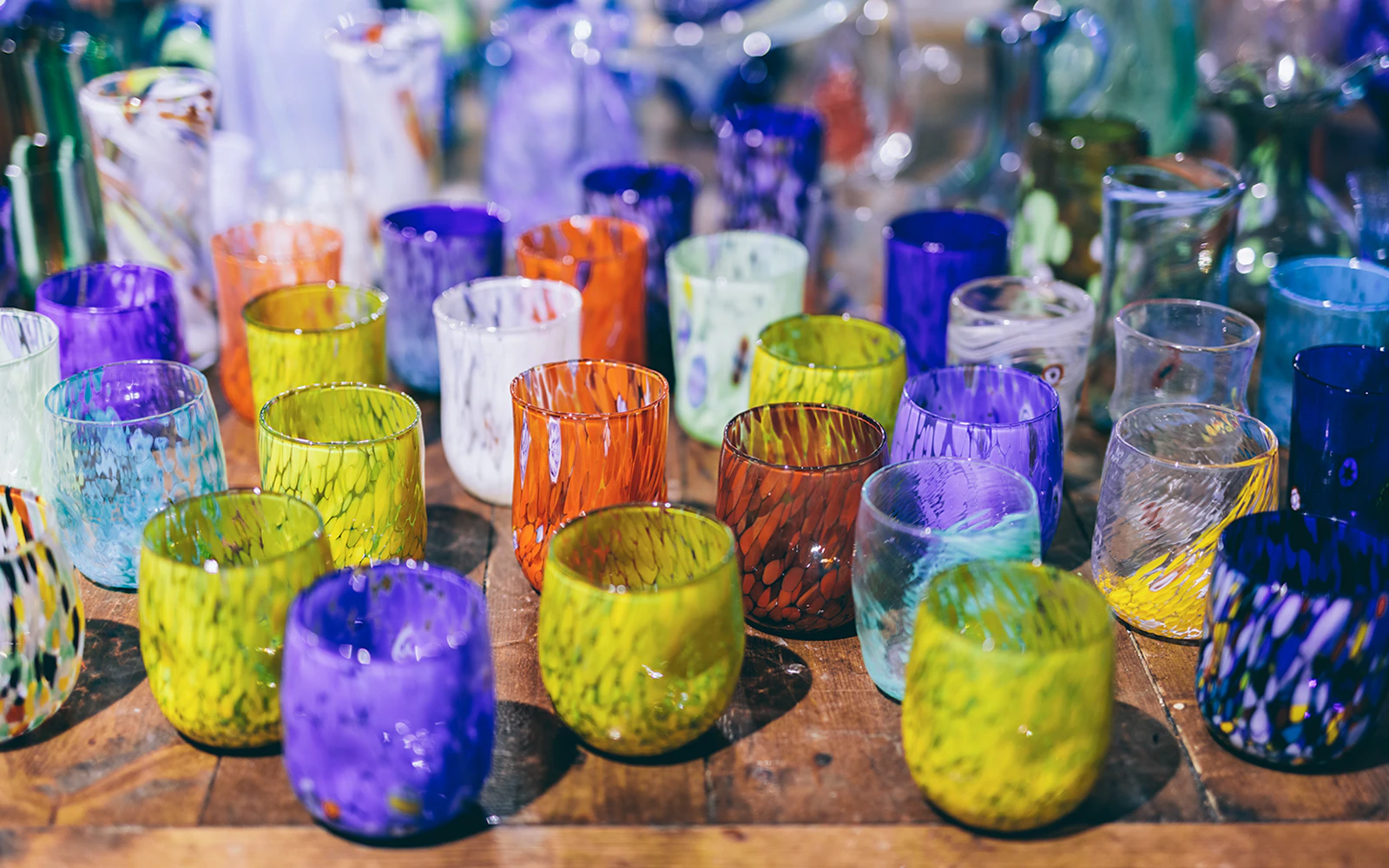
Look beyond the finished object and start noticing how it was made. The galleries reveal techniques and decorative approaches associated with Murano, from delicate filigree and lattimo to colorful murrine and millefiori patterns.
Get closer to the details
Glass rewards a second look. Transparency, color, texture, and impossibly fine decoration can be difficult to appreciate in photographs. Seeing the objects up close makes the precision—and experimentation—behind Murano craftsmanship much easier to understand.
Understand Murano before seeing a furnace
A glassblowing demonstration shows you the spectacle; the museum gives it context. See how techniques and styles evolved here, then a separate furnace visit becomes more meaningful because you’ll recognise some of the processes behind the finished glass.
What to see inside Murano Glass Museum
The museum takes you through glassmaking almost like a timeline, beginning with ancient Roman finds before moving into the centuries that made Murano famous. As you explore, you’ll see techniques become more ambitious, decoration more elaborate, and glass gradually evolve from luxury craftsmanship into a medium for modern design.

Roman glass & the origins
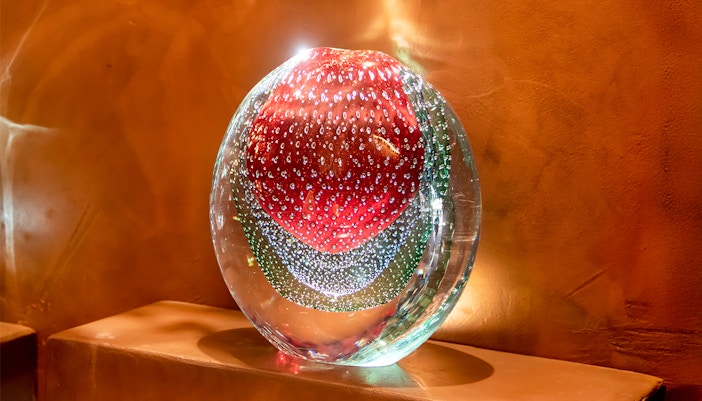
Start with archaeological glass from the 1st to 3rd centuries AD, including vessels recovered from ancient burial sites. These pieces predate Murano’s rise as a glassmaking center and reveal techniques and forms that later continued to inspire Venetian glassmakers.
- Look out for: Ancient funerary vessels and remarkably delicate Roman glassware.
Murano’s Golden Age
Move into the 14th–17th centuries, when Murano glass became celebrated across Europe. This is where innovations such as exceptionally clear cristallo, filigree decoration, ice glass, and increasingly sophisticated forms show just how technically advanced the island’s furnaces had become.
- Look out for: The celebrated Coppa Barovier, dating to around 1470–80.
Color, imitation & 18th-century creativity
The 18th-century galleries show glassmakers having much more fun with the material. Look for opalescent lattimo, chalcedony glass, aventurine, decorative mirrors, and objects designed to imitate the appearance of other precious materials.
- Look out for: Murano mirrors and elaborate decorative glass.
Murrine, millefiori & Venetian beads
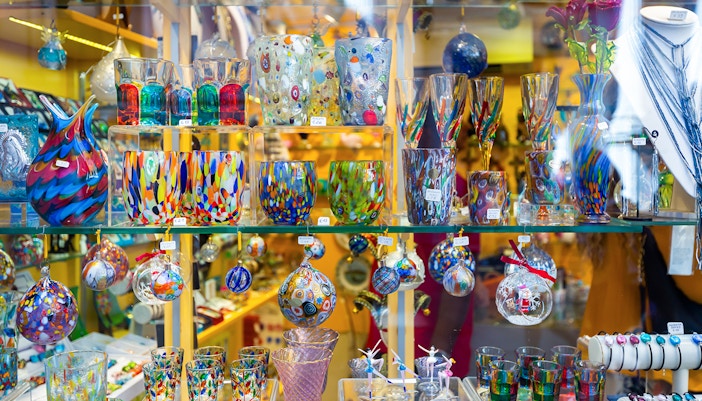
Here, color becomes the star. Explore murrine and millefiori, created through carefully assembled colored glass rods, alongside Venetian beads and conterie. The displays reveal the precision behind some of Murano’s most instantly recognizable patterns and decorative traditions.
- Look out for: Franchini murrine and intricate late 19th-century lampwork beads.
The 19th-century revival
After a difficult period for Murano glassmaking, the 19th century brought a major revival. This part of the collection shows glassmakers rediscovering historic techniques while experimenting with increasingly complex craftsmanship, helping put Murano back on the international design map.
- Look out for: Filigree work and pieces connected to Murano’s renewed international success.
Glass meets modern design
Finish with 1900–1970, when Murano became a laboratory for modern design. Artists, designers, and master glassmakers experimented with shape, texture, color, and traditional techniques, creating a distinctly modern language while keeping Murano craftsmanship at its core.
- Look out for: Works associated with names such as Vittorio Zecchin, Carlo Scarpa, Archimede Seguso, Alfredo Barbini, and Napoleone Martinuzzi.
Must-see Popular Artworks at Murano Glass Museum
1/4
The Barovier Cup
Dating to around 1470, this deep-blue Renaissance cup is one of the museum’s great treasures. Decorated with enamel, gold, portraits, and a lively procession of figures, it shows how Murano glass could become a canvas for remarkably detailed storytelling.
The golden cesendello
This unusual elongated hanging lamp takes inspiration from Eastern forms and combines grooved glass with delicate gold decoration. Its distinctive silhouette makes it stand apart from the goblets and vessels nearby—and reveals how Venetian glassmakers transformed influences arriving from beyond the lagoon.
Franchini’s miniature murrine
Look very closely. Giovanni Battista Franchini and his son Giacomo pushed murrine techniques to extraordinary levels, creating tiny patterned glass compositions and even miniature portraits. What initially looks like a colorful piece of glass can reveal astonishing detail at close range.
20th-century Murano design
The modern collection shows Murano breaking decisively from its historic forms. Works connected with designers such as Vittorio Zecchin and Carlo Scarpa experiment with cleaner silhouettes, unusual textures, layered colors, and traditional techniques reimagined for a new century.
How Murano became the home of Venetian glass
Murano’s glass story changed dramatically in 1291, when Venice ordered glass furnaces to be moved to the island, partly because of the fire risk they posed in the city. Concentrating furnaces and generations of skilled glassmakers on Murano helped the island develop into one of Europe’s great glassmaking centers. The museum came much later. Founded in 1861 inside Palazzo Giustinian, it was created not simply to display beautiful objects, but to preserve the history and techniques of a craft deeply tied to Murano’s identity.
In 1862, Abbot Vincenzo Zanetti also established a school alongside it, where local glassworkers could study historic pieces and drawing—turning the museum into a place where Murano’s past could actively inform its future.
Architecture of Murano Glass Museum
Murano Glass Museum is as interesting for its setting as for some of the objects it holds. The collection occupies Palazzo Giustinian, a historic palace that once served as the residence of the bishops of Torcello. As you move between galleries, look beyond the display cases—the grand rooms and decorative details preserve another layer of Venetian Lagoon history.
The Portego and its frescoed ceiling
The Portego, the palace’s grand central hall, is one of the architectural highlights of the museum. Its richly decorated ceiling features an 18th-century fresco by Francesco Zugno, depicting the Triumph of San Lorenzo Giustinian.
- Look up—the ceiling is easy to miss when your attention is on the glass.
- Notice the scale of the hall compared with the surrounding galleries.
- The historic setting provides a striking backdrop for the museum’s collection.
A former residence of the bishops of Torcello
Long before it became a glass museum, Palazzo Giustinian was associated with the bishops of Torcello. Its former palace rooms give the collection a setting that feels very different from a purpose-built modern museum.
- Notice the proportions and decorative details of the historic rooms.
- Doorways, ceilings, and interior spaces reveal traces of the building’s earlier function.
- The palace connects Murano with the wider history of the Venetian Lagoon.
From historic palace to glass museum
In 1861, Palazzo Giustinian became home to the newly founded Glass Museum. Today, the building brings two histories together: the centuries-old palace itself and the evolution of Murano glass displayed within it.
- Historic interiors sit alongside glass spanning different periods.
- Moving through the building creates a contrast between old palace architecture and changing glass design.
- Pause between galleries to notice the surroundings rather than treating the palace simply as a backdrop.
What to know for your Murano Glass Museum visit
- April 1–October 31: Open daily from 10am–6pm; last admission at 5pm.
- November 1–March 31: Open daily from 10am–5pm; last admission at 4pm.
- From May 1–September 26, 2026, the museum stays open until 8pm on Fridays and Saturdays; last admission is at 7pm.
- Closing procedures begin 20 minutes before the stated closing time.
- Murano Glass Museum is at Fondamenta Giustinian 8, Murano. Find on maps
- From Piazzale Roma, public vaporetto connections include Lines 4.1, 4.2 and 3.
- For Lines 4.1 and 4.2, use the Murano Museo stop, conveniently located for the museum.

- Murano Glass Museum is officially listed as accessible for visitors with disabilities.
- A lift and accessible visitor services are available inside the museum.
- The museum occupies a protected historic building, so some floors and steps can be uneven, slippery, or irregular in height.
- Visitor facilities also include toilets, a cloakroom, bookshop, and a Baby Pit-stop for feeding, changing, and resting.

- Suitcases, trolleys, and bulky luggage exceeding the museum's size limit are not permitted inside.
- Medium-sized bags, backpacks, umbrellas, and other unsuitable items may need to be left in the free cloakroom.
- Bags and backpacks may be checked at the museum entrance.
- Take extra care on the museum's historic flooring, which may include uneven surfaces, raised thresholds, or steps.

- Free MUVE App audio guide included with admission.
- Available in Italian, English, French, Spanish, and German.
- Download the app/content to your smartphone before your visit; the museum recommends doing so in advance to avoid connection issues.
- Bring your own earphones for a more convenient visit.
Frequently asked questions about Murano Glass Museum
No, Murano Glass Museum is a paid attraction. You can buy individual admission or visit with the Island Museums ticket , which also includes Burano Lace Museum and Torcello Museum.
Yes, unless your pass or ticket specifically includes museum admission. Simply visiting Murano or joining a broader island tour does not automatically include entry.
Not usually. Many Murano, Burano & Torcello tours include a glass-factory visit or demonstration instead. Check inclusions carefully if you specifically want museum entry.
Not as part of the standard museum visit. The museum focuses on historic glass and design. For a live demonstration, choose a Murano glass-factory tour instead.
Allow around 1–1.5 hours. If you’re spending longer on the island, pair the museum with the Murano Island Guide to plan nearby stops.
Yes, the museum provides a lift and accessible visitor services, although its historic building has some uneven flooring, thresholds, and steps to be mindful of.
Yes, admission includes the MUVE App audio guide in Italian, English, French, Spanish, and German. Download it before your visit for easier access.