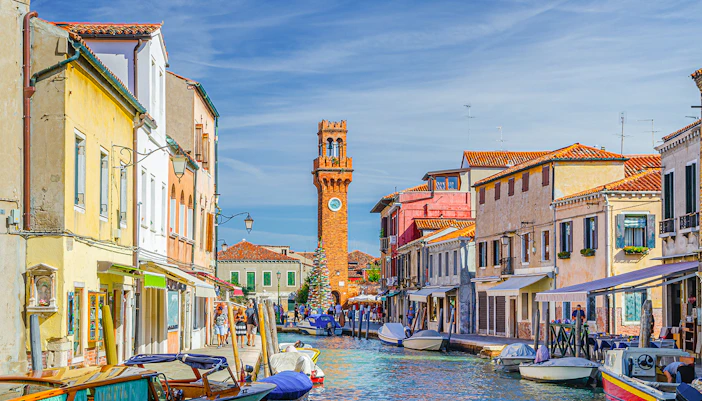
Discover Burano: Venice’s most colorful island

Burano is one of the most distinctive islands in the Venetian Lagoon, instantly recognizable for its brightly painted houses, canals, and centuries-old lace-making tradition. Beyond its colorful waterfronts, you’ll find the historic Burano Lace Museum, the leaning bell tower of San Martino, small lace shops, seafood restaurants, and quieter streets away from the busiest canals.

Compact and easy to explore on foot, Burano works well as a standalone visit or as part of a wider trip with Murano and Torcello. This guide covers the best things to see and do, what to eat and shop for, and how to make the most of your time on the island.

Quick facts: Burano at a glance

What is Burano famous for?

Burano is best known for its brightly painted houses and centuries-old lace-making tradition, which together give the island its distinctive character.

  • Known for: Colorful houses & handmade lace
  • Traditional craft: Burano needle lace
  • Cultural highlight: Burano Lace Museum
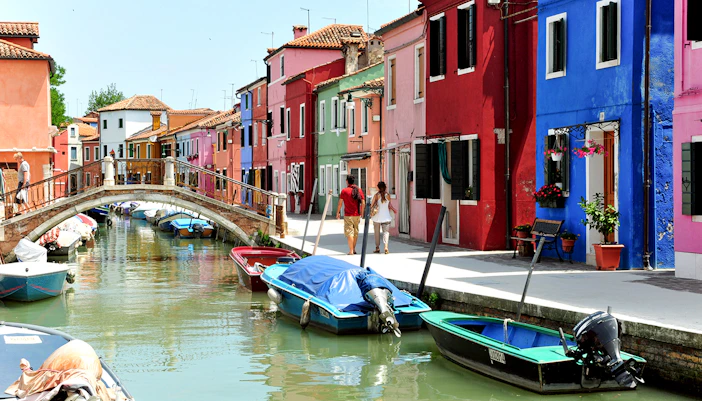
What is Burano like?

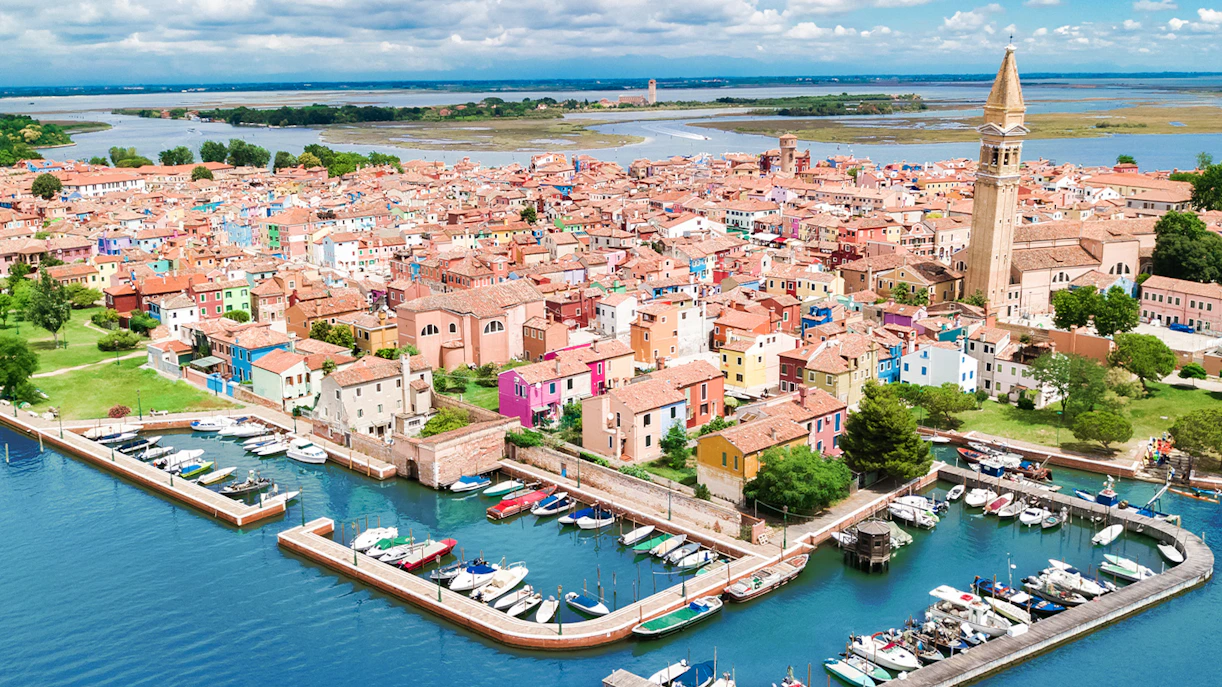
  • Burano is made up of four small islands connected by bridges, creating a compact network of canals, colorful streets, squares, and waterfront paths.
  • Setting: Northern Venetian Lagoon
  • Layout: Four interconnected islands
  • Getting around: Best explored on foot
  • Main square: Piazza Galuppi

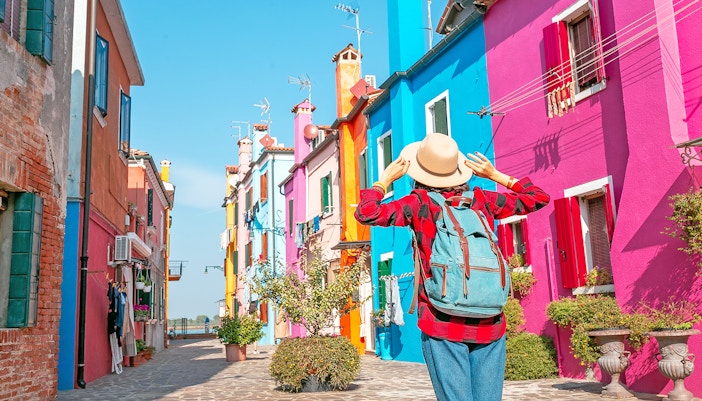
Why are Burano's houses so colorful?

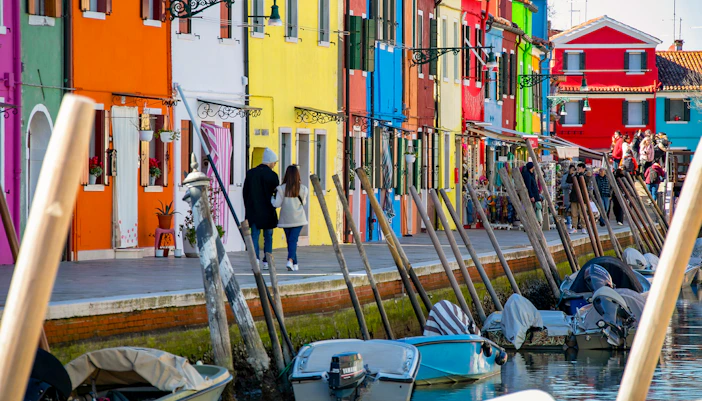
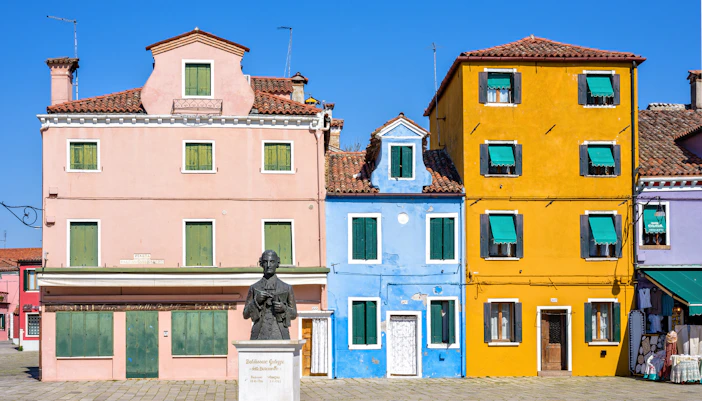
Burano's rows of vividly painted homes have become the island's visual signature. The colors aren't completely arbitrary either: property owners must follow local rules when repainting façades.

  • Look for: Contrasting rows of brightly painted homes
  • Best explored: On foot along the canals
  • Photo favorite: Streets and waterways beyond the main square

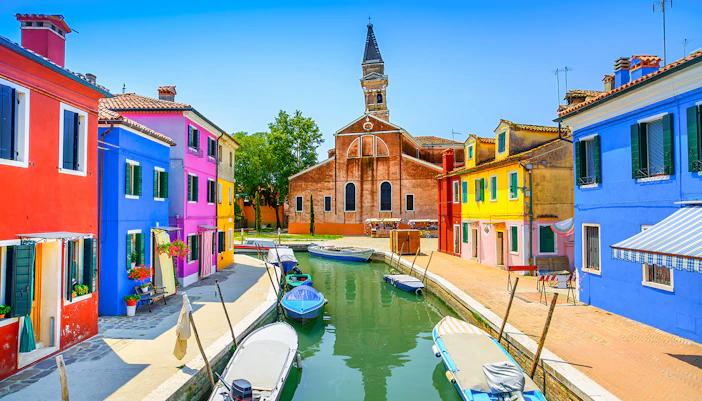
Brightly painted houses in Burano

There’s more here than colorful streets. Burano's main sights introduce you to the island's lace-making, religious history, and everyday character.

  • Burano Lace Museum

  • Church of San Martino
  • Leaning bell tower
  • Piazza Galuppi
  • Tre Ponti and surrounding canals

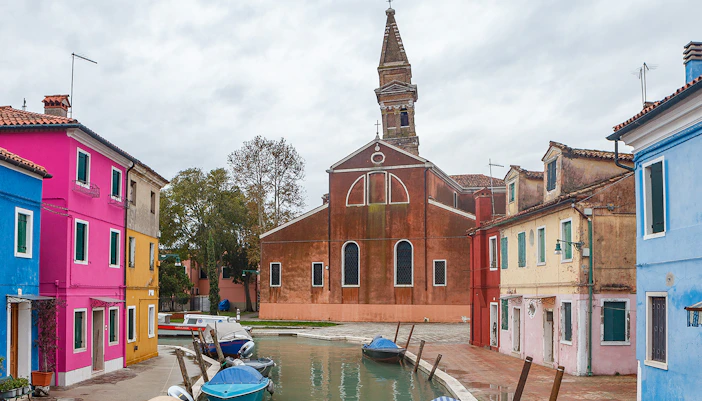
Church of San Martino in Burano

Around 2–3 hours works for the main sights, while half a day gives you time to visit the Lace Museum, explore quieter streets, shop, and stop for a meal.

  • Quick visit: Colorful streets + main sights
  • 2–3 hours: Add Lace Museum and shopping
  • Half day: Explore slowly + lunch

Can you combine Burano with other islands?

Yes. Burano is commonly combined with Murano and Torcello, with each offering a very different side of the Venetian Lagoon.

  • Burano: Colorful houses & lace
  • Murano: Glassmaking & craftsmanship
  • Torcello: Archaeology & early Venetian history
  • Best for: A wider lagoon island day

Why visit Burano?

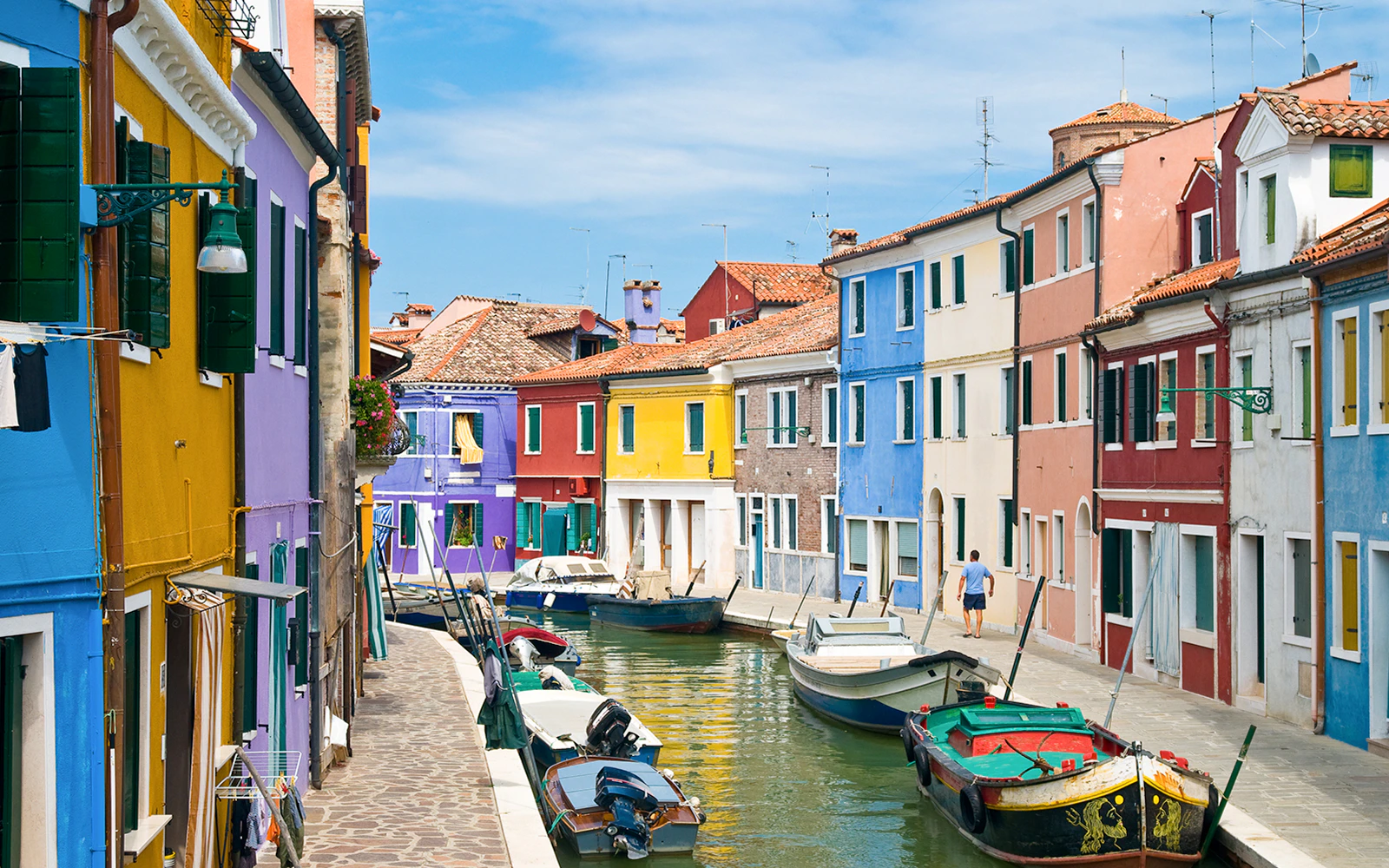
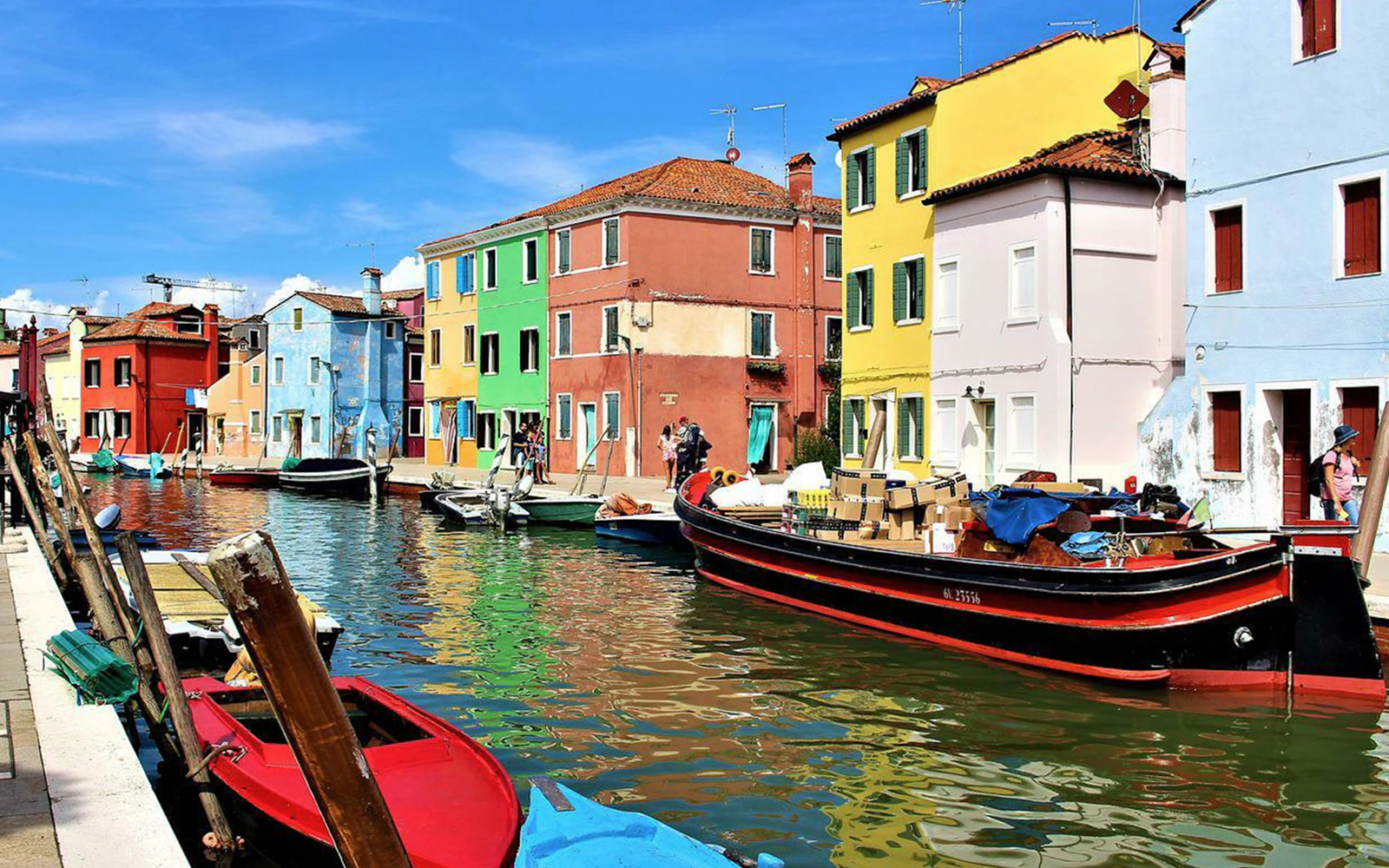
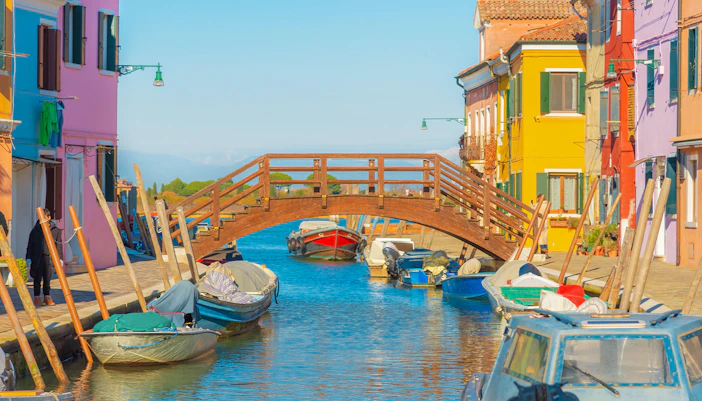
Colorful houses along a canal in Burano

Wander Venice’s most colorful island

Burano’s rows of brightly painted houses turn its canals and narrow streets into one of the Venetian Lagoon’s most distinctive landscapes. Wander beyond the busiest waterfronts and every bridge seems to reveal another combination of colors.

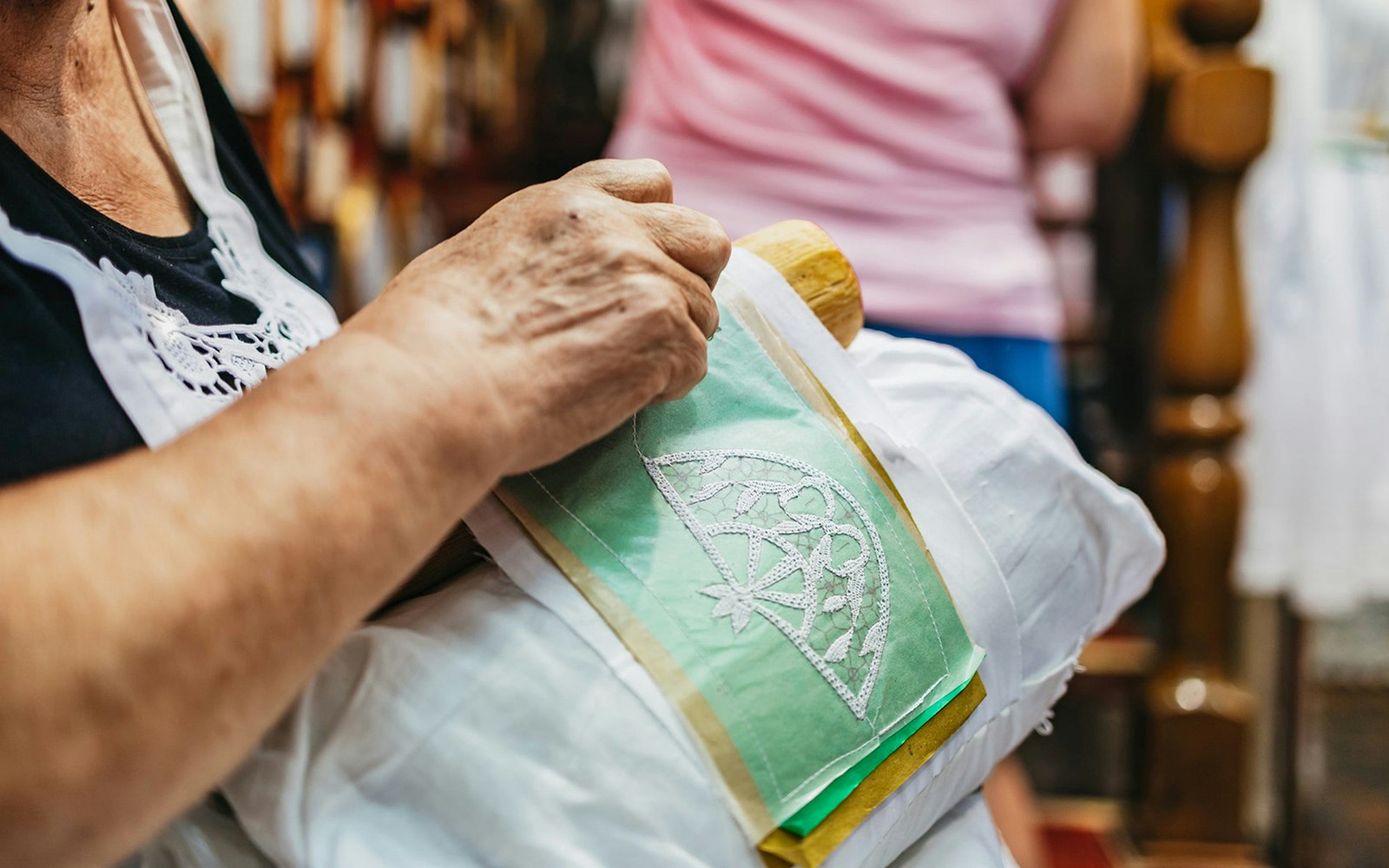
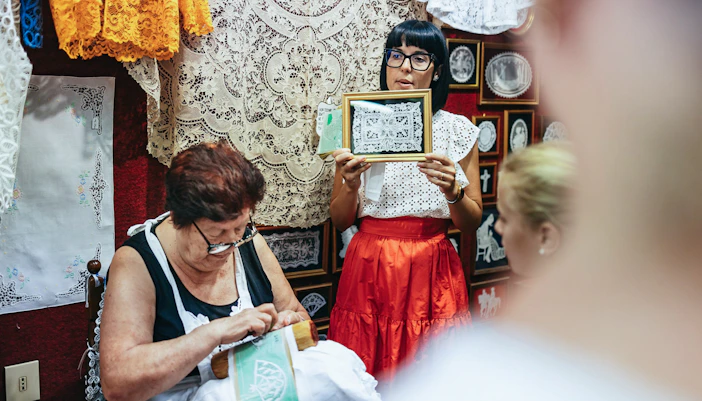
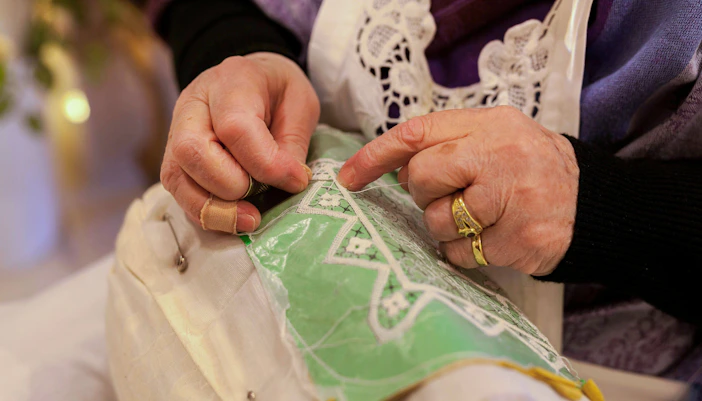
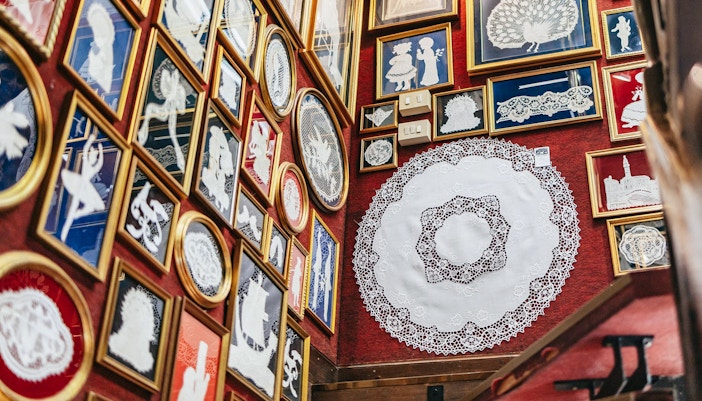
Traditional lace displayed in Burano
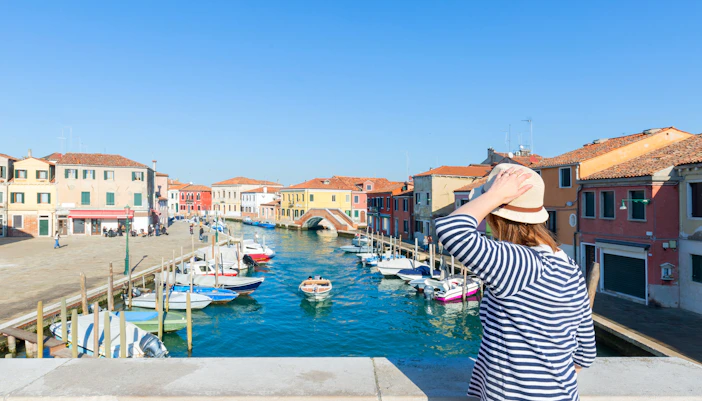
Quiet canal and colorful homes in Burano
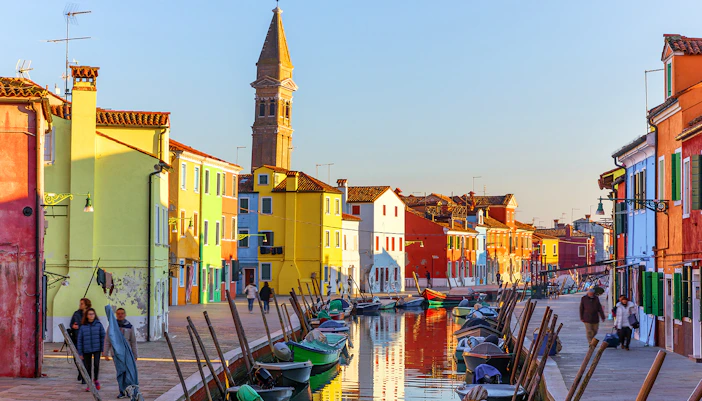
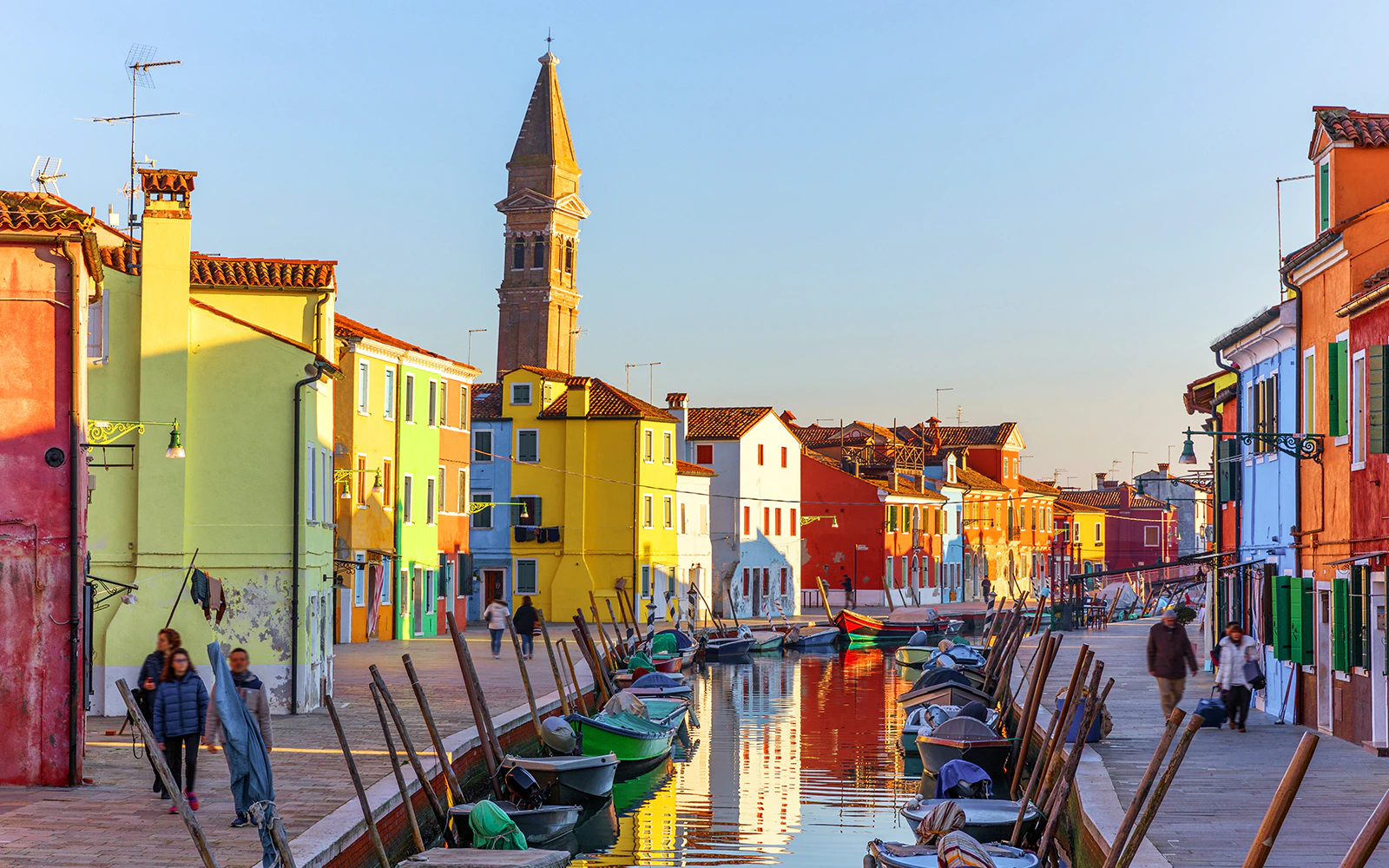
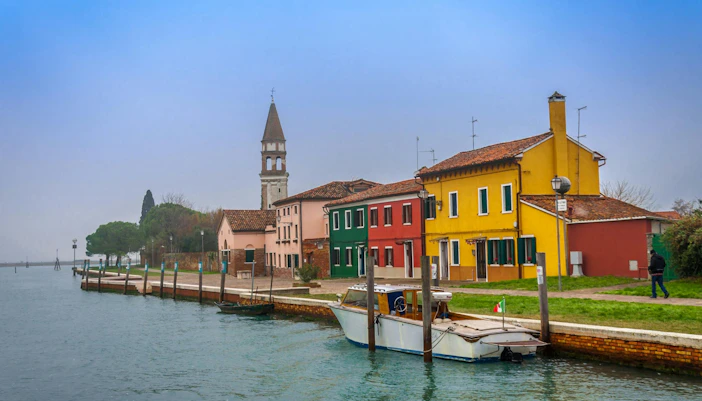
Leaning bell tower of San Martino in Burano
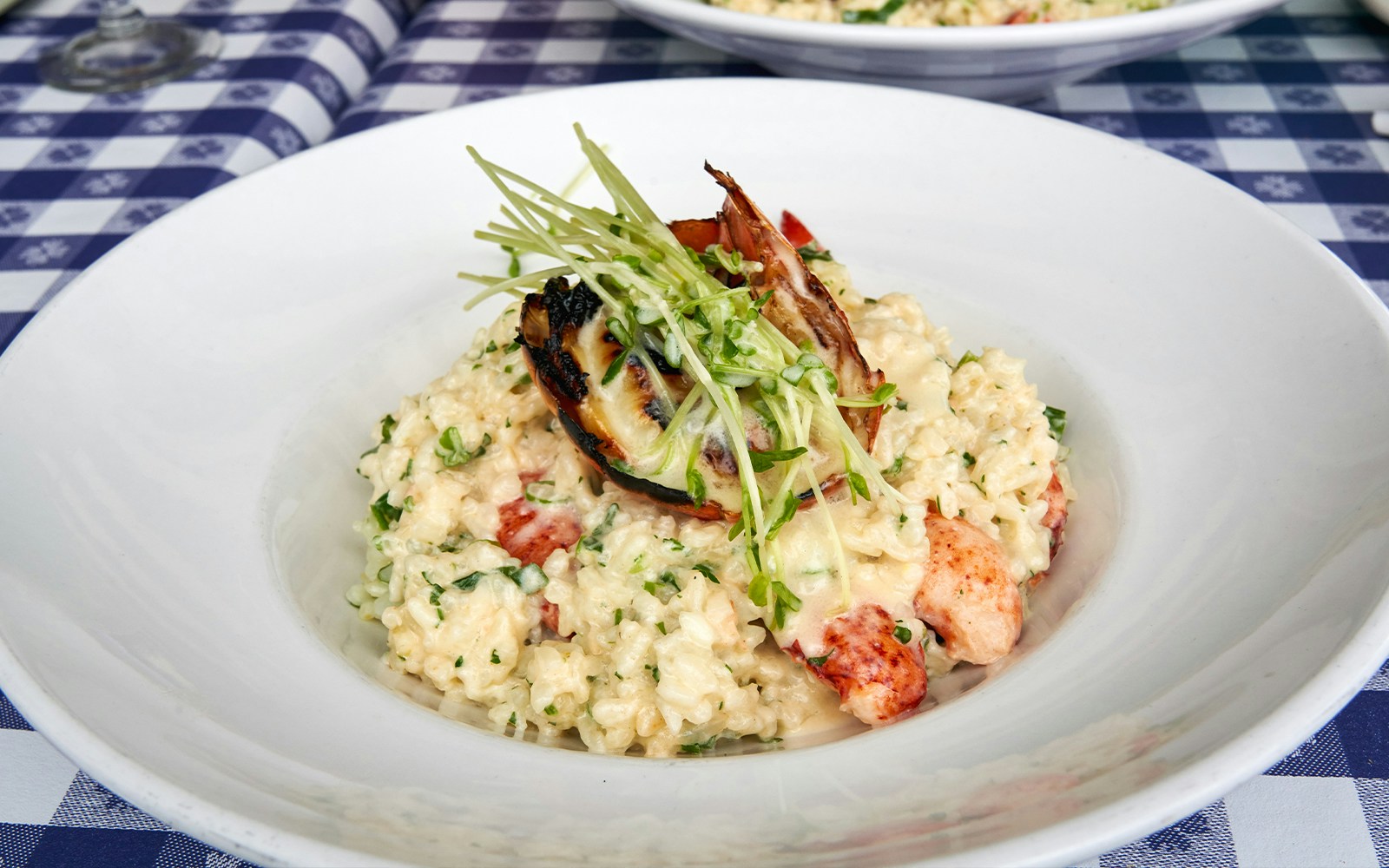
Lobster risotto garnished with greens on a white plate.

Top things to see & do in Burano

Wander Burano’s colorful streets & canals

Burano’s brightly painted homes are the island’s defining sight. Walk beyond the busiest streets around Piazza Galuppi to find quieter canals, tiny bridges, window boxes, and unexpected combinations of color.

When to go: Earlier in the morning or later in the afternoon for a more relaxed walk and softer light.

Visit the Burano Lace Museum

Discover the craft that made Burano famous through historic lace, clothing, drawings, and other objects arranged chronologically from its early origins through the 20th century. You can also see lacemakers at work during museum opening hours.

When to go: Open 10am–4pm, with last admission at 3:30pm; closed Mondays. From May 1–September 26, 2026, Friday and Saturday hours extend to 5pm.

Know more

See San Martino & its leaning bell tower

Look up from Piazza Galuppi and you’ll immediately notice Burano’s leaning bell tower. Part of the Church of San Martino, its distinctive tilt resulted from subsidence in its foundations and has become one of the island’s most recognizable landmarks.

Good to know: San Martino remains a place of worship, so visit respectfully and check current opening or service times locally.

Spend time in Piazza Galuppi

Burano’s main square brings together several of the island’s key sights, including the Church of San Martino and the Lace Museum. It’s also a good starting point for exploring the surrounding streets, shops, and canals.

Tip: Don't make the square your only stop—some of Burano's prettiest streets are found by wandering away from the main route.

Walk across Tre Ponti

Tre Ponti is one of Burano’s best-known viewpoints, where several waterways and rows of colorful houses come together. Cross the bridge, then explore the surrounding Fondamenta for different perspectives over the canals.

When to go: Earlier or later in the day if photography is a priority.

Cross over to Mazzorbo

Extend your walk beyond Burano by crossing the wooden footbridge to neighboring Mazzorbo. The scenery quickly changes from Burano’s dense rows of colorful homes to a quieter lagoon landscape.

Good to know: You don't need a boat to make this detour—Burano and Mazzorbo are connected by footbridge.

Shop for authentic Burano lace

Browse lace shops and ateliers for table linens, clothing, accessories, and decorative pieces while learning how much work goes into traditional needle lace. Genuine handmade lace is considerably more labor-intensive than mass-produced souvenirs.

Tip: Ask how and where a piece was made rather than assuming every lace product sold on Burano is handmade locally.

Try bussolà buranello

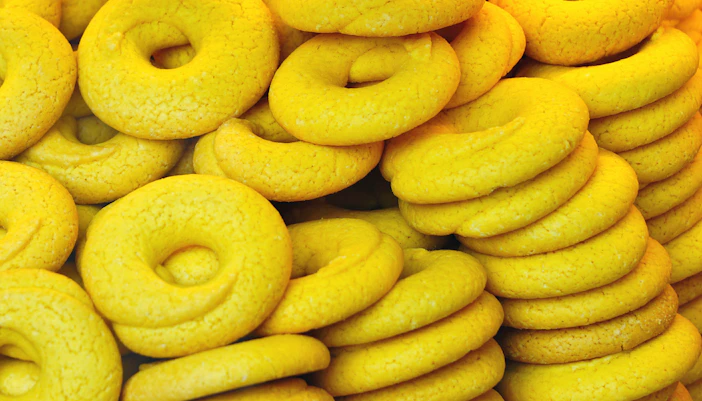
Look out for bussolà, Burano’s traditional ring-shaped biscuit, also known as buranelli. Made with ingredients including flour, eggs, sugar, and butter, it has long been associated with the island and its fishing community.

Also look for: The S-shaped variation known as essi di Burano.

Find Burano’s quieter corners

Once you've seen the headline sights, leave the main visitor route behind. Smaller canals, residential lanes, fishing boats, laundry-lined houses, and tiny bridges reveal a quieter side of the island.

Tip: Burano is compact, so you don't need a fixed route—give yourself some time to wander.

Make the most of your time in Burano

The easiest way to reach Burano? Hop on a vaporetto (public water bus) run by ACTV. Here’s your no-fuss guide:

Burano is reached from Venice by vaporetto, with Line 12 from Fondamente Nove providing the main connection through the northern lagoon. The same route also makes it easy to combine Burano with Murano and Torcello.

  • From Venice: Line 12 departs from Fondamente Nove.
  • Arrival: Burano’s vaporetto stop is a short walk from the island’s main canals and Piazza Galuppi.
  • From Murano: Line 12 connects Murano Faro with Burano.
  • For island hopping: Burano can easily be combined with Murano and Torcello in the same day.
Guide to all Venice vaporetto routes & stops
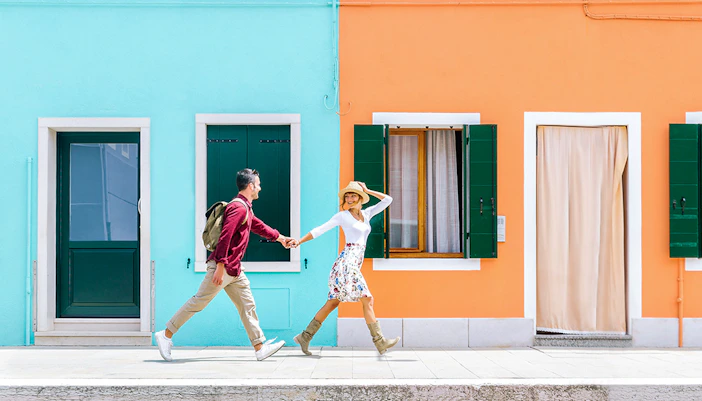
Visitors walking beside colorful houses in Burano

Spring and early autumn are particularly pleasant for exploring Burano, with milder weather for walking its canals and colorful streets. Summer brings longer days but also more day-trippers.

  • For quieter streets: Arrive earlier in the morning before the busiest day-trip period.
  • For photography: Morning and later afternoon offer softer light across the colorful façades.
  • For sightseeing: Check the Lace Museum's opening day if it's one of your priorities; it is normally closed on Mondays.
  • Time to allow: Around 2–3 hours covers the highlights, while half a day gives you time for the museum, shopping, and a meal.
Local seafood dining experience in Rome with fresh dishes and authentic Italian ambiance.

Burano’s fishing heritage makes seafood one of the highlights of eating on the island. Leave enough time for a meal rather than treating Burano purely as a sightseeing stop.

  • Risotto di gò: A traditional lagoon risotto made using goby fish.
  • Lagoon seafood: Look for seasonal fish and shellfish dishes.
  • Cicchetti: Small Venetian bites that work well for a quicker stop.
  • Bussolà buranello: Burano’s traditional buttery biscuit, usually ring-shaped.
  • Essi: An S-shaped variation of the island’s traditional biscuit.

Tip: Choose based on the menu and setting rather than building the guide around individual restaurants, which can change over time.

Tour group observing lace-making demonstration at Lace Museum in Burano.

Burano lace is the island’s signature buy, with a tradition stretching back centuries. You’ll find everything from small lace accessories to intricate decorative and household pieces.

  • Handmade lace: Look for table linens, decorative pieces, clothing, and accessories.
  • Small souvenirs: Lace handkerchiefs and other smaller pieces are easier to take home.
  • Bussolà: The island’s traditional biscuits also make an edible souvenir.
  • Local art: Prints, paintings, and photographs inspired by Burano’s colorful streets are widely available.

Buying tip: Genuine handmade Burano lace requires considerable time and skill to produce, so be cautious of very cheap pieces presented as locally handmade. Ask the seller where and how the lace was made before buying.

Suggested Burano itineraries

Whether you’re stopping by for an hour or spending half a day, here’s how to make the most of your time in Burano.

1 hour: Burano’s colorful highlights

Best for: A quick Burano stop as part of a wider lagoon island trip.

  • Wander the colorful canals: Start with Burano’s signature brightly painted houses and cross a few of the small bridges for different views.
  • Piazza Galuppi: Walk through the island’s main square and see the Church of San Martino and its distinctive leaning bell tower.
  • Browse for Burano lace: Pop into a lace shop or atelier for a quick introduction to the craft that made the island famous.

Tip: With only an hour, skip the Lace Museum and focus on Burano’s streets, canals, and atmosphere.

2 hours: Colors, lace & landmarks

Best for: Seeing Burano’s major sights without spending half a day on the island.

  • Colorful streets & canals (30–40 min): Wander beyond the main route and explore Burano’s bridges, canals, and residential streets.
  • Burano Lace Museum (45–60 min): Discover five centuries of Burano lace-making and see historic examples of the island’s signature craft.
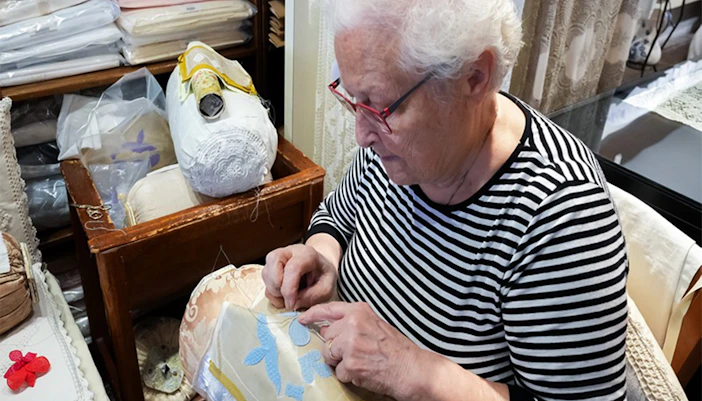
  • Piazza Galuppi & San Martino (20–30 min): See the island’s main square, church, and leaning bell tower.
  • Quick local treat: Pick up a bussolà buranello before continuing your lagoon trip.

Tip: If the Lace Museum is closed or lace isn’t your priority, use that time to explore quieter canals and browse local shops.

Half a day: Experience Burano properly

Best for: Travelers who want to combine Burano’s culture, food, shopping, and quieter corners without rushing.

  • Colorful canals (45–60 min): Explore the famous waterfronts before wandering into less-busy residential streets.
  • Burano Lace Museum (45–60 min): Learn how the island’s intricate lace tradition developed over centuries.
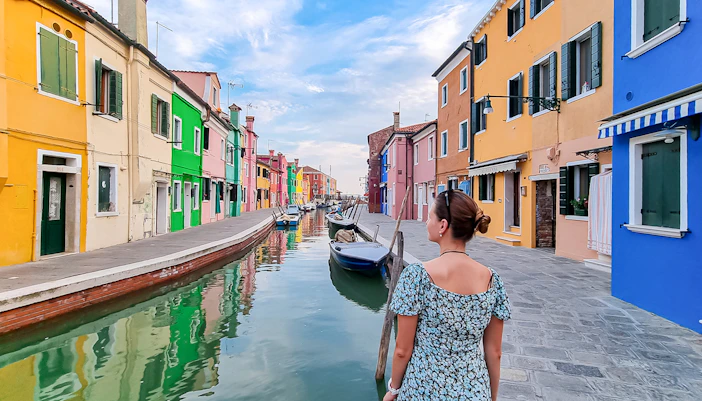
  • San Martino & Piazza Galuppi (20–30 min): See Burano’s principal church, leaning bell tower, and main square.
  • Lunch (45–60 min): Stop for lagoon seafood, cicchetti, or a traditional dish such as risotto di gò.
  • Tre Ponti & quieter streets (30–45 min): Walk toward one of Burano’s best-known viewpoints and explore the surrounding canals.
  • Lace shopping (20–30 min): Browse ateliers and shops, asking how and where pieces were made if you're looking for handmade Burano lace.
  • Optional Mazzorbo detour (30–45 min): Cross the footbridge to neighboring Mazzorbo for a quieter contrast to Burano.

Tip: Half a day lets you experience Burano beyond its photo spots. If you’d rather see more of the lagoon, skip Mazzorbo and continue to Torcello instead.

Local tips & island etiquette

  • Remember that the colorful houses are homes: Admire and photograph the façades from public areas, but avoid stepping onto doorways, moving residents’ belongings, or looking through windows for a better shot.
  • Give residents their privacy: Ask permission before photographing people, and keep noise down when exploring Burano’s quieter residential streets.
  • Don’t block bridges for photos: Burano’s narrow bridges and paths are used by residents and visitors alike. Take your photo, then move aside so others can pass.
  • Be selective when buying Burano lace: Genuine handmade lace takes considerable skill and time to produce, so very cheap pieces may not be handmade locally. Ask where and how the piece was made before buying.
  • Respect churches and religious spaces: Dress appropriately, keep your voice down, and avoid disrupting services when visiting the Church of San Martino or other places of worship.
  • Leave the island as you found it: Dispose of rubbish properly and don't add graffiti, love locks, or other objects to bridges and historic structures.
  • Explore beyond the busiest streets: Piazza Galuppi and the main canals get most of the attention, but crossing a few bridges leads to quieter residential corners and a more relaxed side of Burano.

Frequently asked questions about visiting Burano Island

Take an ACTV vaporetto from Venice, with Line 12 from Fondamente Nove providing the main connection. For routes, stops, and travel times, see our Murano, Burano & Torcello Plan Your Visit guide.