Tickets Venice

Learn All About St. Marks Basilica Before Your Visit | History, Architecture, & More

Highlights of St. Mark's Basilica

Pala d’Oro

This fine piece of Byzantine art has a total of 1927 studded precious gems, including pearls, emeralds, sapphires, garnets, amethysts, rubies, and topazes. The jewels encrusted on the altarpiece display the life of Christ, which took more than 300 years to be fabricated into its current glory. Its opulence reflects Venice's prosperity and political influence during its peak as a wealthy trading hub.

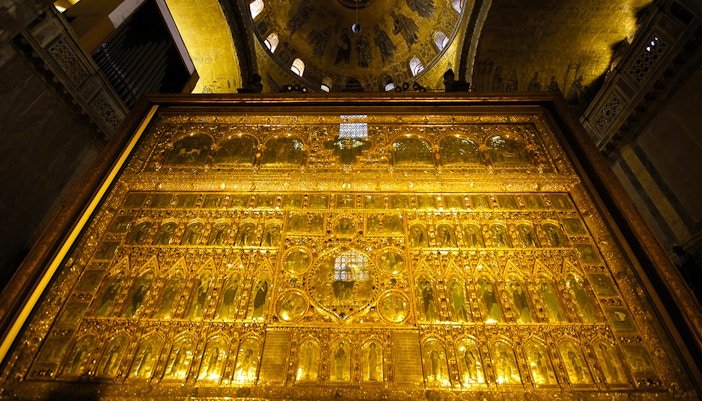
Highlights of Pala d’Oro

Real gold mosaics

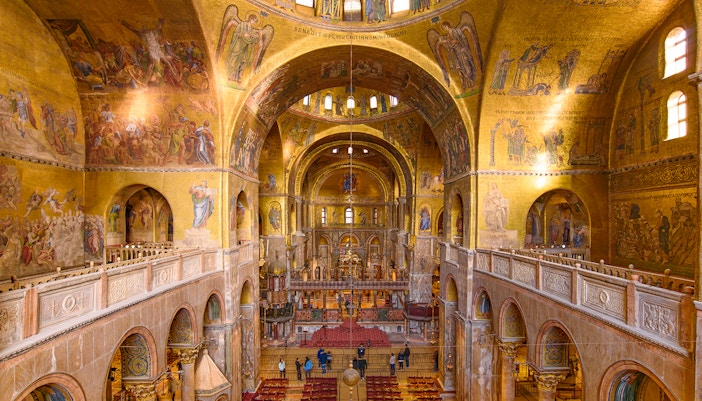
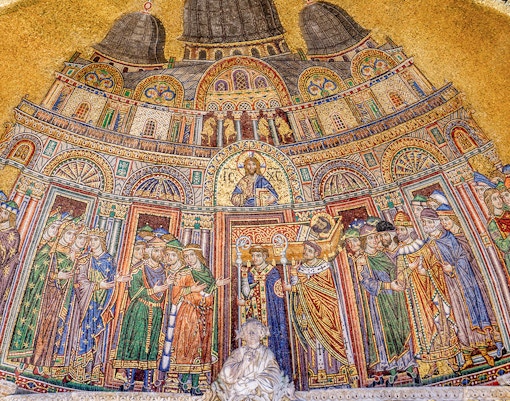
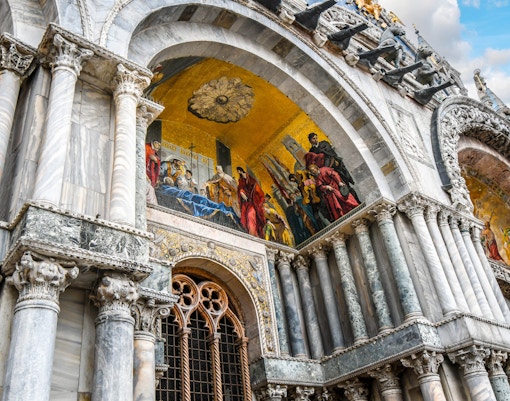
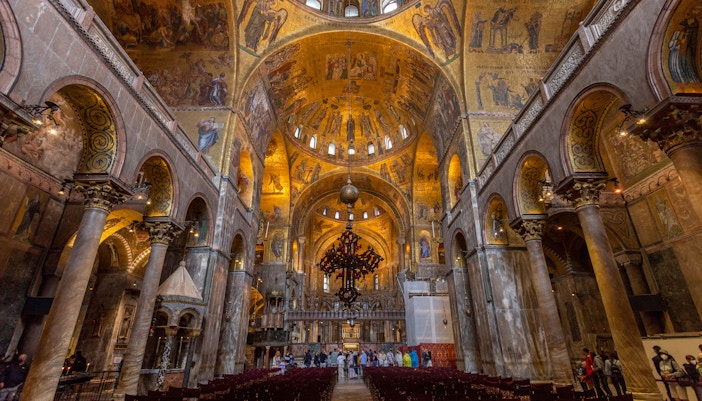
The basilica features mesmerizing mosaics crafted with REAL gold, glass, and marble tesserae. These vivid artworks narrate biblical tales with vibrant colors and intricate designs, showcasing centuries-old craftsmanship and flair of storytelling. A beautiful reflection of Venetian wealth & religious devotion.

San Marco Museum

It is an incredible collection of Persian carpets, broken fragments of mosaics, and many other relics. Stroll through and you will get to Sala de Banchetti’s room which showcases royal fabrics and the Doge’s red velvet throne. The most precious treasure out here is the Quadriga, popularly known as the Horses of San Marco.

Book St. Mark's Museum tickets

Treasury

This space consists of a collection of precious objects looted by the Venetians from Constantinople with a few pieces of art by ancient Venetian craftsmen. It showcases 823 pieces in gold and silver along with many other precious curios and is the most important part of the place.

Marble Inlays

The flooring of the Basilica is designed with marble in geometric patterns with over 2099 sq. meters in hues of earth tones with animal and floral designs added. Spot the intricate designs of peacocks, roosters, foxes, and more while you stroll through the Basilica.

Tomb of Saint Mark

The Basilica's crypt holds St. Mark’s body and is accessible for tours beyond regular opening hours. This part of the church was built to keep the corpse safe after it was brought from Alexandria. The area is designed with mosaics illuminated by dim lighting that adds to the whole feel.

Entrances

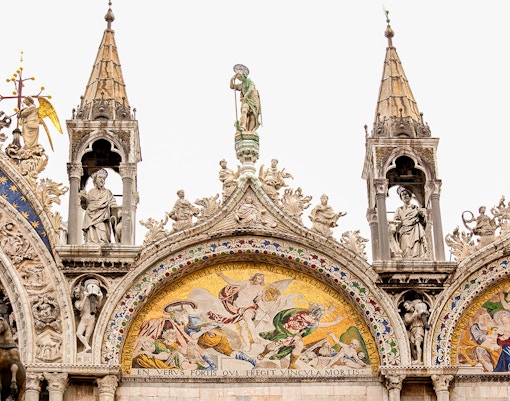
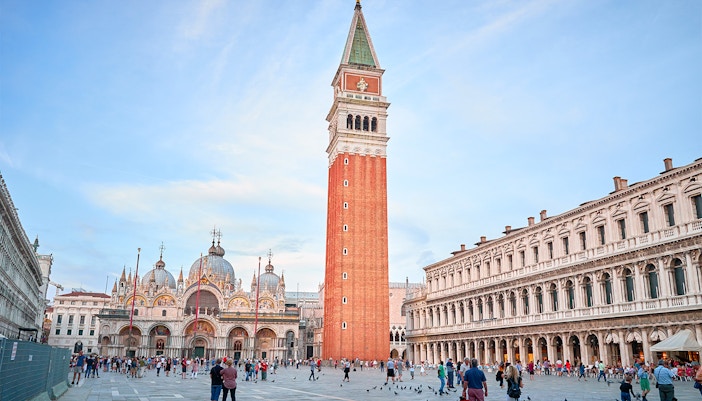
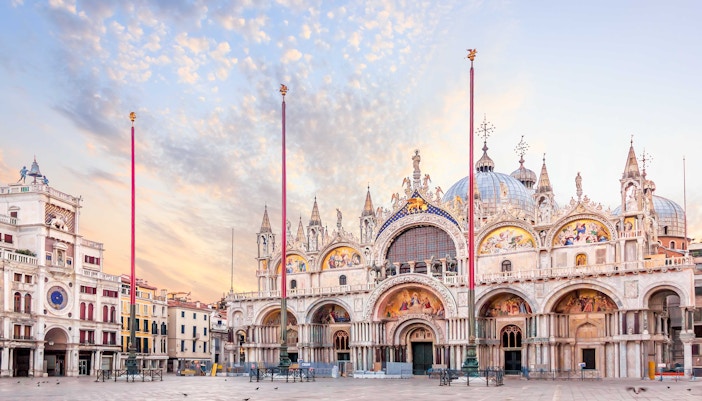
St. Mark’s Basilica has five large portals that can be accessed from St. Mark’s Square, which is known for being the main square of Venice. Every single one of these portals is truly an architectural masterpiece in itself and are worth visiting.

Finding all the St. Mark's Basilica entrances

Brief history of St. Mark's Basilica

  • 828 AD: Venetian merchants smuggled the remains of Saint Mark from Alexandria, Egypt, to Venice, elevating the saint to the city's patron and marking the beginning of the basilica's legacy.
  • 9th-10th centuries: The original church was constructed to house Saint Mark's relics.
  • 976 AD: A devastating fire destroyed the original basilica, prompting the construction of the present-day St. Mark's Basilica.
  • 1063 AD: The new basilica was consecrated, reflecting a mix of Byzantine and Western European architectural styles.
  • 11th-18th centuries: St. Mark's underwent numerous modifications, including the addition of mosaics, sculptures, and the Pala d'Oro, showcasing its wealth and religious significance.
  • Early 19th century: Napoleon's troops removed the Quadriga horses, but they were later returned to the basilica.
  • 20th century: The basilica survived bombings during World War II and underwent several restorations, preserving its historical and artistic wealth.

Learn St. Mark's Basilica history

Who built St. Mark's Basilica?

St. Marks Basilica About

Doge Giustiniano Participazio stipulated in his will that his widow and younger brother and successor Giovanni would build a church dedicated to Saint Mark, wherein the relics would be housed.

It was built during the 9th century to house the very sacred relics. Domenico Contarini was the architect involved in building the St. Mark’s Basilica and was the 30th Doge of Venice.

Architecture of St. Mark's Basilica

Constructed back in the 9th century, St. Mark’s Basilica was built to house the remains of Saint. Mark’s corpse that was smuggled in from Egypt by Venetian merchants. The building was initially torched to the ground and eventually rebuilt to become an extraordinary structure that is admired by the world to date.

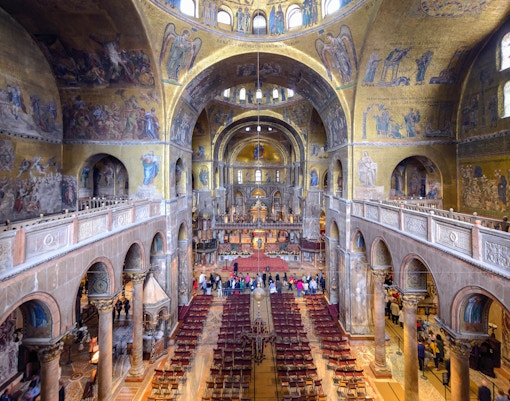
The structure is currently made of layers of white marble that were bought from the Middle East. The Basilica that is seen today is a cosmopolitan version of the original. The building has various elements from Byzantine architecture that make it remarkably exquisite. The place is famous for having a Greek cross layout and for using an immense amount of gold in each of its attractions and because of this, the structure is often called the Church of Gold.

Detailed breakdown of St. Mark's Basilica architecture

Frequently asked questions about St. Mark's Basilica

St. Mark's Basilica is significant for its religious importance as the resting place of Saint Mark, its stunning blend of Byzantine, Gothic, and Renaissance architecture, and its reflection of Venice's cultural heritage as a center of trade and commerce. As an iconic symbol of Venice, it attracts visitors worldwide for its beauty and historical significance.

More Reads

History

Book Now

Architecture

Book Now

St. Mark's Square

Book Now