Detailed Analysis of the Incredible St. Mark's Basilica Architecture

St. Mark's Basilica, a revered landmark in Venice, boasts an exceptional blend of Byzantine and Renaissance architectural styles. From its striking domes to the gold mosaics, every bit of this iconic cathedral is intriguing and a major crowd-puller. Here, we'll be breaking down the various elements of St. Mark's Basilica's architecture in detail so you're all set to appreciate and enrich your next visit.

St. Mark's Basilica architectural style

St. Mark's Basilica Architecture

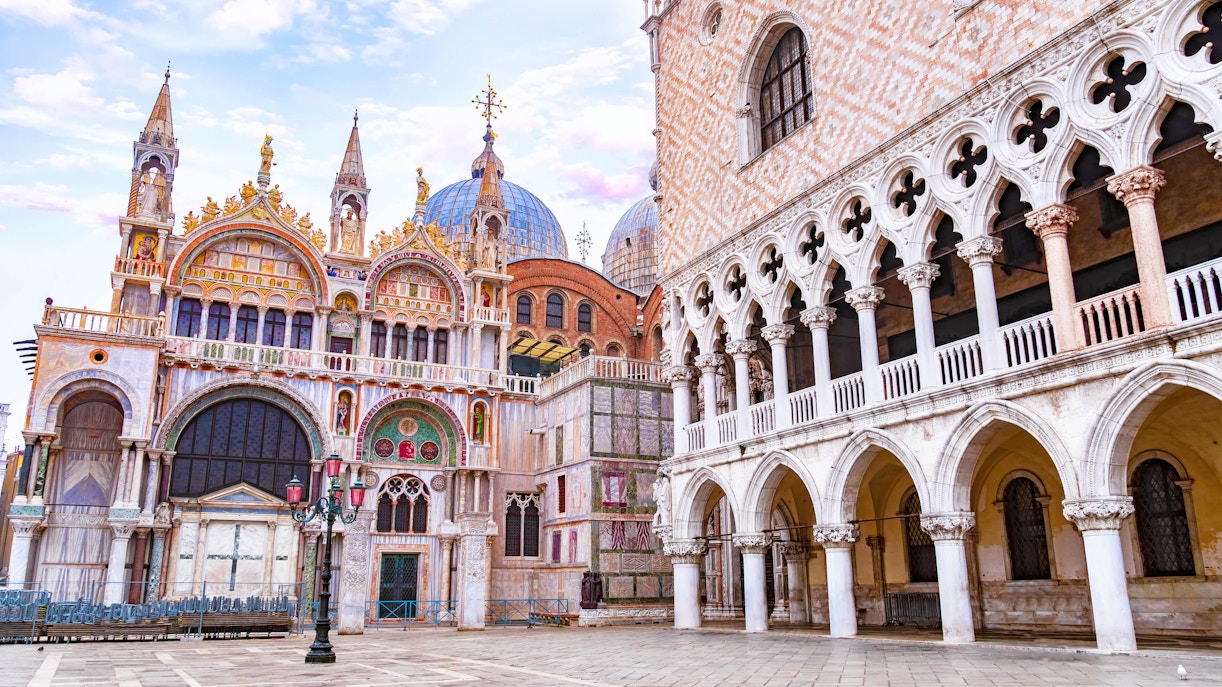
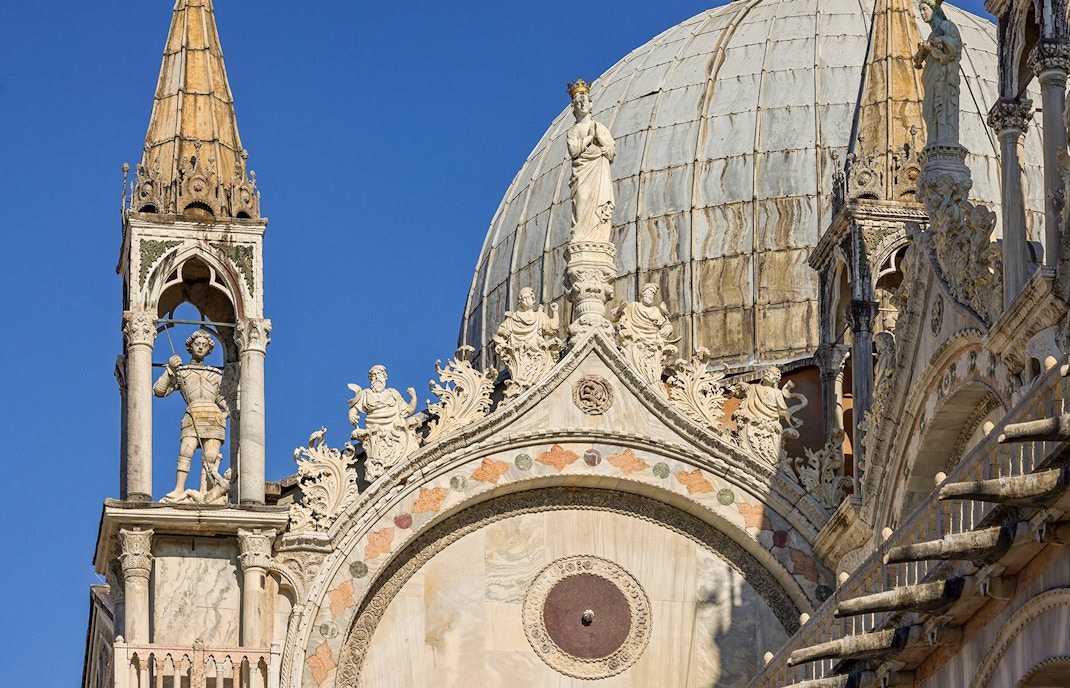
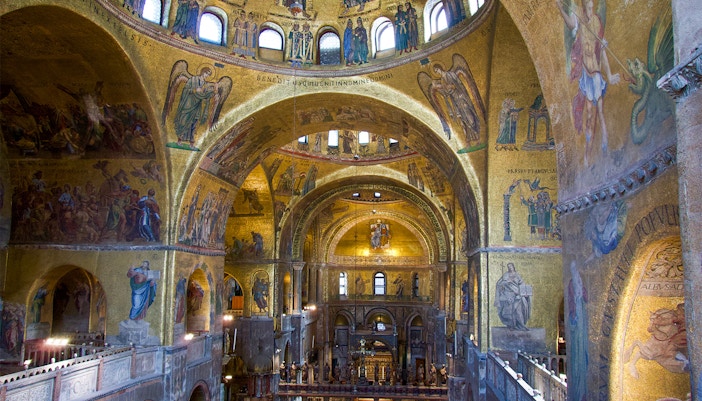
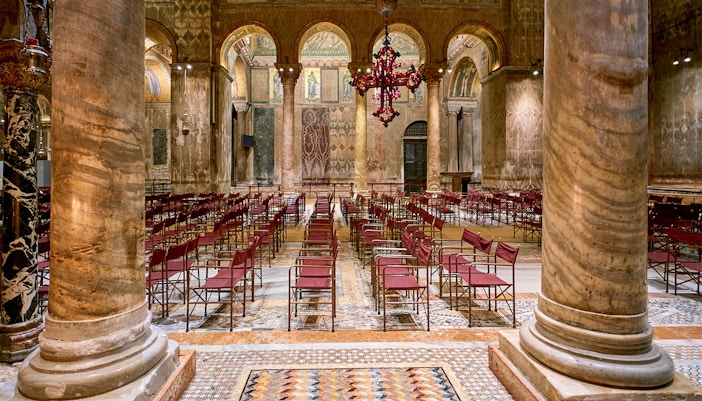
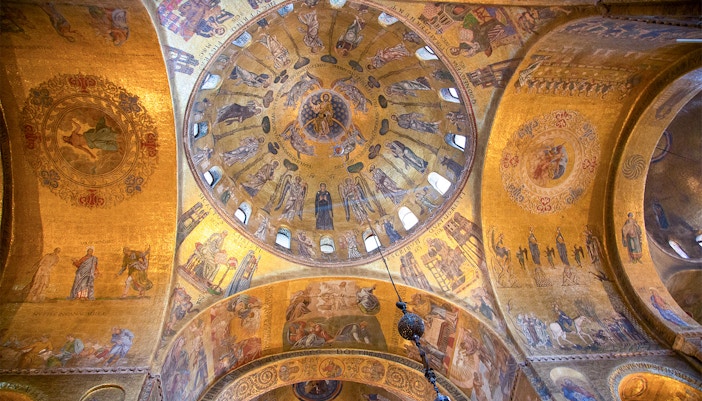
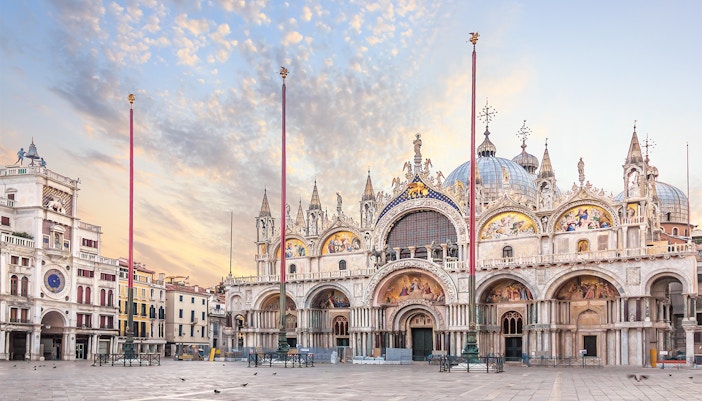
St. Mark's Basilica is a mix of Byzantine, Gothic, and Romanesque styles. Its layout, resembling a Greek cross, is topped by five grand domes symbolizing God's presence. Inside, it's a visual treat with intricate mosaics, marble floors, and lavish decor. This blend of designs represents Venice's ties to Byzantium.

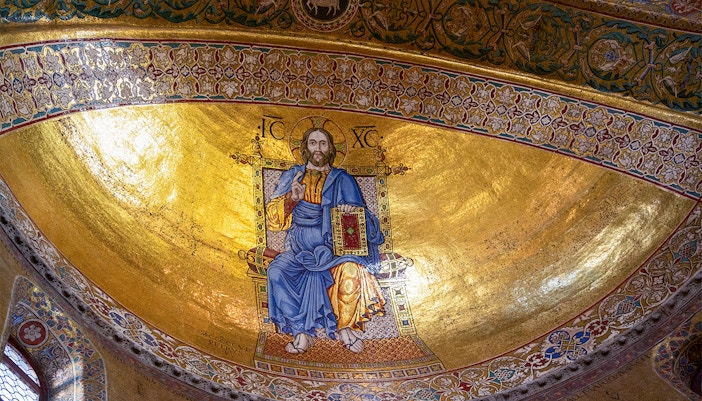
The basilica's luxurious interior, with its golden mosaics and symbolic art, beautifully blends Eastern and Western architectural influences. It's a unique architectural marvel depicting the city's rich history and cultural connections.
Who designed St. Mark's Basilica?

Domenico Contarini

As the Doge, he initiated the construction in 1063. He commissioned an architect—likely Greek—to build the church on ancient foundations.

Jacopo Sansovino

During the 16th century, he hooped the cupolas with buttress systems and contributed to the altars and gate of Paradise.

Pietro Saccardo and Giovambattista Meduna

In the 19th century, they directed significant preservation and restoration efforts, adhering to different conservation philosophies.

Manfredo Manfredi

Oversaw rigorous inspections after the campanile collapse in 1902, focusing on structural aspects and implementing innovative restoration methods.

Structure of St. Mark's Basilica

St. Mark's Basilica Architecture

The Basilica's construction began in 1063, incorporating foundations and walls from earlier churches dedicated to St. Mark. Inspired by the Basilica of the Twelve Apostles in Constantinople, this newer and larger structure adopts a Greek cross plan, emphasizing its five grand cupolas at the crossroads. The church's architectural scheme intricately involves spandrels, great vaults, and four main pillars supporting the central cupola. Carefully decorated with gold background mosaics, the interior seamlessly orchestrates individual spatial zones.

Over time, modifications introduced a narthex, a Gothic rosette, and other alterations tied to structural and prestigious motives. The basilica embodies a blend of Roman, Byzantine, and Venetian cultures, continually evolving through history, preserved as a living heritage of past civilizations.

Stages of construction of St. Mark's Basilica

  • Early foundations (9th - 11th Century): In 828, the original church was constructed to house St. Mark's remains, the foundation of today's basilica. However, it suffered damage due to a fire in 976. Rebuilding commenced in 1063 under the commission of Doge Domenico Contarini.
  • Byzantine roots and early development (11th - 12th Century): With the consecration in 1094, the basilica's Byzantine and Romanesque architectural features started taking shape. This phase included the basic design layout in the form of a Greek cross and the initial mosaic decorations.
  • Adaptations and enhancements (13th - 15th Century): In the 13th century, Venetian styles from the Fourth Crusade blended with Byzantine influences in St. Mark's Basilica. Changes continued over time, influenced by people like Andrea Dandolo and Jacopo Sansovino. Their contributions introduced Gothic and Renaissance elements, altering the basilica's look forever.
  • Restorations and Reinforcements (16th - 20th Century): Subsequent fires, collapses, and earthquakes necessitated restorations and structural reinforcements. Significant restorative efforts were undertaken in the 19th and 20th centuries following Napoleon's rule and the collapse of the campanile in 1902.

The exterior of St. Mark's Basilica

Western Façade

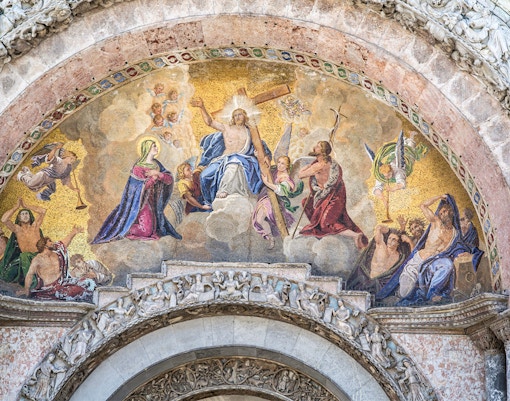
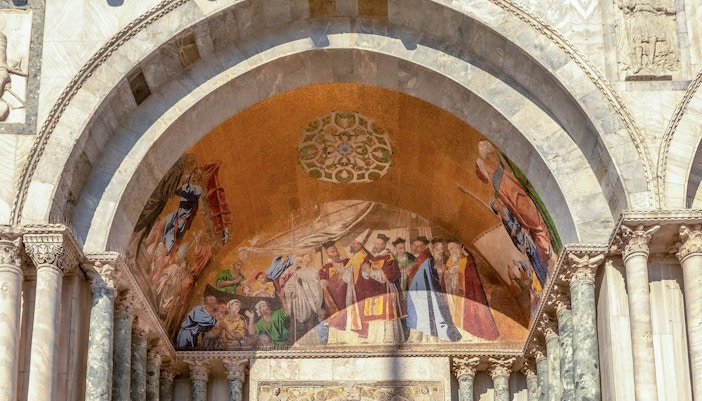
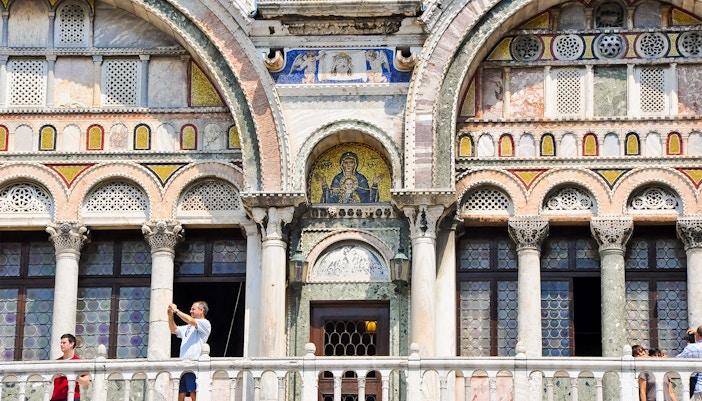
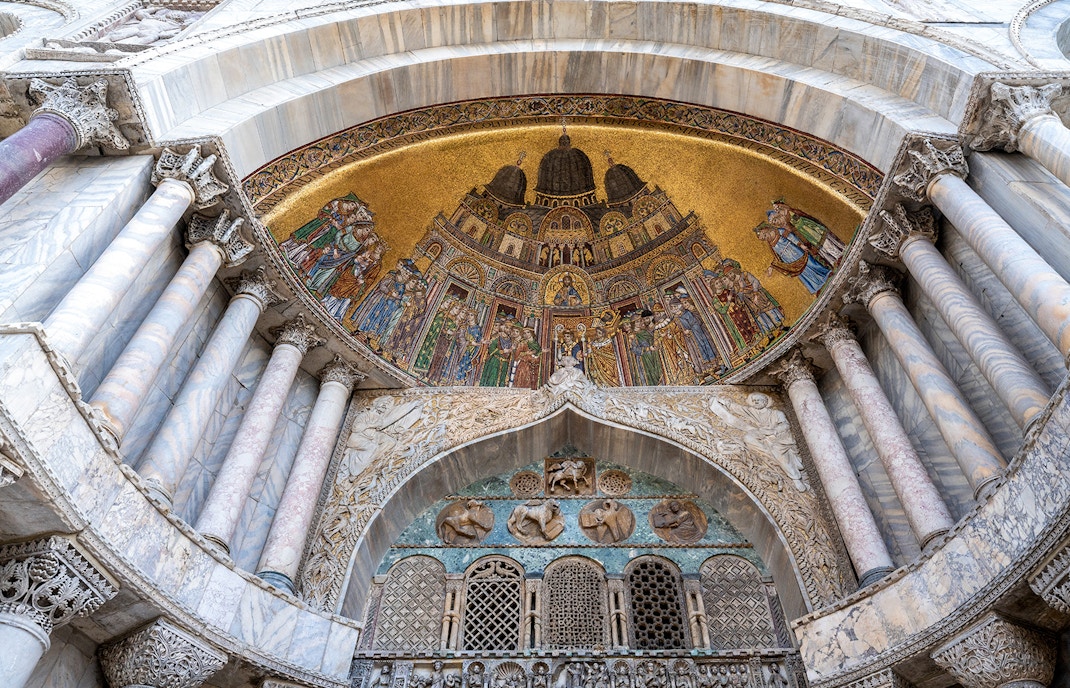
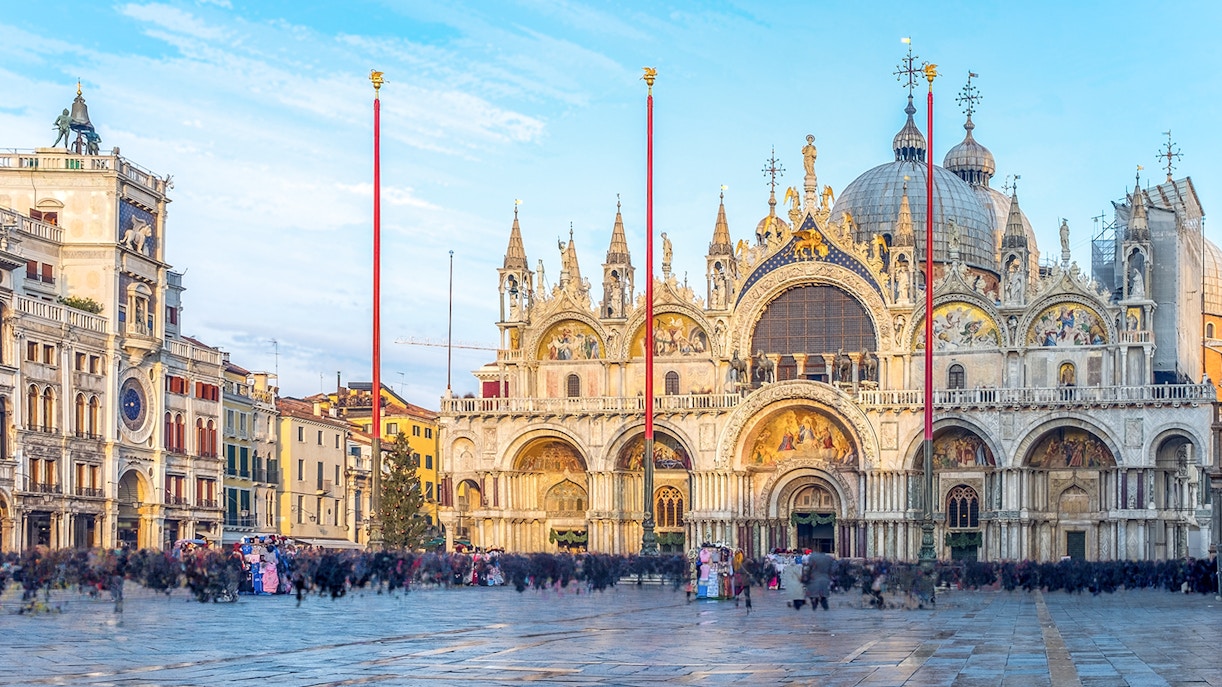
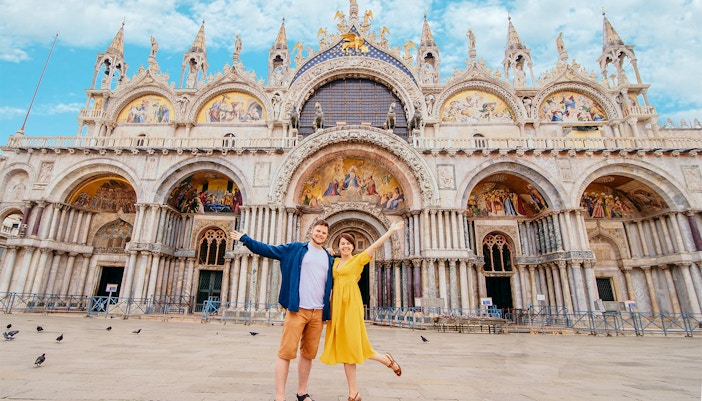
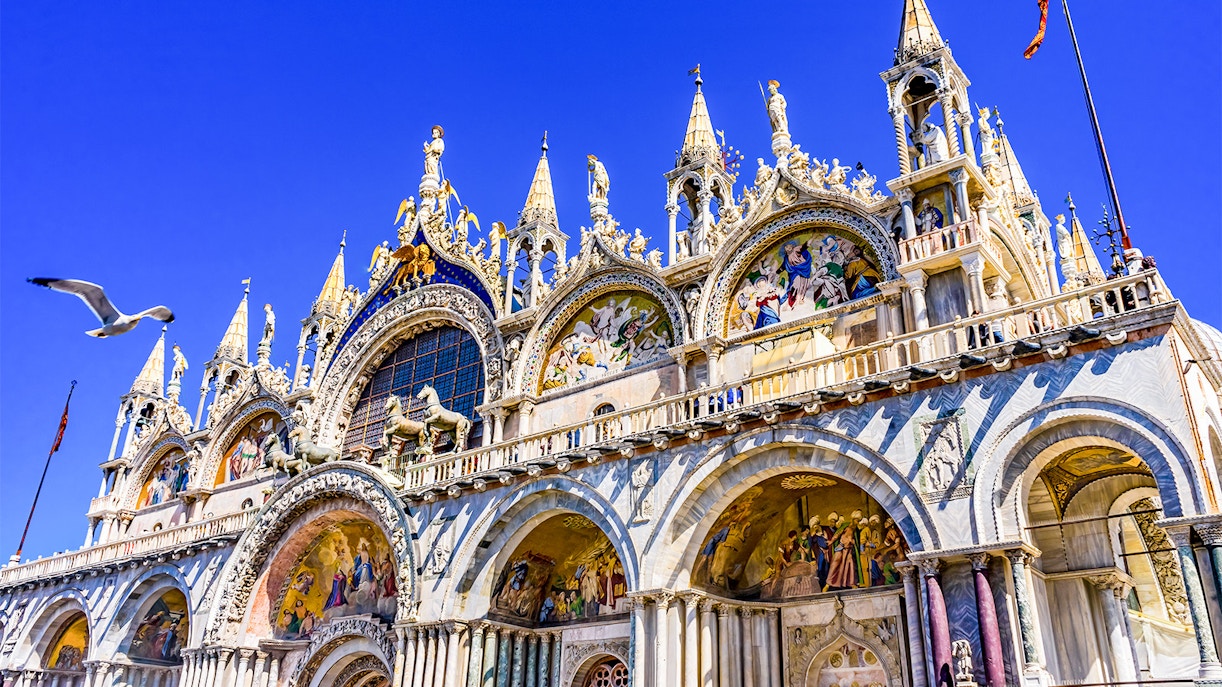
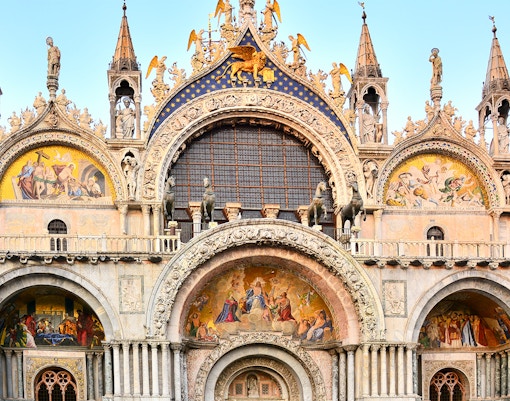
Divided into two sections, the lower register of the western façade features five doors, adorned with columns from the Fourth Crusade. It shows sculptures and details inspired by Byzantine and Islamic styles. The reliefs and mosaics tell the tale of Saint Mark's relics coming to Venice. Upstairs, fancy Gothic decorations were added later. There's a winged lion of Saint Mark in the middle and arches showing scenes of Christ's triumph.

Bronze Horses

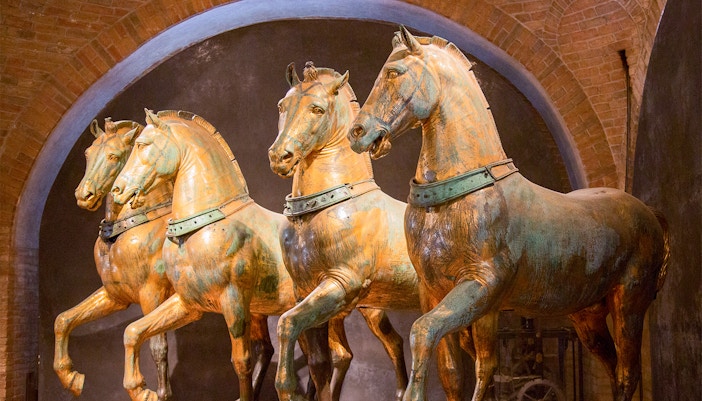
Renowned symbols of Venice's victory over Byzantium, the gilded bronze horses, part of the Hippodrome’s quadriga, adorned the main facade in the mid-13th century. These prized equestrian sculptures, the only surviving team from ancient times, were moved inside in 1974. Today, replicas grace the balcony over the central portal.

Southern Façade

The southern side of the building is adorned with precious marbles and decorative details. It's got intricate designs in the Gothic style, along with figures that represent ideas like virtues and treasures brought in, such as the well-known "pillars of Acre." Also, there's a special porphyry head, believed to be Francesco Bussone da Carmagnola, adding to the façade's distinct features.

Northern Facade

The northern façade features aediculae housing statues of the four eminent Latin Doctors of the Church: Jerome, Augustine, Ambrose, and Gregory the Great. These towering figures pay homage to their significant contributions and spiritual guidance. Above them, the lunettes are crowned with allegorical representations including Prudence, Temperance, Faith, and Charity.

The Southern Entry

Initially an entry hall and later transformed into the funerary chapel of Giovanni Battista Cardinal Zen, the southern entrance was closed, and much of its decoration was moved or destroyed between 1503 and 1515. The interior of the entry hall was adapted to accommodate the funerary memorial, which led to alterations in the space's design and aesthetic

Know more St. Mark's Basilica entrances

St. Mark's Basilica interiors

The Zen Chapel

Dedicated to Cardinal Giambattista Zen, this southern entry hall features a bronze arched gate from the late 5th century, brought from Constantinople. Mosaics on the vault depict St. Mark's life, narrating the church's divine right to possess the saint's relics.

Presbytery and High Altar

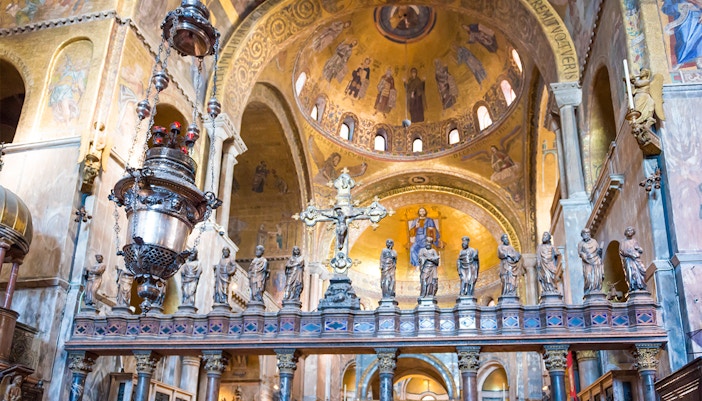
The presbytery, reserved for clergy, houses the high altar. Supported by intricately carved columns, the ciborium above it displays scenes from Christ and the Virgin's lives. The altar itself holds the precious relics of Saint Mark, enclosed within a splendid ensemble.

Choir Chapels

Dedicated to Saint Peter and Saint Clement I, these spaces exhibit mosaic vaults narrating Saint Mark's life and the historic translation of his relics to Venice, presenting an ancient depiction of this significant event.

Side Altars & Chapels

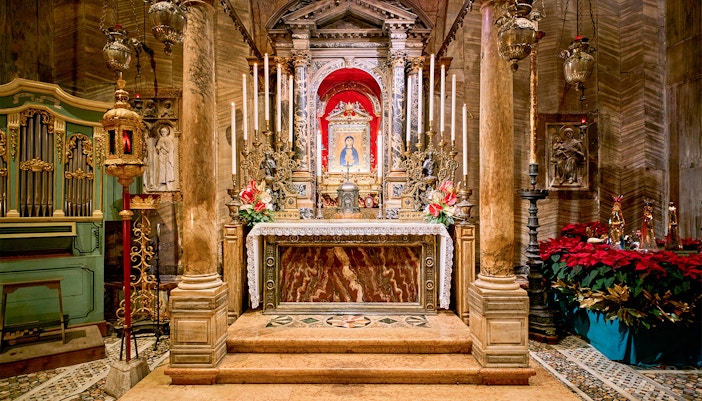
Each altar, adorned with mosaics and sculptures, pays homage to various saints, like the Madonna Nicopeia and the True Cross. The Chapel of Saint Isidore, housing the saint's relics, and the Mascoli Chapel, dating to 1430, add to the architectural splendor.

Baptistery

Featuring mosaics portraying Saint John the Baptist's life and Christ's infancy, the baptistery is crowned by a granite altar believed to have historical significance from Tyre.

Sacristy

Crafted in 1486, this space exhibits stunning inlaid cabinets illustrating scenes from Saint Mark's life and a vault adorned with mosaics designed by Titian, depicting Old-Testament prophets.

Sub-attractions of St.Mark's Basilica

St. Mark's Basilica Architecture

The architecture of St. Mark's Museum underwent a recent expansion, incorporating the historic area adjacent to the Basilica’s vestibule and the former Doge’s Sala dei Banchetti (Banquet Hall).

It now offers new spaces to exhibit church-related artifacts, including the renowned quadriga of St. Mark’s and the mid-14th-century weekday altar-piece by Paolo Veneziano, illustrating the saint's life stories. The museum's layout highlights Persian carpets, liturgical vestments, illuminated manuscripts, ancient mosaic fragments, and tapestries portraying religious themes.

Read more about St. Mark's Museum
St. Mark's Basilica Architecture

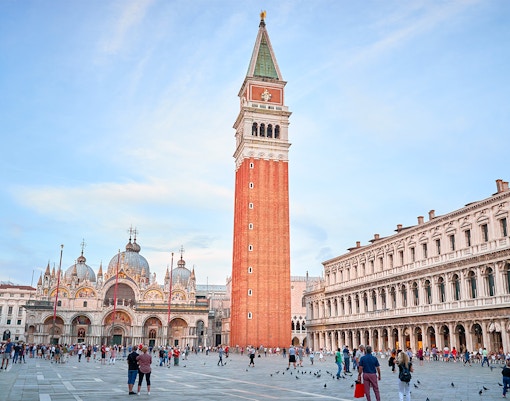
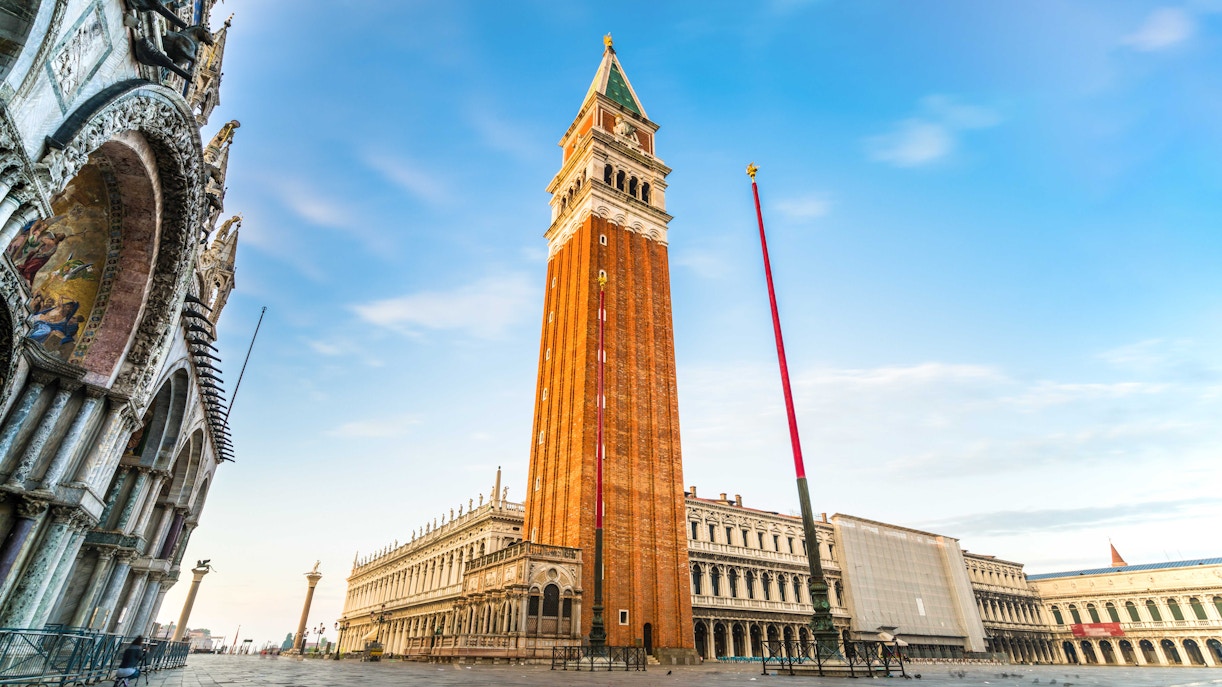
St. Mark's Campanile, a commanding structure standing approximately 99 meters tall, represents the prototype for lagoon area bell towers. Initially built in the 12th century on Roman foundations, it underwent a significant transformation in the early 16th century, acquiring a belfry and a copper-covered spire crowned by a rotating platform featuring the Archangel Gabriel statue serving as a weather vane.

Destroyed in 1902 and meticulously reconstructed by 1912, it boasts a Romanesque brickwork frame, presenting stunning vistas of Venice and the lagoon from its loggia. Renowned astronomer Galileo Galilei used this tower as an observatory, contributing to its historical significance.

More insights into St. Mark's Campanile

Frequently asked questions about the St. Mark's Basilica's architecture

St. Mark's Basilica exhibits a fusion of Byzantine, Romanesque, and Gothic architectural styles, renowned for its Byzantine influences and intricate mosaics.

More reads

Skip-the-line

Book Now

Entrances

Book Now