A walk look inside St. Mark's Basilica - From Palo d'Oro to golden mosaics

What is inside St. Mark’s Basilica?

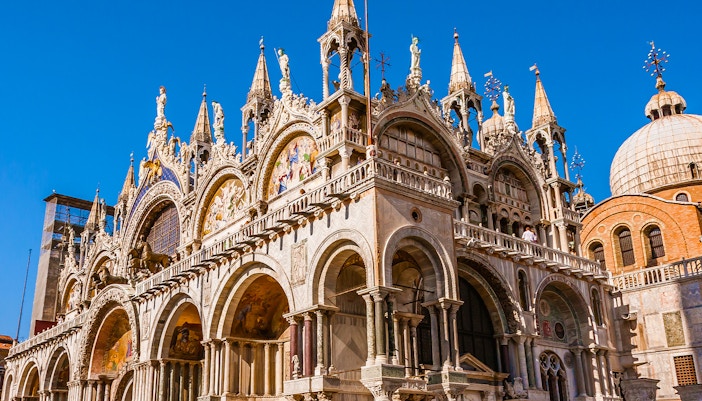
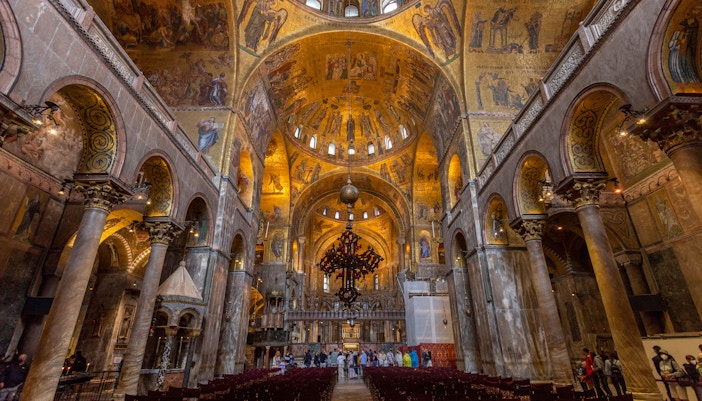
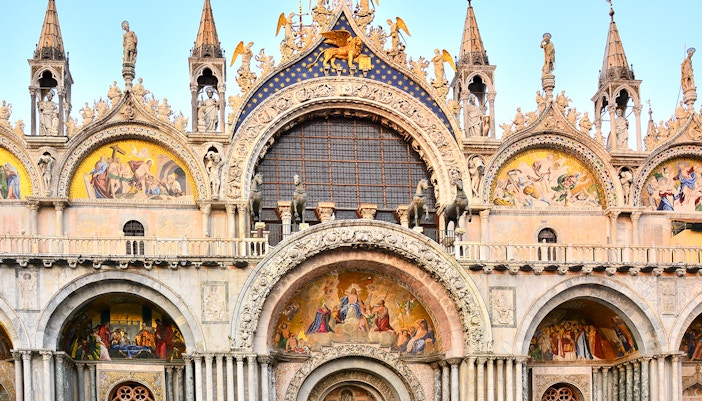
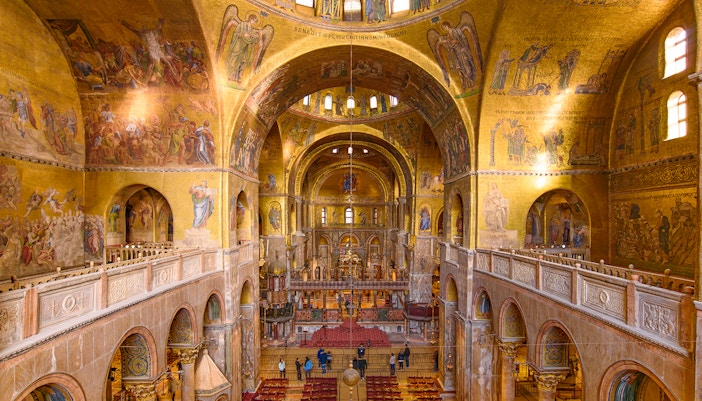
Step inside St. Mark’s Basilica, an exquisite cathedral in Venice constructed in 1094. Home to St. Mark's relics. It beautifully blends Renaissance, Byzantine, Venetian, and Islamic styles, evident in its stunning architecture and mosaics. Explore its ancient yet still relevant luxury rooms, spatial design, historical artifacts, and breathtaking mosaics.

Highlights - St. Mark's Basilica's inside

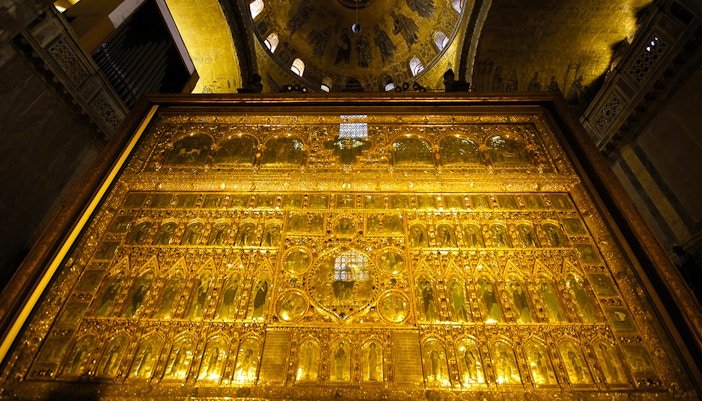
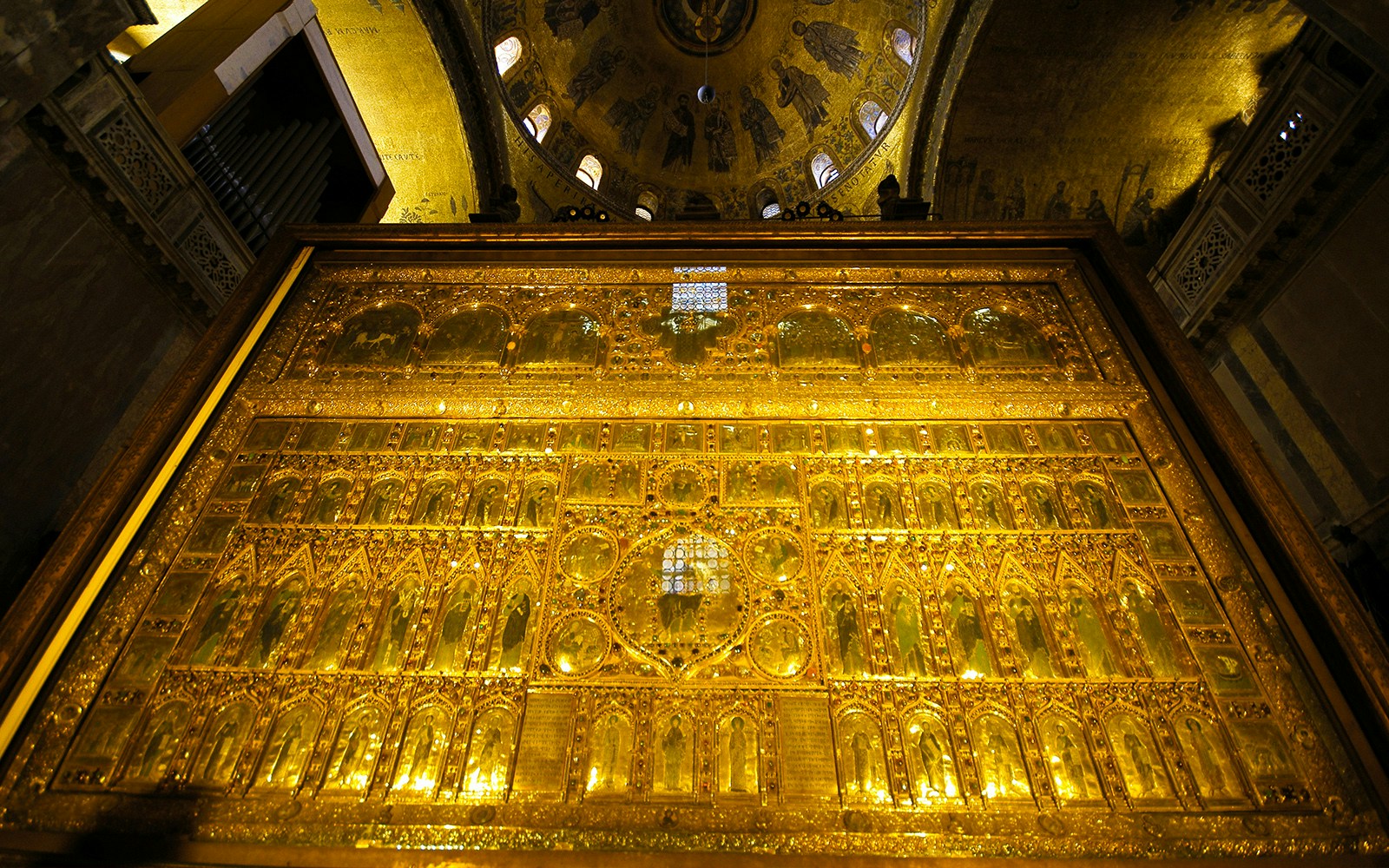
Pala d'Oro (Golden Altarpiece)
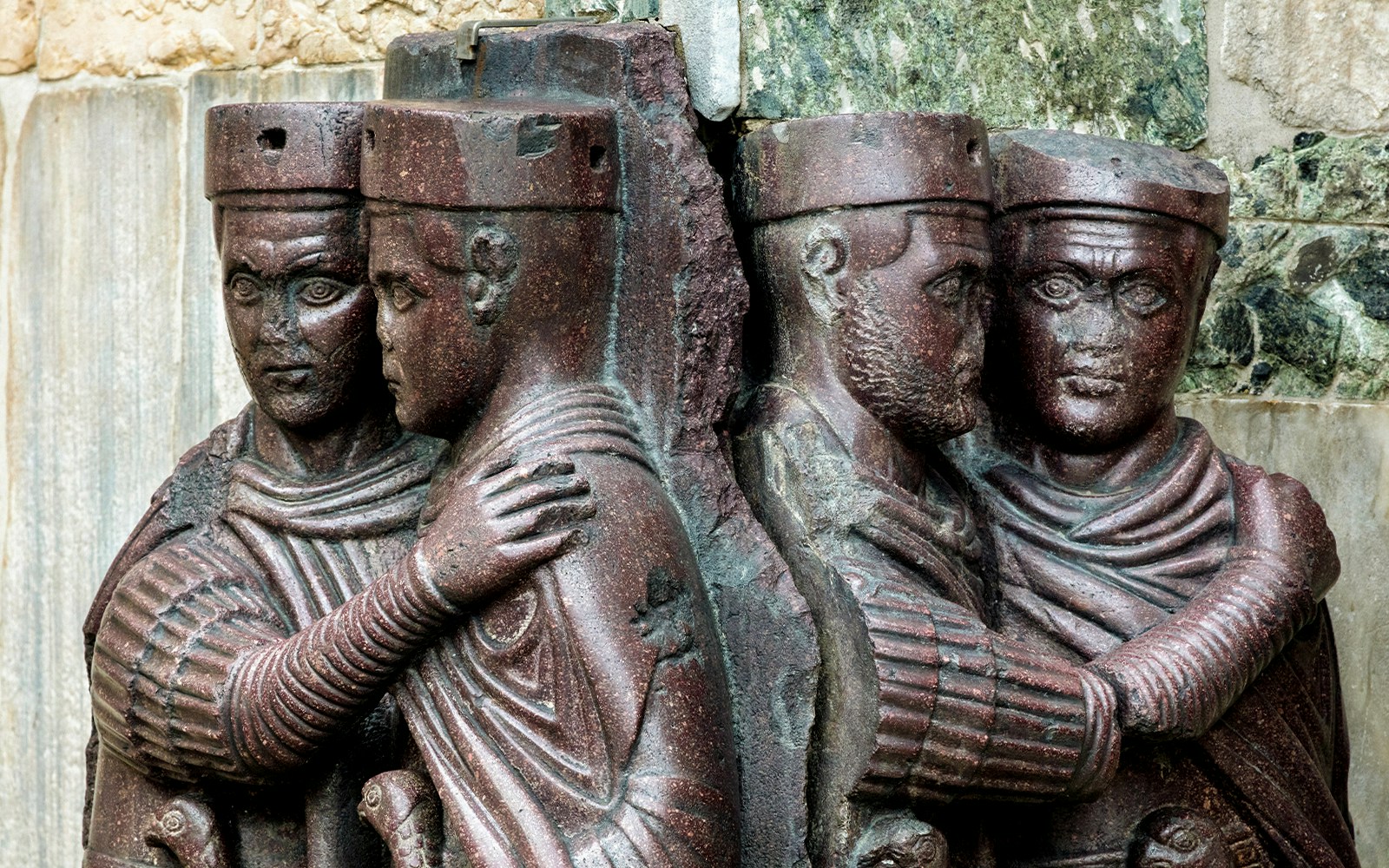
Tetrarchs - St Mark's Basilica
The Golden Altar Screen
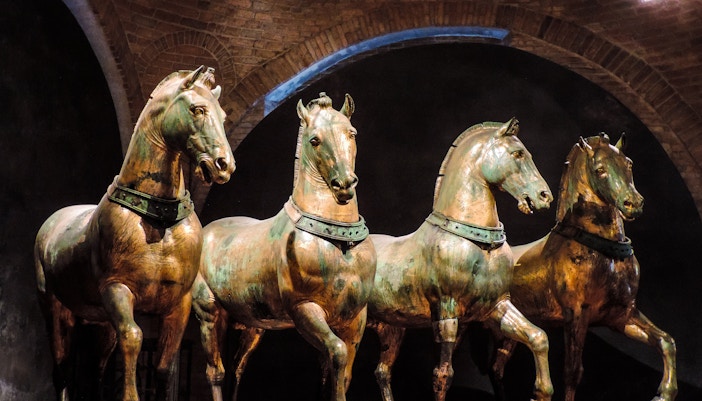
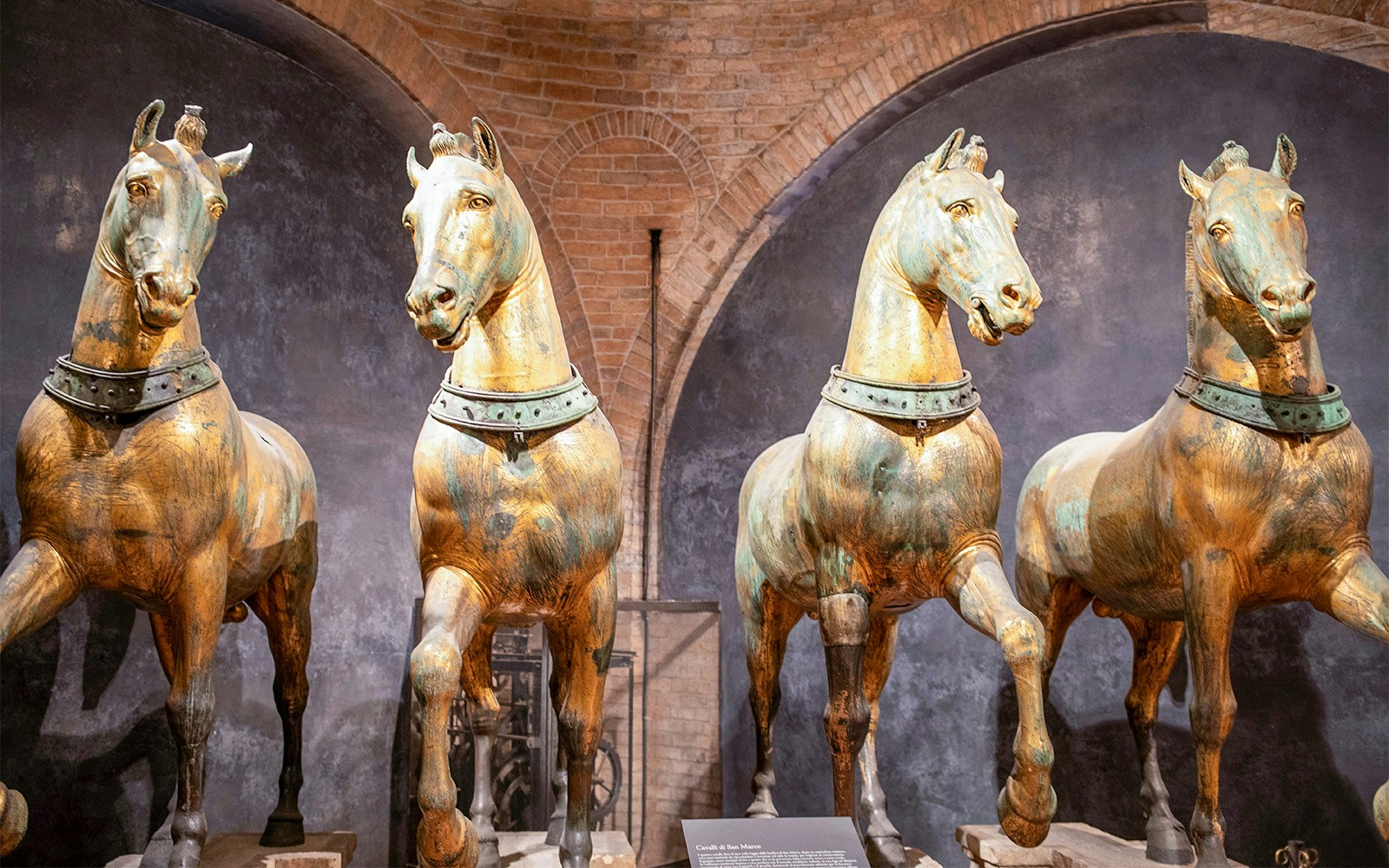
Horses of Saint Mark's
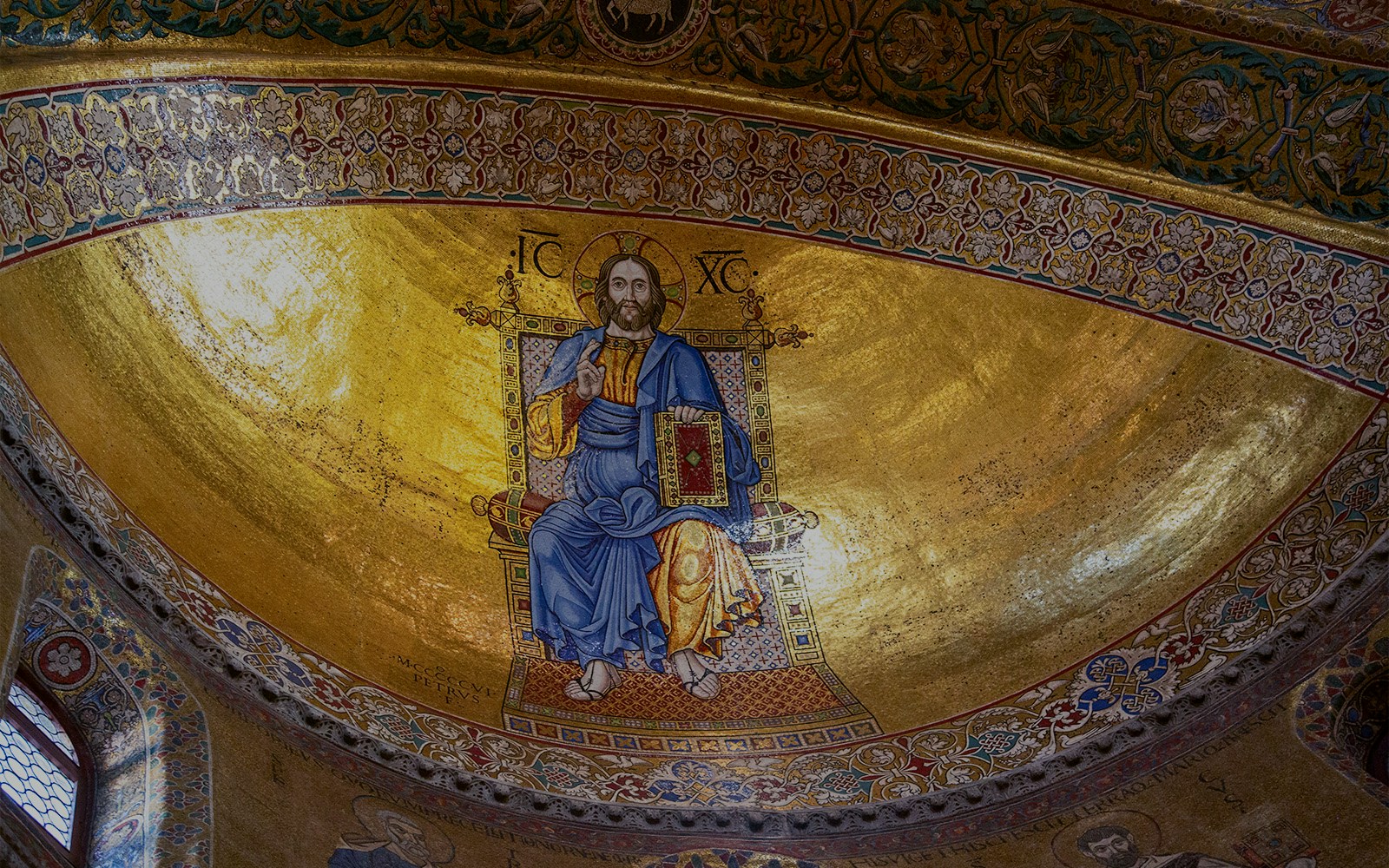
Byzantine Mosaics

What's inside St. Mark's Basilica?

Entry hall - The Zen Chapel

In the southern entry hall, the Zen Chapel honors Cardinal Giambattista Zen. It displays a 5th-century bronze arched gate from Constantinople and a mosaic cycle illustrating St. Mark's life in 12 scenes. These scenes include the angelic prophecy about St. Mark's burial in Venice and the divine right of the church to possess his relics. Explore other chapels like Chapel of Saint Giovanni, illustrating St. John's life, and the Cappella della Madonna Nicopeia, home to the renowned Byzantine icon of the Madonna Nicopeia.

The Chancel

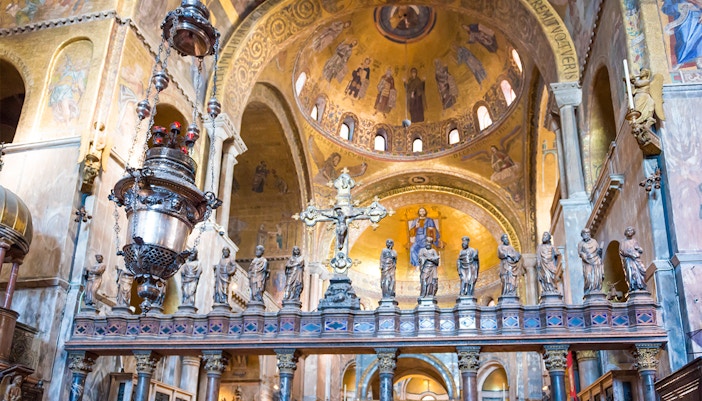
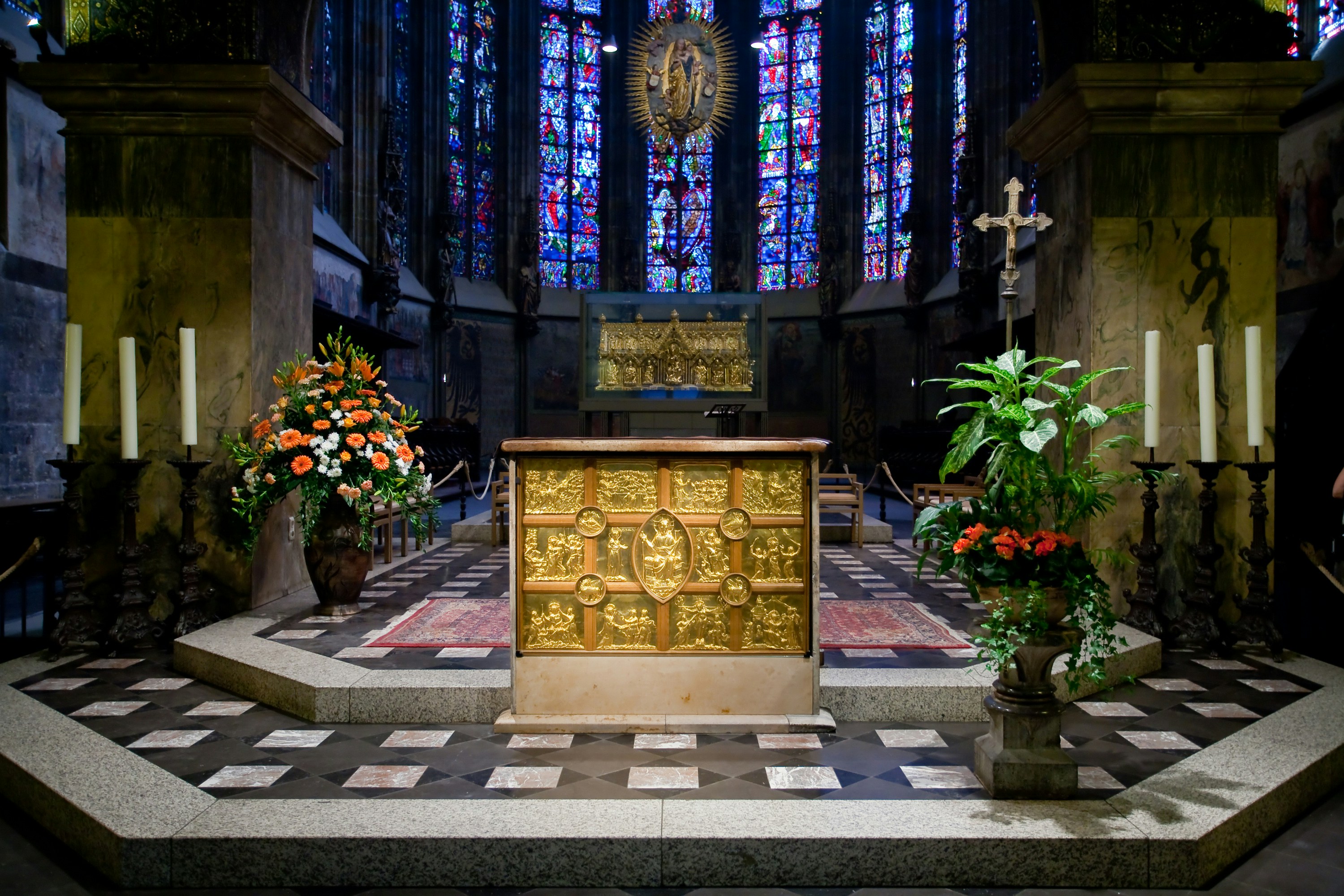
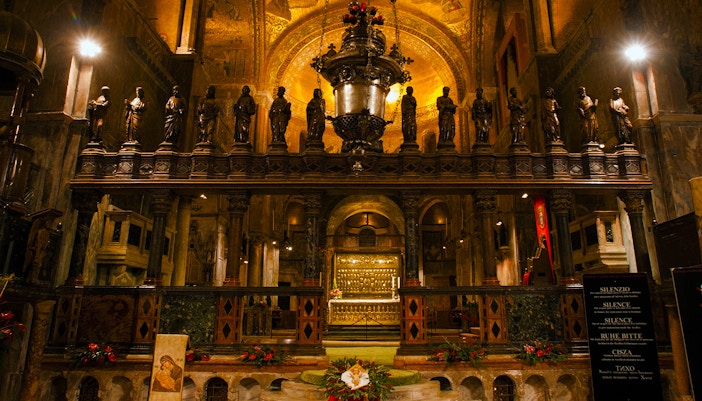
The chancel, just before the apse, is bordered by a Gothic altar screen dating back to 1394. This ornate screen showcases silver and bronze statues of the Virgin Mary, St. Mark, and the twelve disciples of Jesus. Behind it, marble banisters denote the start of the choir area, hosting the Doge and civic leaders. Further lies the presbytery, housing the renowned Pala d'Oro high altar. Bronze reliefs of St. Mark adorn each side, depicting his miracles.

Pala d’Oro

The Pala d'Oro, a Byzantine masterpiece, is a stunning altarpiece within St. Mark's Basilica. Commissioned in 976, it underwent modifications over the years, featuring 187 enamel plaques and over 1,900 gemstones including pearls, garnets, emeralds, rubies, and amethysts. Created in 1209, it depicts Archangel Michael and scenes from Christ's life in the upper section, while the lower half illustrates Christ and events from St. Mark's life.

Highlights of Pala d'Oro

Mosaics

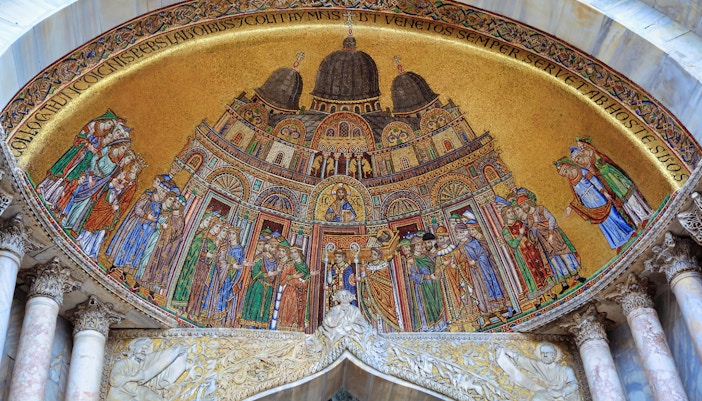
The dazzling gold-grounded mosaics are an absolute attention grabber! Spanning 8,000 pieces covering 4,240 square meters, these Byzantine-style artworks illustrate biblical narratives and Venetian history. Developed over 8 centuries, they depict key religious figures and city stories. Among these, the Christ Pantocrator in the apse, the Dome of the Creation in the narthex, and the Agony in the Garden are particularly revered.

Marble Floor inlays

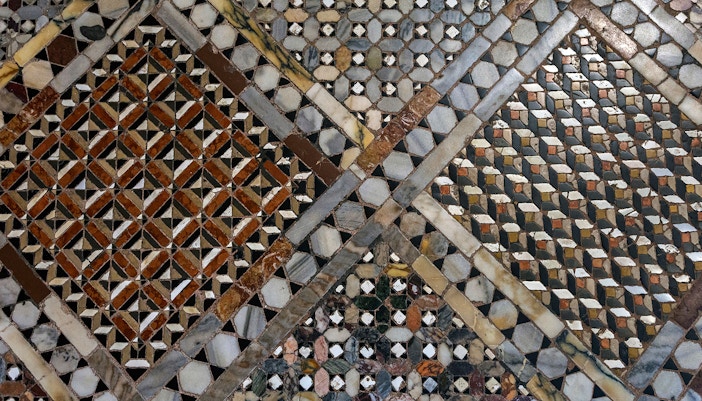
The tessellated floor of the cathedral spreads across 2099 square meters with marble and limestone mosaics. Divided into earthly and divine zones, the floor employs opus sectile and opus tessellatum techniques from Constantinople and Byzantine Greece. Fancy geometric forms and floral-animal motifs adorn the floor, showcasing a rectangular herringbone mosaic in the nave, a must-see highlight.

St. Mark's Museum

The museum, situated on the first floor, displays significant church artifacts, established in the 19th century. Among these treasures are the Triumphal Quadriga or Horses of Saint Mark, four bronze horses from classical antiquity (2nd or 3rd century AD). It houses Persian carpets, ancient priestly attire, St. Mark's manuscripts, and 19th-century-restored ancient mosaics. Exhibits include woolen tapestries depicting Christ's Passion and silk-silver tapestries showcasing St. Mark's life.

Book St. Mark's Museum tickets

The Treasury

The Treasury at St. Mark’s Basilica, between the church and the Doge Palace, houses a collection of sacred relics and objects. Acquired during the Fourth Crusade, the collection includes Byzantine metalworks and enamels. Among its treasures are artifacts purportedly taken from Constantinople, such as a fragment of the True Cross, a vessel containing Christ's Precious Blood, and a relic of St. John the Baptist. With 283 items in total, the treasury showcases gold, silver, and ceramic pieces, including chalices and bowls, from Byzantine and Islamic cultures.

The St. Mark Tomb

The crypt below the presbytery is believed to have housed St. Mark's body around 1063, before the relics were relocated to the high altar in 1835. It was constructed from repurposed church buildings and features ancient columns and arches, creating an atmospheric environment. Controversy surrounds the relics, with some suggesting they may belong to Alexander the Great.

Iconostasis

The Iconostasis in St. Mark's Basilica is a decorative partition adorned with religious icons, separating the nave from the sanctuary. This Byzantine-style wooden screen features intricate paintings of saints, biblical scenes, and symbols, representing the spiritual connection between earthly and heavenly realms. It adds a sense of sacredness to the church's interior, with a touch of Eastern Orthodox traditions.

Patriarchal Throne

The Patriarchal Throne, situated within St. Mark's Basilica, is an ornate seat symbolic of ecclesiastical authority. Crafted from marble with intricate carvings, it serves as the ceremonial seat of the Patriarch of Venice, holding historical and religious importance. It represents the spiritual leadership and authority of the Patriarch within the basilica.

Golden Pall

The Golden Pall inside St. Mark's Basilica is a valuable fabric embellished with intricate embroidery, typically made from threads of gold or silver. It is delicately draped over religious relics, altars, or esteemed religious figures during ceremonies, symbolizing their importance and reverence. In St. Mark's Basilica, the Golden Pall represents the grandeur and solemnity of its religious rituals.

Can I go inside St. Mark's Basilica?

Yes, you can go inside St. Mark’s Basilica, and admission tis free between 9:30 AM and 5:30 PM. However, add-ons such as audio guides, skip-the-line entry, and guided tours that enrich your experience require tickets that are available on our website. Although admission to the church is free, you will need to buy tickets to view the St. Mark’s Museum and the Treasury separately.

Plan your visit to St. Mark’s Basilica

Visitor Tips

  • Visitors with motor disabilities or in wheelchairs can enter the Basilica and access the Treasury through the Porta dei Fiori porch, located in the north facade which is equipped with a platform.
  • Wheelchair users may access the museum located on the first floor by using a lift. 
  • While you are inside St. Mark’s Basilica, it is important to note that photographs and video recordings are not permitted except for private use. 
  • You will not be allowed to enter inside the basilica with large and bulky luggage. Therefore it is recommended that you deposit your luggage at your hotel before your visit. 
  • It is also important to observe the dress code while in the basilica, remembering to dress modestly.

Frequently asked questions about St. Mark's Basilica's inside

Inside St. Mark's Basilica, visitors can explore a blend of architectural styles, including Renaissance, Byzantine, Venetian, and Islamic influences. The interior features intricate mosaics, sculptures, and historical artifacts that narrate the life of Venice's patron saint, Mark the Evangelist. Chapels dedicated to different saints offer unique artworks, such as the mosaic cycle in the Zen Chapel portraying scenes from St. Mark's life. Don't miss iconic pieces like the Byzantine icon of the Madonna Nicopeia housed in the Cappella della Madonna Nicopeia.

More reads

History

Book Now

Plan Your Visit

Book Now