Tickets Venice

Quick Information

ADDRESS

Campo S. Fantin, 1965, 30124 Venezia VE, Italy

Did you know?

Built to replace the fire-destroyed Teatro San Benedetto, La Fenice was named “The Phoenix” to symbolize its rebirth after both a devastating blaze and a bitter legal dispute.

The name also reflects the theater’s resilient history of being rebuilt after major fires in 1836 and 1996.

The main auditorium features a distinctive horseshoe shape, enhancing both acoustics and audience visibility.

Teatro La Fenice Guided Tour

Free cancellation
Book now, pay later
1 hr.

Venice City Pass with Access to Doge’s Palace, Scuola Grande & Querini Stampalia

Extended validity
Flexible duration

Why is Teatro La Fenice a must-visit attraction in Venice?

Most visitors come to Venice for the water, the palaces, and St Mark's Square. La Fenice rewards the ones who step a few minutes inland. It is one of the most beautiful opera houses in the world, and it sits less than five minutes' walk from Piazza San Marco.

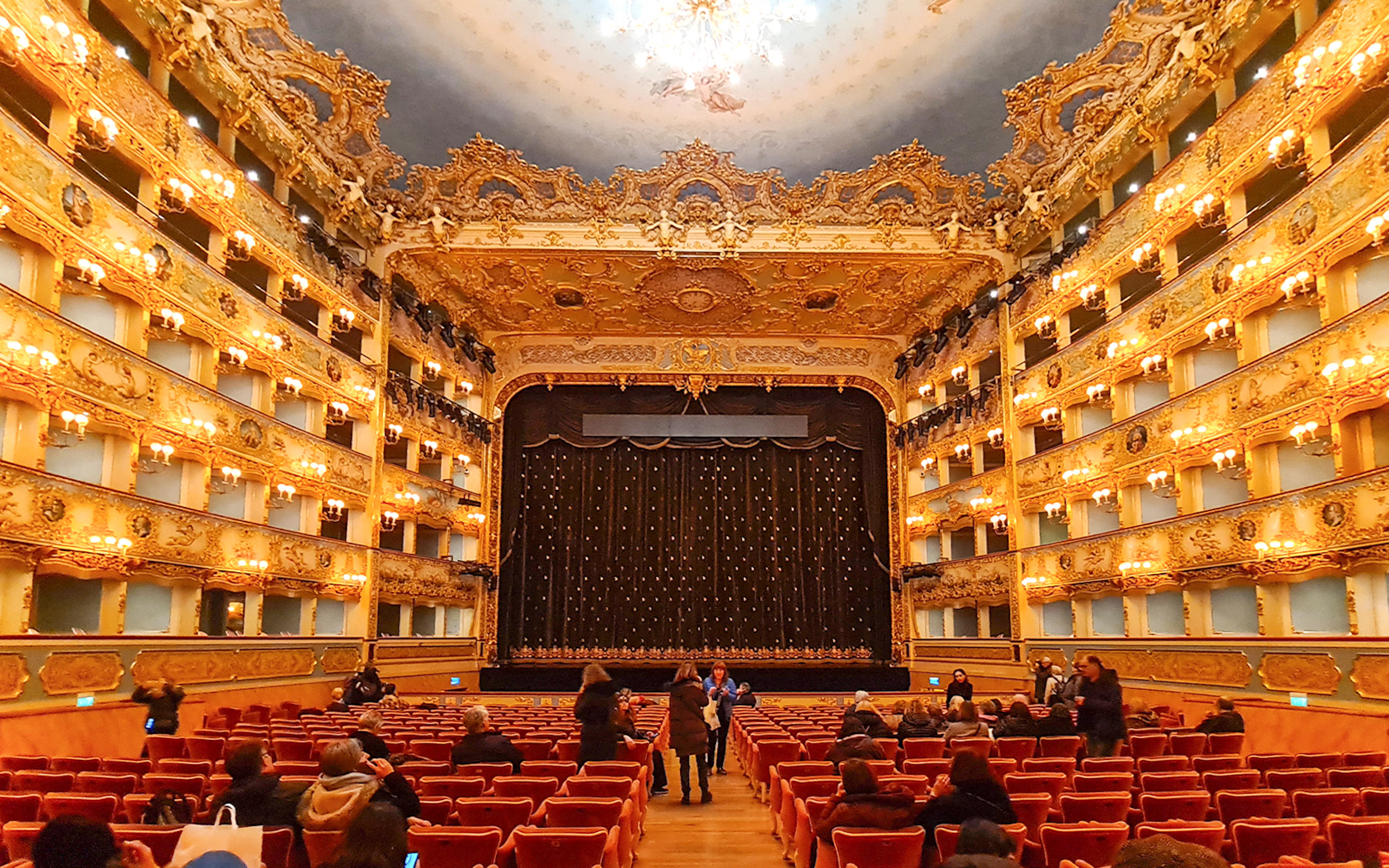
The auditorium is the reason to come. Five tiers of gilded boxes curve around a horseshoe floor, topped by a painted ceiling and a single vast chandelier. The gold and cream interior feels impossibly theatrical even when empty, which is why the room keeps turning up in films and photographs of Venice. The acoustics are the other marvel. Composers wrote for this space because it made voices carry.

La Fenice also earns its place for sheer historical weight. Rossini, Bellini, Donizetti, and Verdi all premiered major works here during the bel canto era. Later, Maria Callas sang some of her most celebrated performances on this stage, and the upper floor houses a permanent exhibition dedicated to her Venetian years.

Then there is the story the name tells. La Fenice, "The Phoenix", has burned to the ground twice and risen again both times, most recently in 1996. The building you walk into today is a meticulous recreation of the 19th-century theatre, rebuilt under the motto com'era, dov'era, meaning "as it was, where it was". Few buildings in Europe carry this much history of destruction and renewal within their walls.

What to see at Teatro la Fenice

Teatro La Fenice auditorium with ornate balconies and red seats, Venice.
Placeholder Image Headout Blimp
1/4

The auditorium

The main hall is the reason most visitors come. Five tiers of boxes curve around a horseshoe floor beneath a painted ceiling and a single grand chandelier. The gold stucco work, crimson velvet, and stage curtain recreate the 19th-century room destroyed in the 1996 fire.

The Royal Box

Set at the centre of the first tier, the Royal Box gives the best sightline in the house. Originally built for the Austrian emperor during Venetian occupation, it now frames the most photographed view of the auditorium's symmetry and gilded detail.

The Apollonian Halls (Sale Apollinee)

This set of reception rooms sits above the foyer and hosts the theatre's aperitifs, receptions, and smaller recitals. Four connected halls display stucco work, mirrored walls, and painted ceilings in the neoclassical style, offering a quieter counterpoint to the theatrical drama of the main auditorium below.

The Maria Callas exhibition

The upper floor holds a permanent exhibition dedicated to Maria Callas and her years performing in Venice. Costumes, photographs, recordings, and personal items trace her connection to La Fenice, where she sang several of the roles that defined her career in the 1950s.

Brief history of Teatro La Fenice

The story starts with another fire. In 1774, the Teatro San Benedetto burned down, leaving Venice's noble box-holders without a stage. They commissioned a new theatre, chose the name "La Fenice" for its promise of rebirth, and held a public competition for the design. Gianantonio Selva won, and the new opera house opened on 16 May 1792 with Paisiello's I giochi di Agrigento.

Disaster struck again in December 1836 when a faulty stove set the interior alight. The Meduna brothers rebuilt the theatre within a year, reopening in December 1837. The 19th century became La Fenice's golden age, hosting premieres by Rossini, Bellini, Donizetti, and Verdi. A third fire, this one set deliberately, destroyed the theatre again in 1996. Reconstruction took seven years. La Fenice reopened in December 2003 and resumed full operatic programming in 2004.

Who built Teatro La Fenice?

Gianantonio Selva, a Venetian neoclassical architect, won the 1789 design competition and built the original theatre between 1790 and 1792. After the 1836 fire, the brothers Tommaso and Giovanni Battista Meduna led the rebuild. After the 1996 arson, architect Aldo Rossi oversaw the most recent reconstruction, which reopened in December 2003.

La Fenice fire

Fire has shaped La Fenice at every stage of its existence. The theatre was built in the 1790s to replace the Teatro San Benedetto, which had burned down in 1774. Its very name, Italian for "The Phoenix", acknowledges that origin. In December 1836, a faulty stove destroyed the interior of the newly built theatre. The Meduna brothers rebuilt it within a year, and the 1837 reopening set the interior design that still defines the auditorium today.

The most recent and most devastating fire broke out on the night of 29 January 1996. Flames gutted the theatre in under nine hours, leaving only the external walls standing. Fire crews struggled to reach the building because the two canals closest to it had been drained for dredging, ironically so that emergency boats could move more freely.

A Venice court ruled in 2001 that the fire was arson. Two electricians, Enrico Carella and Massimiliano Marchetti, had set it to cover delays in their repair work that were about to trigger contractual fines. Both went to prison.

Reconstruction took roughly €90 million and seven years. La Fenice reopened on 14 December 2003 with a concert conducted by Riccardo Muti. Full operatic programming resumed in 2004.
Architecture of Teatro La Fenice

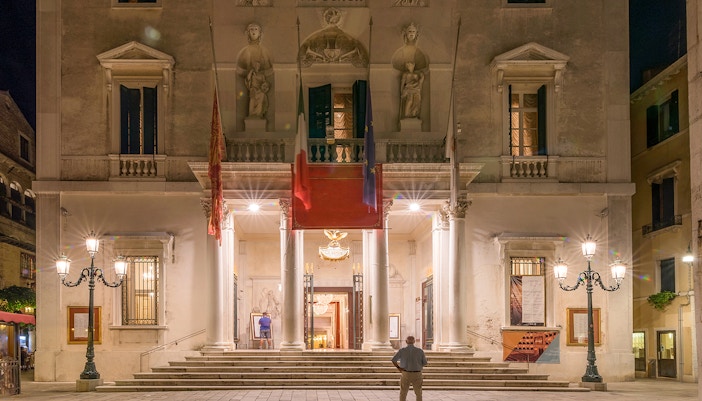
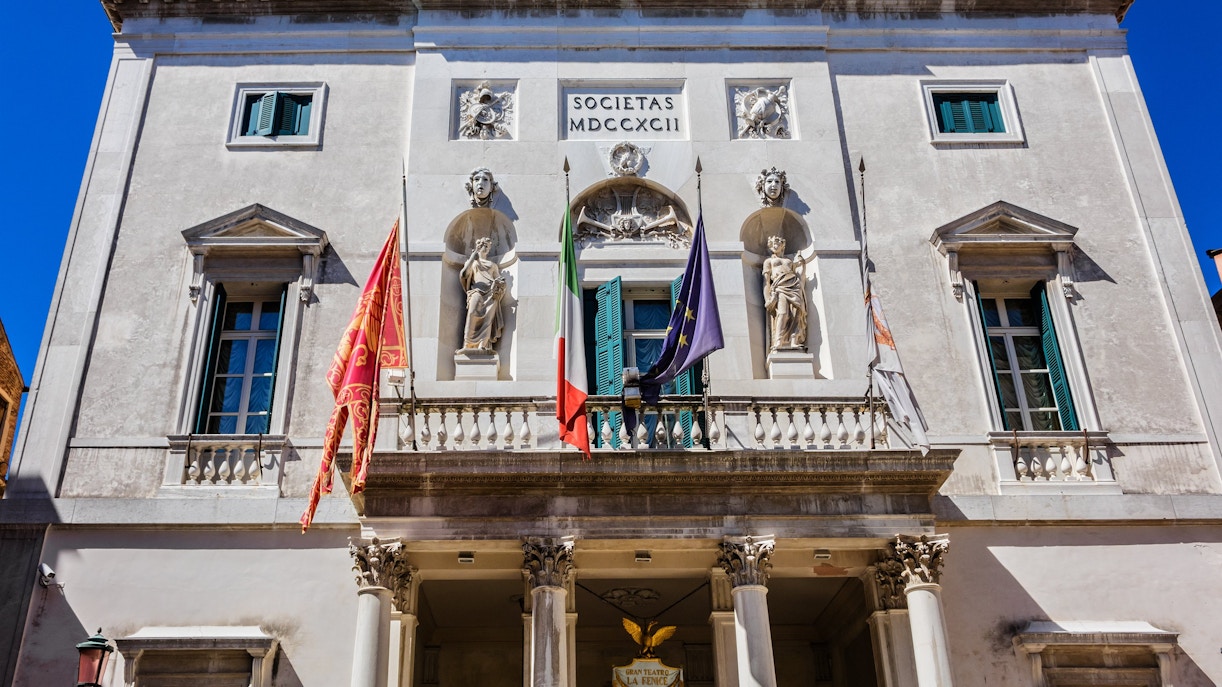
La Fenice follows the Venetian neoclassical style that Selva championed in the late 18th century. The facade on Campo San Fantin presents a restrained two-storey front, with a pronaos of four Corinthian columns at ground level and two niches above holding statues of Dance and Music. The understated exterior gives little warning of the drama inside.

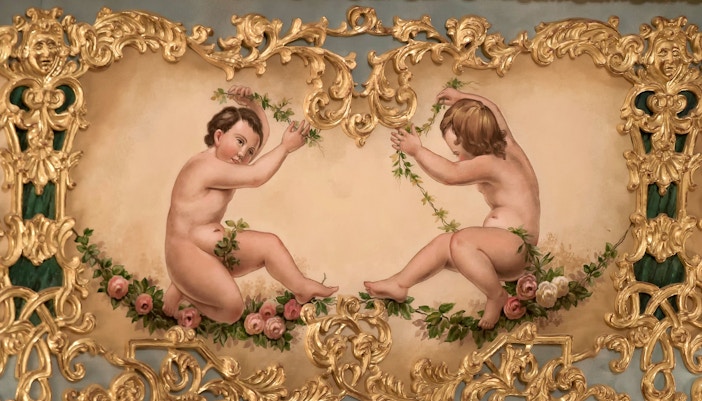
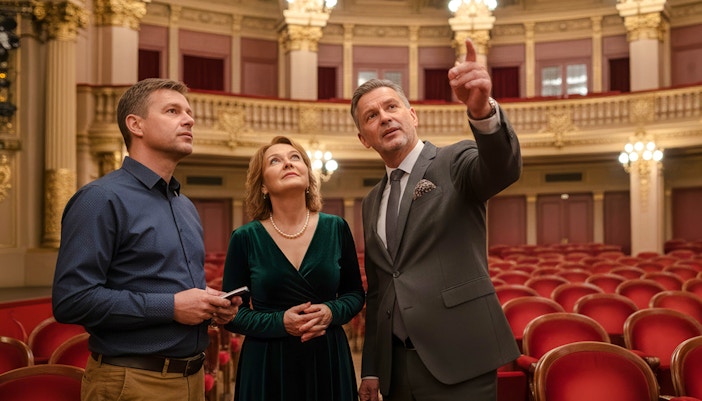
The auditorium keeps the traditional horseshoe plan that Venice had favoured since 1642, with five tiers of boxes rising around a central floor. The interior finishes, richly gilded stucco, painted ceiling panels, and crimson velvet, reflect the 1837 Meduna rebuild rather than Selva's plainer original. The current rooms faithfully recreate that 19th-century scheme, following the com'era, dov'era mandate set after the 1996 fire. Capacity today runs to around 1,000 seats across stalls, boxes, and gallery.

Frequently asked questions about Teatro la Fenice

Yes. The main season runs from November to July and covers opera, ballet, and symphonic concerts. Performance tickets are separate from the daytime tour ticket and sell out quickly for popular productions like the New Year's Concert.