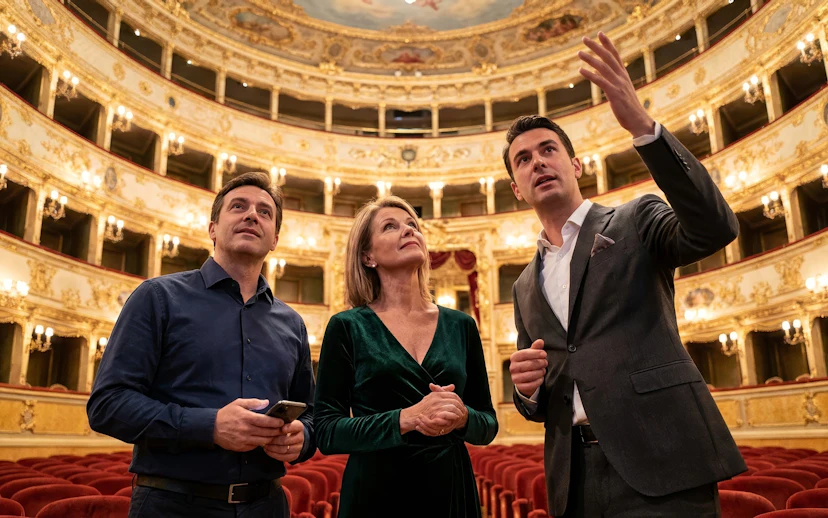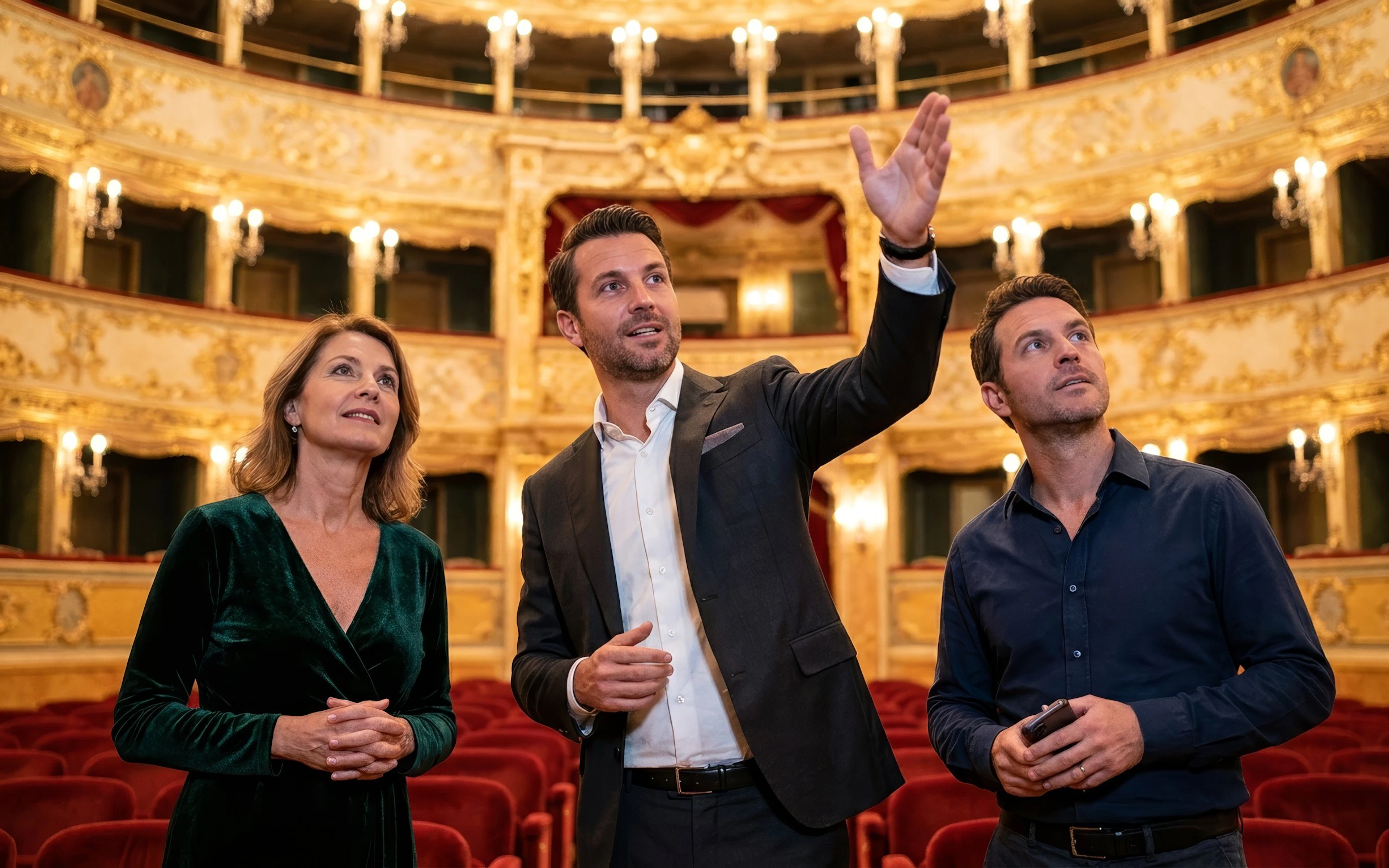
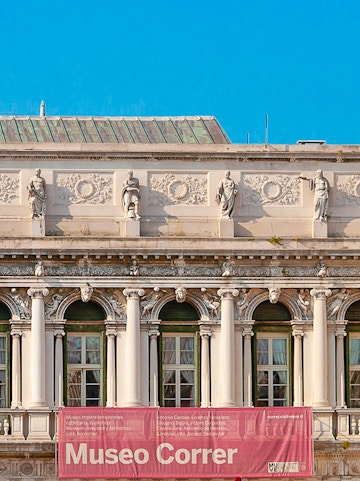



Explore the theatre with a regionally-certified guide who speaks your language. Tours run in English, Italian, French, or German, with commentary spanning the architecture, the opera history, and the story of the theatre's three fires and rebirths.
Top things to do in Venice
A guided tour of Teatro la Fenice is
✔️ With a licensed local guide
✔️ Without the wait
Skip the box-office queue with priority entry. Your guide meets you at Campo San Fantin in front of the theatre and takes you straight in after voucher check-in, saving you the line and the ticket-counter shuffle.
✔️ Focused and complete
In just one hour, cover the main auditorium, the royal box, the Apollonian Halls, and the Maria Callas exhibition. The route is built to reach every significant space in the building without rushing through any of them.
✔️ Real conversations in small groups
Maximum 20 guests per tour, with a minimum of four to confirm departure. Group size stays intimate enough that questions get real answers and the guide can tailor the pace to the interests of the room.
What to expect on a guided tour of Teatro la Fenice
1/6
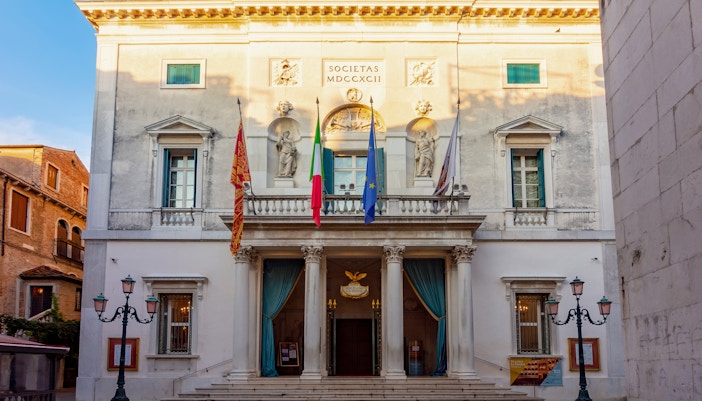
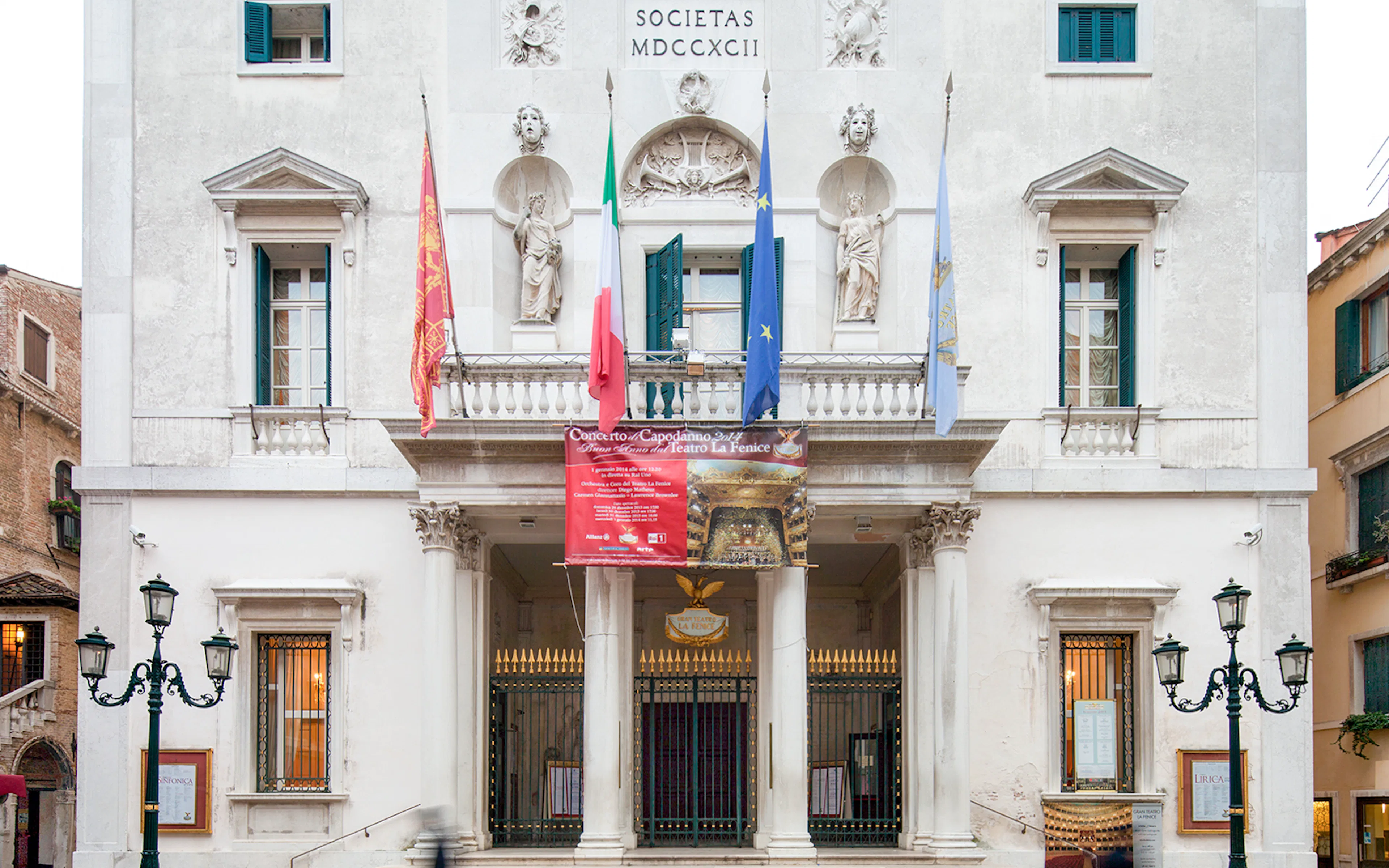
Meet your guide at Campo San Fantin
Arrive at Campo San Fantin, the small square in front of the theatre, at least 15 minutes before departure. Show your printed or mobile voucher at the meeting point, where your guide exchanges it for a regular ticket before gathering the group and leading you inside.
Step into the main auditorium
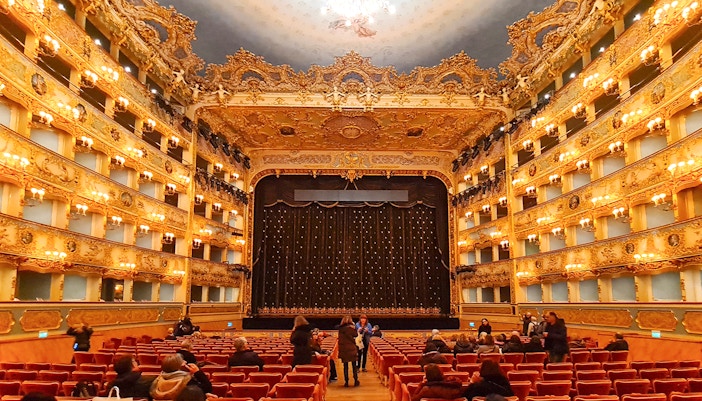
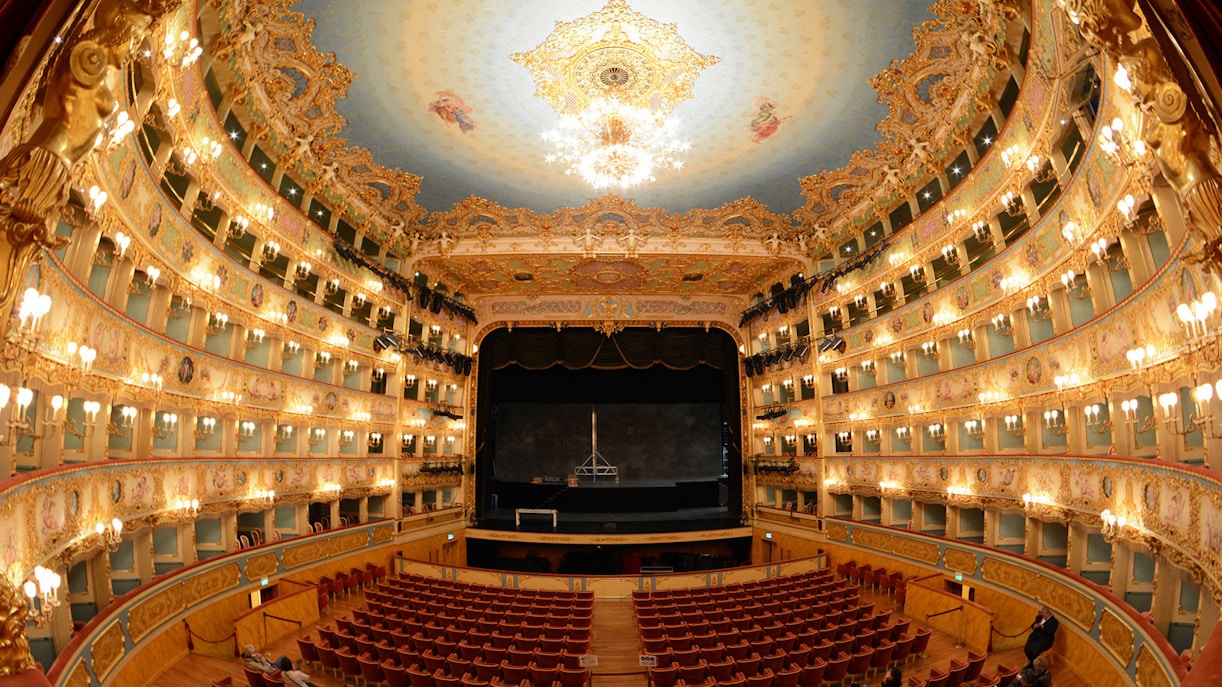
The tour begins in the horseshoe-shaped main hall. Your guide walks you through the five tiers of gilded boxes, the painted ceiling, and the single grand chandelier, while laying out the theatre's 230-year story. Three fires, three rebirths, and two centuries of opera premieres.
The royal box and the view from above
From the stalls, the tour moves up to the royal box at the centre of the first tier. This is the best sightline in the house and the most photographed view of the auditorium. Originally built for visits by the Austrian emperor during the occupation years, it now anchors every official photo of the interior.
The Apollonian Halls (Sale Apollinee)
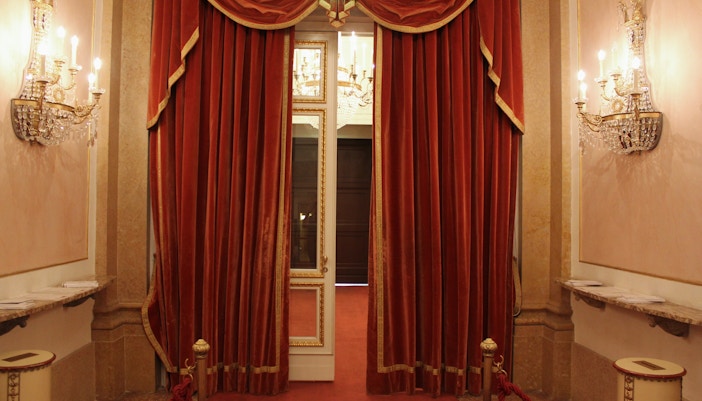
Upstairs, the four neoclassical reception rooms above the foyer offer a quieter counterpoint to the drama below. Your guide points out the stucco work, the mirrored walls, and the painted ceilings, and explains how these halls have hosted the theatre's aperitifs and recitals for generations.
The Maria Callas exhibition
The upper floor houses a permanent exhibition dedicated to Maria Callas, who rose to international fame on La Fenice's stage. Costumes, photographs, and recordings trace her Venetian years from 1947 to 1954, including the 1949 night she replaced an indisposed soprano on six days' notice and changed opera history.
The tour ends, but the theatre lingers
Your guide wraps up after around an hour, typically near the exit. Most visitors step back out into Campo San Fantin with a better sense of why La Fenice matters beyond its gilded interiors. For a longer, self-paced visit with more time to explore, consider booking the audio-guide ticket instead.
Things to keep in mind when you go on a Teatro la Fenice tour
- A small cloakroom near the entrance takes jackets, umbrellas, and small bags.
- Restrooms are available to visitors during tour hours.

- Your printed or mobile voucher is required at check-in.
- A valid photo ID may also be requested.
- Comfortable shoes make the interior staircases easier, and a light layer helps in winter since tour groups gather outside on Campo San Fantin before entering.

- No photography is permitted during rehearsals or performances, and flash and tripods are prohibited at all times.
- Staff ask for quiet inside the auditorium during the guide's commentary.
- Food and drink are not allowed inside the theatre.

- Smart casual is fine for daytime tours. Visitors in shorts, swimwear, or sleeveless tops may be refused entry.
- Evening performances call for more formal attire, with suit and tie expected on opening and gala nights.
- Arrive 15 minutes before your tour begins to allow for voucher check-in.
- Tours confirm with a minimum of four guests, and smaller bookings may be rescheduled.
- Children under five join free, making this a practical short tour for families with young kids.
Frequently asked questions about Teatro la Fenice guided tours
If you arrive after the tour starts, you may not be able to join. Tours run strictly on schedule and groups enter together. Arrive at least 15 minutes before departure at Campo San Fantin to check in and collect your ticket.
Yes. Children aged 0 to 5 join free, and the one-hour format suits kids who might tire on longer museum tours. Older children interested in theatre or history respond well to the stories of the fires and the rebuild.
Very little. La Fenice is compact by Venetian standards, and the one-hour route covers the auditorium, royal box, Apollonian Halls, and Callas exhibition without long stretches. Staircases between levels are the main physical demand, and the venue is wheelchair accessible.
No. Group size stays small enough (maximum 20) that the guide speaks directly to the group without amplification. If you have hearing concerns, request a spot near the front when you arrive at the meeting point.
Yes. Free cancellation is available up to 24 hours before your tour begins. Book now, pay later is also offered if you want to lock a slot without committing immediately. Within 24 hours of the tour, standard cancellation terms apply.
No. The tour covers the front-of-house only: auditorium, royal box, Apollonian Halls, and Callas exhibition. The stage and backstage remain working areas for the opera company and are not part of any tour option.
Tours are led by licensed local guides certified by the Veneto region, typically with backgrounds in art history, music, or cultural heritage. They are fluent in English, Italian, French, or German, depending on the option you book.
No. Tours run in English, French, German, or Italian. Choose your preferred language at the time of booking, since each tour runs in one language only and you should not join a tour in a language you don't understand.